When Poetry Touched the Brush: The Romantic Artists Who Painted Britain's Literary Soul
The Canvas Speaks in Verse
In the mist-shrouded valleys of the Lake District, where Wordsworth once walked and pondered, another form of poetry was quietly taking shape. With brush and pigment, a generation of British watercolourists was translating the written word into something altogether more immediate—the painted poem.
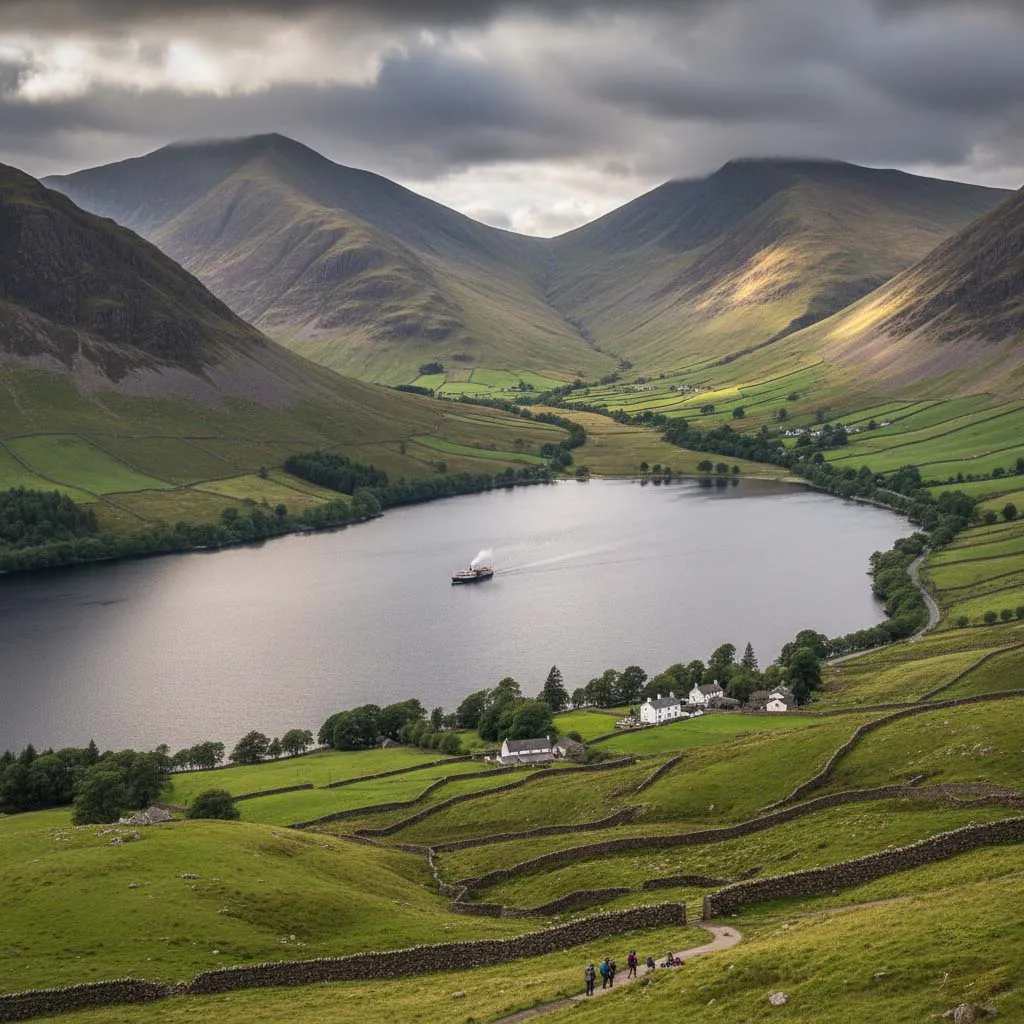 Photo: Lake District, via www.thelakedistrict.com
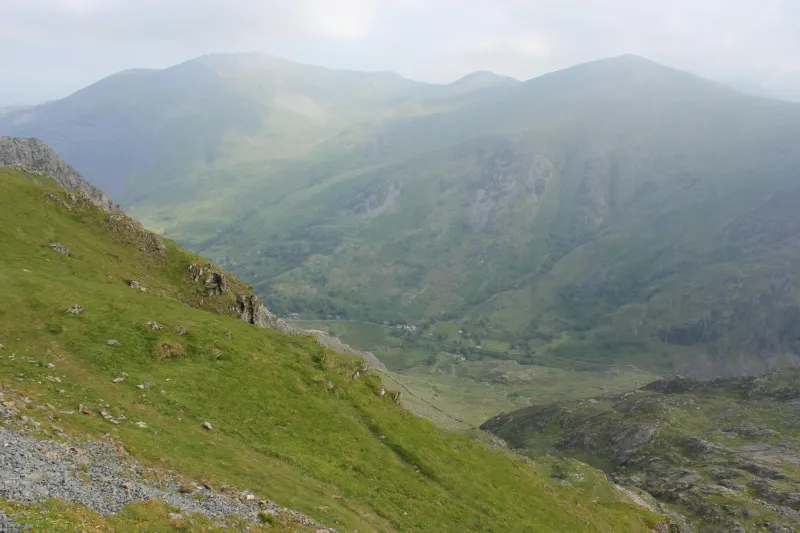
The early nineteenth century witnessed an extraordinary convergence of artistic sensibilities. As the Romantic poets reshaped literature's relationship with nature and emotion, watercolour painters were discovering their medium's unique capacity to capture the ephemeral—the play of light across a Yorkshire moor, the gathering storm clouds above a Welsh valley, the melancholy of autumn in an English woodland.
This was no mere coincidence. The watercolourists and poets shared more than an era; they shared a vision of Britain as a landscape of feeling, where every hill and stream carried emotional weight.
Turner's Literary Tempests
Joseph Mallord William Turner stands as perhaps the most literary of painters, his canvases alive with the same tempestuous energy that animated Byron's verses. When Turner painted 'Snow Storm - Steam-Boat off a Harbour's Mouth' in 1842, he was responding not just to a maritime scene but to the Romantic fascination with humanity's struggle against sublime natural forces—a theme that runs through the poetry of Shelley and Coleridge like a golden thread.
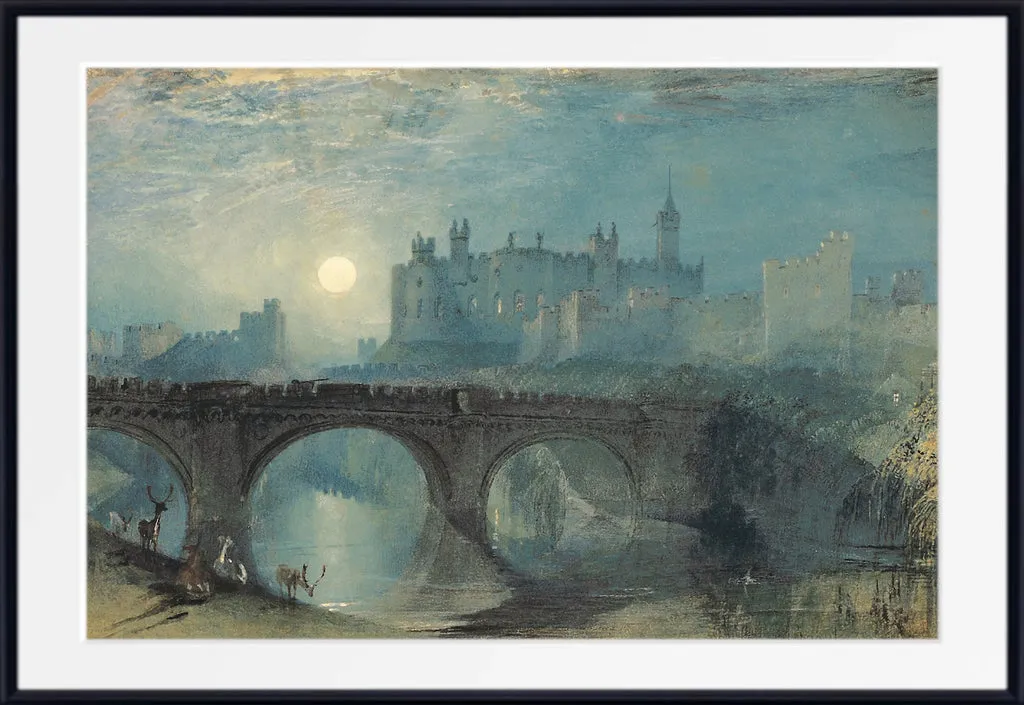 Photo: Joseph Mallord William Turner, via gallerythane.com
Turner's relationship with literature was deeply personal. He illustrated works by Walter Scott, Lord Byron, and Samuel Rogers, but more significantly, he approached landscape as if it were narrative. His paintings tell stories—of ancient civilisations crumbling before time's advance, of industrial progress clashing with pastoral tranquillity, of light itself as a protagonist in the drama of existence.
Consider his 'The Fighting Temeraire' (1838), which depicts the old warship being towed to her final berth. The painting breathes with the same elegiac quality that Tennyson would later capture in verse—a meditation on glory's passing, rendered in pigment rather than metre.
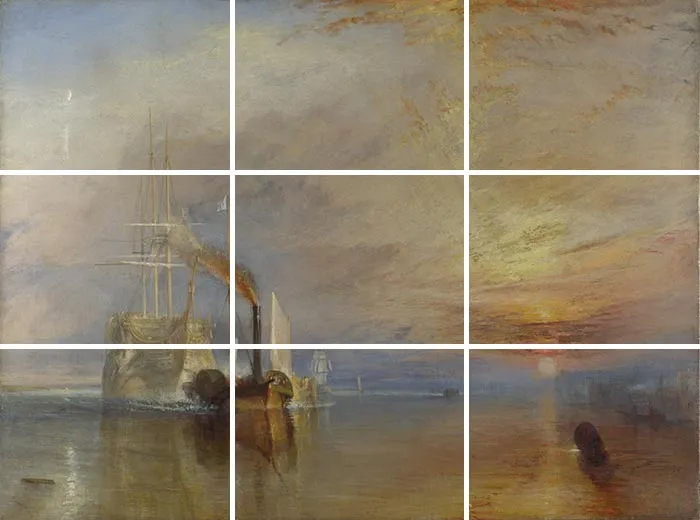 Photo: The Fighting Temeraire, via drawpaintacademy.com
Cotman's Quiet Revelations
While Turner painted with Byronic drama, John Sell Cotman found his voice in quieter harmonies. His watercolours of Norfolk and Yorkshire possessed what Wordsworth called 'the still, sad music of humanity'—a gentle melancholy that spoke to the Romantic belief in nature's capacity for moral instruction.
Cotman's 'Greta Bridge' (c.1805) exemplifies this approach. The ancient stone bridge, reflected in still water beneath overhanging trees, creates a composition of perfect tranquillity. Yet like Wordsworth's 'Tintern Abbey', it speaks to deeper themes—the continuity of human presence in the landscape, the consoling power of natural beauty, the way memory and place intertwine to create meaning.
The painter's technique—those luminous washes of colour, the way he allowed white paper to suggest light—paralleled the poets' use of simple language to convey profound truths. Both sought to strip away artifice, to find in direct observation the path to universal understanding.
Girtin's Urban Pastorals
Thomas Girtin brought the Romantic sensibility to Britain's towns and cities, finding poetry in places where others saw only commerce and industry. His views of London, particularly his panoramic 'Eidometropolis', revealed the capital as a landscape worthy of the same reverent attention traditionally reserved for mountains and lakes.
This was revolutionary. Girtin painted London's smoky atmosphere, its bustling river traffic, its mixture of ancient and modern architecture, with the same sensitivity that Gray brought to his 'Elegy Written in a Country Churchyard'. Both artist and poet understood that the sublime could be found in unexpected places—that a city's evening light could move the soul as powerfully as any Alpine vista.
The Language of Light
What united these watercolourists was their mastery of light—not as mere illumination, but as emotional language. They understood, as the Romantic poets did, that light could convey feeling more directly than any symbol or allegory.
When Constable painted the changing skies above Hampstead Heath, he was responding to the same impulses that drove Shelley to write 'To a Skylark' or Keats to compose 'To Autumn'. All were attempting to capture the fleeting moment when natural beauty and human consciousness intersect to create something approaching the transcendent.
The watercolour medium itself—with its transparency, its capacity for spontaneous effects, its reliance on the white of the paper for luminosity—seemed perfectly suited to this Romantic enterprise. Where oil painting could appear laboured and artificial, watercolour retained the freshness of immediate response.
A Nation's Visual Poetry
By the 1820s, British watercolour had established itself as more than a regional school; it had become the visual equivalent of English Romantic poetry. Foreign visitors recognised something distinctively British in these misty landscapes and atmospheric effects. They saw a nation that had learned to find the sublime in its own countryside, rather than seeking it only in the dramatic scenery of the Alps or the ruins of Italy.
This achievement cannot be separated from the broader cultural movement that produced Wordsworth, Coleridge, and their contemporaries. The watercolourists were part of a generation that was reimagining Britain's relationship with its own landscape, finding in familiar scenes the material for high art.
The Enduring Conversation
Today, when we stand before Turner's late watercolours in the Tate or examine Cotman's subtle harmonies in the British Museum, we witness the continuation of a conversation that began two centuries ago. These works remain vivid because they succeeded in their ambitious goal—to create a visual poetry that could speak as directly to the emotions as any written verse.
The Romantic watercolourists achieved something remarkable: they gave Britain's landscape a voice that still resonates. In their hands, the painted word became as eloquent as any poem, as enduring as any literary masterpiece. They proved that painting, at its finest, is indeed another form of literature—written not in words, but in light.