The Golden Thread: How Britain's Hidden Benefactors Shaped Our Cultural Destiny
The Invisible Hand of Taste
When we speak of British cultural achievement, we invoke familiar names—Handel's oratorios, Reynolds's portraits, Johnson's dictionary. Yet behind each celebrated work lies a more complex story, one in which genius required not just inspiration but invitation, not merely talent but patronage. The true architects of Britain's cultural golden age were often those who never touched brush or pen, but whose cheque books and social connections determined which artists flourished and which faded into obscurity.
This hidden economy of cultural production challenges our romantic notions of artistic independence. The masterpieces we revere today emerged from a web of personal relationships, financial dependencies, and social obligations that were as crucial to their creation as any flash of creative insight.
The Aristocratic Tastemakers
Consider Charles Montagu, 1st Earl of Halifax, whose passion for literature in the early eighteenth century shaped an entire generation of writers. Halifax didn't merely collect books; he cultivated authors. His patronage of Joseph Addison transformed a struggling academic into the voice of The Spectator, whilst his support for Matthew Prior elevated a diplomat's verses into enduring poetry.
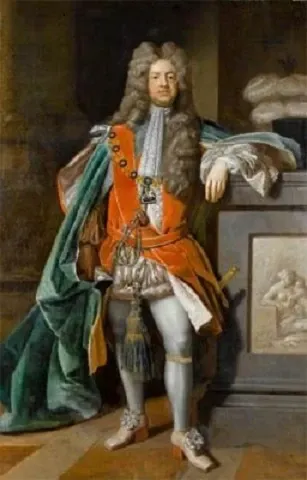 Photo: Charles Montagu, 1st Earl of Halifax, via static.wikia.nocookie.net
Halifax understood that patronage was not charity but investment—in ideas, in taste, in the very definition of cultural value. His weekly gatherings at his London mansion became the crucible where literary reputations were forged and aesthetic judgements refined. When Halifax endorsed a work, London's reading public took notice.
Yet Halifax's influence extended beyond mere financial support. He actively shaped the works he sponsored, suggesting themes, recommending revisions, even commissioning specific pieces to suit his vision of what British literature should become. The Earl's preference for classical restraint over baroque excess helped define the Augustan style that dominated British letters for decades.
The Musical Kingmakers
In music, no figure looms larger than Charles Jennens, the Leicestershire landowner whose collaboration with Handel produced some of Britain's most cherished choral works. Jennens was more than Handel's librettist for 'Messiah'; he was the composer's cultural translator, the man who understood how continental musical forms could speak to British sensibilities.
 Photo: Charles Jennens, via s2.studylib.net
Jennens possessed that rarest of qualities in a patron—the ability to recognise genius whilst knowing how to channel it. His detailed correspondence with Handel reveals a man who understood music's technical demands whilst grasping its emotional possibilities. When Jennens suggested biblical texts for musical setting, he wasn't merely providing raw material; he was offering a vision of how sacred music could serve both devotional and artistic purposes.
The success of 'Messiah' cannot be separated from Jennens's cultural intelligence. He knew that British audiences craved music that was both spiritually uplifting and intellectually sophisticated, works that could fill the new concert halls whilst satisfying the most refined taste. His patronage didn't just support Handel; it helped create the template for British oratorio that endured for generations.
The Industrial Visionaries
As the eighteenth century gave way to the nineteenth, a new class of patrons emerged from Britain's industrial prosperity. These self-made men brought different sensibilities to cultural patronage, often favouring contemporary artists over established masters, innovation over tradition.
Samuel Whitbread, the brewing magnate, exemplified this new approach. His support for young painters like David Wilkie reflected a patron's confidence in his own judgement rather than deference to academic authority. Whitbread's collection of contemporary British art became a statement of cultural nationalism—a declaration that British artists could rival their continental peers.
Yet Whitbread's most significant contribution lay in his understanding of art's public dimension. His decision to loan paintings for public exhibition helped establish the principle that private collecting carried social responsibilities. The brewer's patronage wasn't merely personal indulgence; it was cultural philanthropy.
The Literary Salonnières
Women patrons operated within different constraints but often wielded comparable influence. Elizabeth Montagu, the 'Queen of the Blues', transformed her London drawing room into the epicentre of literary life. Her weekly gatherings didn't simply bring writers together; they created the social conditions in which literature could flourish.
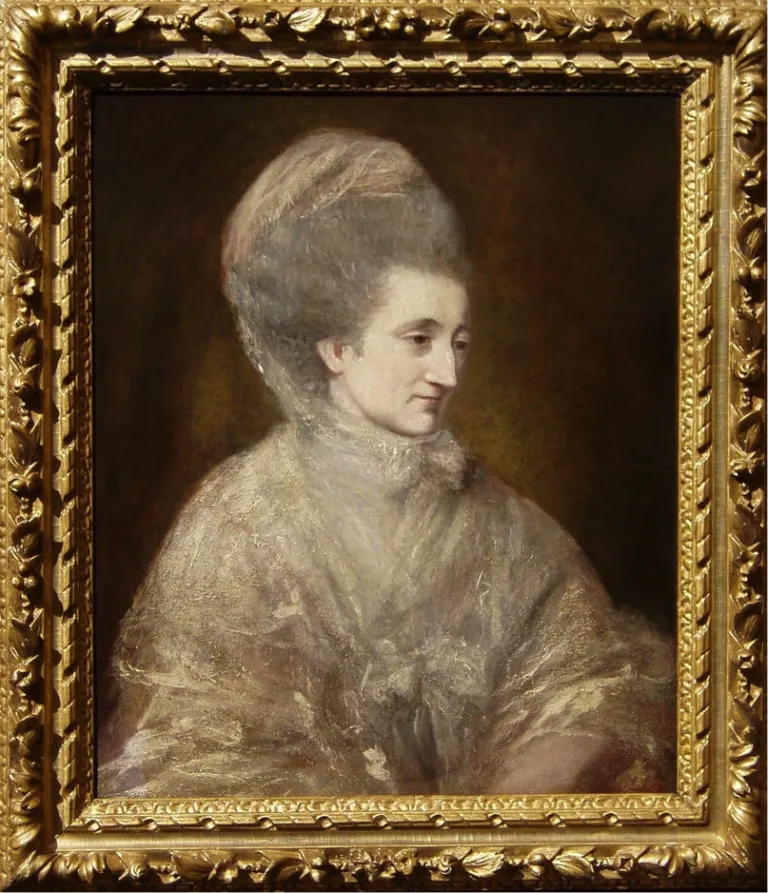 Photo: Elizabeth Montagu, via emco.swansea.ac.uk
Montagu's salon operated on principles of intellectual meritocracy that challenged conventional social hierarchies. Birth and wealth mattered less than wit and learning. This democratic spirit encouraged literary innovation whilst maintaining standards of excellence. The conversations that flowed through Montagu's rooms shaped critical opinion and literary taste throughout the later eighteenth century.
Her correspondence reveals a woman who understood literature's commercial as well as artistic dimensions. Montagu's recommendations could make or break publishing ventures, whilst her social endorsement often determined whether new works reached influential readers. She wielded cultural power through personal relationships rather than institutional authority.
The Price of Patronage
Yet patronage exacted its costs. Artists who depended on wealthy supporters often found their creative freedom circumscribed by their patrons' preferences and prejudices. The Earl of Burlington's architectural tastes, for instance, effectively excluded baroque influences from British building design for decades, whilst his promotion of Palladian principles shaped the appearance of countless country houses and public buildings.
Similarly, the musical preferences of aristocratic patrons could determine which composers received commissions and which styles gained acceptance. The British preference for Handel over his contemporary Telemann owed as much to patronage networks as to purely musical considerations.
These constraints weren't necessarily harmful. Patronage often forced artists to refine their work, to consider their audience, to balance personal expression with public communication. The greatest works of the period emerged from creative tension between artistic vision and patron expectation.
The Democratic Revolution
By the mid-nineteenth century, this intimate system of personal patronage was giving way to more democratic forms of cultural support. Public subscription concerts, commercial galleries, and popular publishing reduced artists' dependence on individual benefactors whilst creating new relationships between creators and audiences.
Yet something was lost in this transition. The personal relationships that characterised earlier patronage had encouraged artistic risk-taking whilst maintaining quality control. Patrons like Halifax and Jennens possessed both the knowledge to recognise excellence and the commitment to nurture it through difficult periods.
The Lasting Legacy
Today's cultural landscape bears the invisible imprint of these forgotten figures. The works we consider quintessentially British often reflect the tastes and values of long-dead patrons whose names have faded from memory. Their aesthetic judgements, transmitted through the artists they supported, continue to shape our understanding of cultural value.
This recognition should not diminish our appreciation of artistic genius but rather deepen our understanding of how culture develops. The masterpieces we celebrate emerged from human relationships—complex, sometimes difficult, always essential to the creative process. Behind every golden age stand the golden threads of patronage, weaving individual talent into lasting achievement.
Britain's cultural inheritance remains what it is not despite the influence of these hidden benefactors, but because of it. They were the unsung composers of our artistic destiny, conducting from the shadows whilst genius took the stage.