Voices in the Margin: When Victorian Readers Answered Back
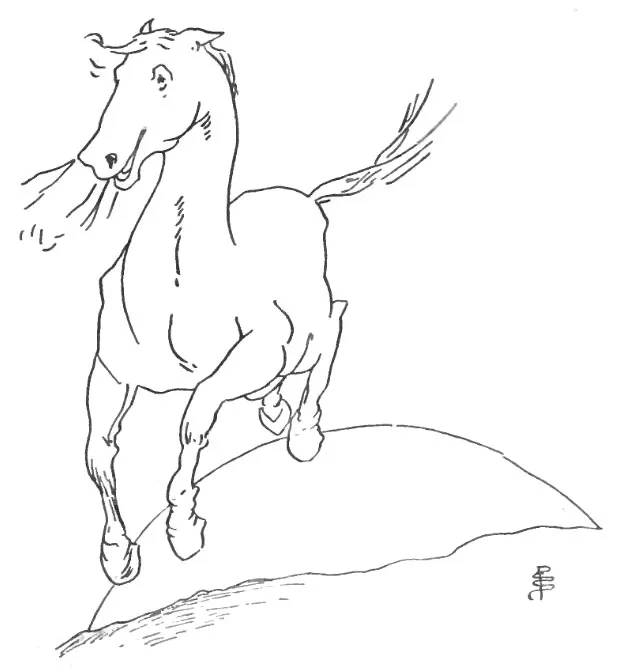
Photo: Sabine Baring-Gould, Public domain, via Wikimedia Commons
Published criticism tells us what reviewers thought of a novel. Marginalia tells us something far rarer: what a person sitting by a fire in a Yorkshire parlour, or on a tram in Manchester, actually felt as they turned the pages.
Across the archives of British libraries and the stock of second-hand bookshops, Victorian books survive densely annotated by their first owners. These pencil marks — the exclamation, the underlined sentence, the furious 'No!' beside a character's decision — constitute one of the least studied and most human of historical records.
The Reader Who Could Not Keep Silent
The annotators divide, roughly, into types. There is the earnest student, who summarises arguments in the margins of sermons and essays, compressing a chapter into a neat chain of logic. There is the sentimental reader, whose 'how true' and 'just so' trace an emotional journey through a three-volume novel. And there is the disputatious reader — the most delightful of all — who argues openly with the author.
Copies of Hardy's novels frequently bear such rebellions. Readers have been known to write 'wicked' beside passages they considered morally dangerous, or to record their outrage at a particular ending, addressing the author directly across the gap of decades. One finds, in copies of Dickens, readers keeping tally of the author's sentimentality, as though keeping score. Copies of Charlotte Brontë carry the opposite impulse: a quiet, almost devotional attention, passages underlined with unusual care.
A Democracy of Readers
What makes this material so valuable to the historian is its social breadth. Professional critics wrote for a readership; marginalia was written for no one. Farmers annotate. Governesses annotate. Schoolboys annotate, usually badly. The clerk, the clergyman's wife, the apprentice — all leave their traces in a medium that cost nothing and answered to no editor.
Social historians have long sought the voice of the ordinary Victorian reader, and it is here, in graphite, that it most often survives. A dated note in a flyleaf — finished this, wept at the last chapter, March 1874 — compresses an entire emotional life into a single line. Such records cannot be found in census returns or newspaper reviews.
Why It Matters Now
There is a lesson in all this for our own age of public opinion, in which every reaction is published instantly to an audience. The Victorian annotator wrote for themselves alone, and it is precisely that privacy that gives their words their honesty. No one performed for the margin.
Institutions such as university special collections and county record offices increasingly catalogue annotations as significant objects in their own right, and rightly so. The annotated book is not a damaged book. It is a conversation — between reader and author, and between the reader and us. Handle such a volume gently: you are reading over someone's shoulder across a century and a half, and they are still talking.