The Shadow Seat: How Britain's Deputy Musicians Keep the Music Playing When Fortune Turns
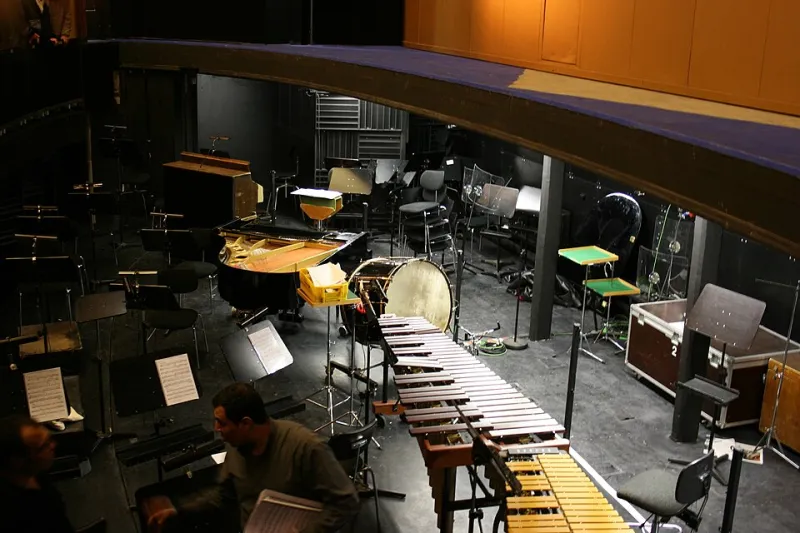
Photo: Frank Vincentz, CC BY-SA 3.0, via Wikimedia Commons
There is a telephone call that musicians in Britain dread and, in equal measure, rather relish. It comes at inconvenient hours — often the evening before, sometimes the very morning of a performance. A principal player has succumbed to a fever, a throat has closed, a shoulder has given way. And somewhere across the city, a freelancer reaches for a coat, gathers a folder of music, and prepares to sit in a seat they may never have occupied before.
These are the deputies — 'deps' in the universal shorthand of the profession — and without them, the edifice of British live performance would tremble within a week.
An Unwritten Constitution
The deputy system operates on trust rather than contract. No central register exists; no formal qualification is required. Instead, an intricate web of favours, recommendations and long memories determines who gets the call. A dep who plays brilliantly but arrives late will find the phone silent for a season. One who turns up prepared, blends seamlessly and asks for nothing will be first on the list for years.
The etiquette is strict and entirely informal. A deputy is expected to have done the preparation — not merely the notes, but the tempos as a particular conductor takes them, the cuts a particular director favours, the idiosyncrasies of a pit orchestra that has played the same show four hundred times. In the West End especially, where a musical may run for years, the permanent players develop a collective instinct. The dep must slot into that instinct without disturbing it.
Payment, too, follows custom. The dep receives the fee the absent player would have earned, and the absent player, in turn, is expected to be available as a dep for others. It is a mutual insurance scheme written in pencil, and it has sustained British music-making since the days when theatre orchestras played from hand-copied parts by gaslight.
The Famous Saves
Every orchestra carries its legends. There is the tale, told in various forms around the Royal Albert Hall's hospitality rooms, of the horn player summoned at two in the afternoon to play a full programme that evening — sight-reading the encore, as the story goes, without a single misplaced entry. Another frequently repeated account concerns a West End percussionist who covered an entire act having never seen the show, guided only by a score annotated in a predecessor's handwriting and the whispered instructions of a sympathetic clarinettist.
Whether every detail is strictly true matters less than what the stories reveal: a profession that prizes composure under impossible circumstances. The best deps are not merely technically accomplished; they possess a particular temperament, a capacity to walk into a stranger's chair and make the audience believe nothing has changed.
The Backbone Nobody Sees
Orchestras and managements are, quite properly, celebrated for their soloists and their music directors. Yet the resilience of Britain's musical life — the fact that a season is rarely cancelled because one player falls ill — rests on this shadow workforce. Freelance musicians, often juggling teaching, session work and family commitments, keep a kind of standing readiness that deserves more recognition than it receives.
There is something quietly characteristic about the whole arrangement. It is a system built on honour, sustained by goodwill, and entirely invisible to the ticket-buying public. The next time a performance passes without a stumble, spare a thought for the possibility that the second oboe learned the part that morning. The show, as the profession likes to say, went on — because somebody made certain that it could.