The Invisible Hands Behind the Music: Britain's Great Venue Stewards and House Managers
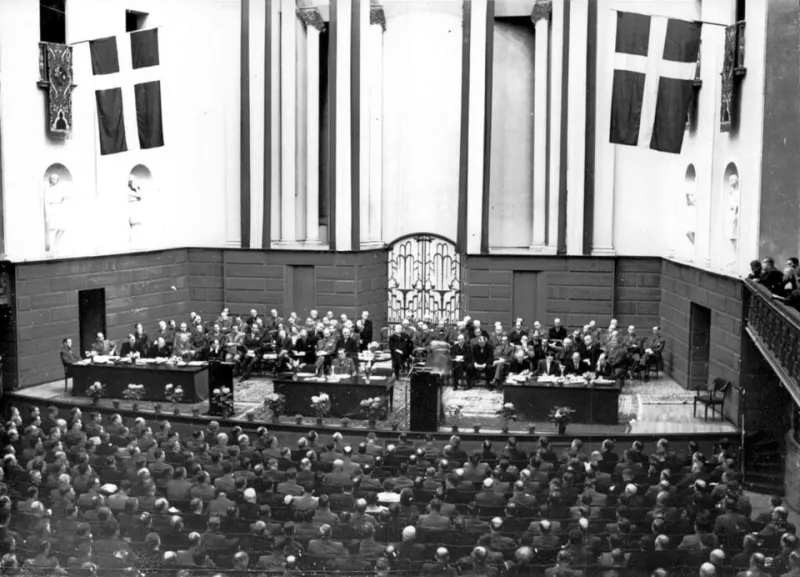
Photo: Unknown photographer, Public domain, via Wikimedia Commons
The photograph survives in the archives: a golden-age London recital, the great hall packed to the doors, a pianist of international fame bowing at the platform's edge. Every face in the frame is accounted for by history except one — a figure at the rear of the auditorium, half in shadow, notebook in hand, watching not the artist but the room. He was the hall's manager, and without him there would have been no hall, no recital, and nothing for the pianist to bow to.
The Profession Nobody Named
British musical life has always been generous with its heroes. We name our orchestras after conductors, our competitions after composers, our chairs after benefactors. The people who ran the venues — the house managers, the box-office stalwarts, the impresarios' lieutenants — received no such immortality, and mostly did not seek it. Yet their work was exacting: the negotiation with agents, the calibration of ticket prices against a hall's capacity, the endless diplomacy required when a temperamental soloist, a charitable committee and a heating system all had competing claims on the same Tuesday evening.
The great London rooms of the early twentieth century — the Queen's Hall before its destruction, the intimate bechstein-turned-wigmore with its famous warm acoustic — were run by a small cadre of such professionals. Their skill lay in making administration invisible. A well-run hall, like a well-run dinner party, gives no sign of the labour beneath it.
Reading a Room
What distinguished the finest of these stewards was an almost musical attentiveness to the venue itself. They knew which seats sold and which needed coaxing; how the hall's resonance changed with a full house or a sparse Tuesday; when to programme the popular over the adventurous and when to gamble. The manager's ear was commercial and artistic at once, and the health of British live music depended on the accuracy of it.
In the regions, the role carried additional weight. A municipal auditorium in an industrial town might be the only space of its kind for fifty miles, and its manager answered to borough councillors as readily as to musicians. Programmes were negotiated, subsidies defended at committee meetings, and touring companies fed and billeted through a combination of firmness and charm. Many such managers served for decades, becoming the institutional memory of their towns' musical life.
Administration as Artistry
It is fashionable to describe such work as merely logistical, but the record suggests otherwise. The impresarios whose names we remember — the great concert promoters of the Victorian and Edwardian age — were only as good as the men and women who translated their ambitions into functioning evenings. Contracts honoured, artists met at the station, programmes printed, stewarding arranged, the bar stocked: each successful concert was a small administrative miracle, performed nightly across the country without applause.
That tradition has not lapsed. Every British venue that opens its doors this season does so because someone has balanced an unforgiving budget, rostered the volunteers, and ensured the piano arrived tuned. Live music's survival has always rested as much on such quiet competence as on genius. The least we owe the invisible hands is the occasional acknowledgement — and perhaps, next time the lights dim, a thought for the figure at the back of the room, notebook in hand.