Beyond the Capital: Five County Customs Keeping Britain's Classical Heart Beating
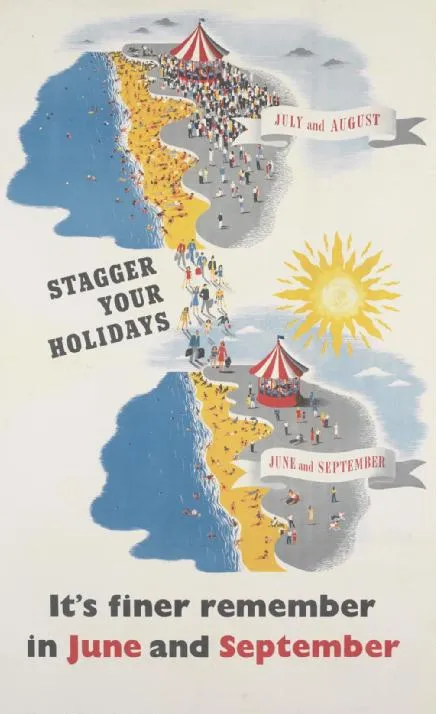
Photo: Unknown (artist), Elm Press (N R P Co Ltd), London (printer), Her Majesty's Stationery Office (publisher/sponsor), Public domain, via Wikimedia Commons
London does not hold a monopoly on Britain's musical life, whatever the national press might suggest. Travel an hour or two in almost any direction and you will find customs — some centuries old, some cheerfully improvised — through which ordinary communities keep classical music not merely preserved, but genuinely lived.
The Seafront Bandstand, Still Standing
The Victorian bandstand, once declared a relic, has enjoyed a remarkable afterlife. From the Essex coast to the promenades of Devon and the restored terraces of Glasgow Green, municipal bandstands once again host Sunday brass and wind programmes, largely run by volunteers who book the bands, wind up the programme sellers and pray for dry weather. The repertoire is a delightfully stubborn mixture of light classics, overtures and marches — Holst beside Sousa — and the deckchair audience, many of whom attend weekly, know exactly what they like.
Choral Evensong, Sung as a Habit
In cathedrals and greater parish churches from Norwich to Hereford, the ancient office of choral evensong continues without ticket or ceremony. Anyone may walk in, sit beneath the fan vaulting, and hear some of the finest choral writing in the English tradition — Stanford, Howells, Tallis — performed to a professional standard, free of charge. The regulars in the nave stalls, some attending for decades, constitute one of Britain's most devoted and least celebrated concert audiences.
The Village Competition
The competitive festival movement — choirs, solo singers, young pianists graded by an adjudicator with a clipboard and a kind word — still flourishes in market towns across the north of England, Wales and Scotland. These festivals, many founded in the early twentieth century, remain a first stage for generations of musicians. The volunteers who organise them, often the same families for three generations, regard the event less as a competition than as a homecoming.
The Piped Tradition of the Small Church
Across rural Britain, small parish churches keep their pipe organs in playing condition on shoestring budgets, and the organists who play them — frequently the same person who arranges the music, mends the boiler and locks up — sustain a weekly standard that would astonish visitors who assume greatness requires a metropolis. A well-restored two-manual instrument in a stone village church, played on a wet Sunday, is an acoustic experience few purpose-built halls can match.
The Library Recital
Finally, a newer custom: the lunchtime recital in public libraries, art galleries and town halls, where local professionals and conservatoire students perform short programmes to audiences of a few dozen. These concerts, often free and frequently accompanied by tea, have quietly become a nursery for young players and a lifeline for housebound music-lovers.
None of these customs makes headlines. All of them, taken together, explain why Britain's classical tradition remains not a museum piece but a living habit — renewed every week, in every county, by people who simply cannot imagine a Sunday without it.