The Silent Artisans: Britain's Master Instrument Makers Who Shaped Musical History
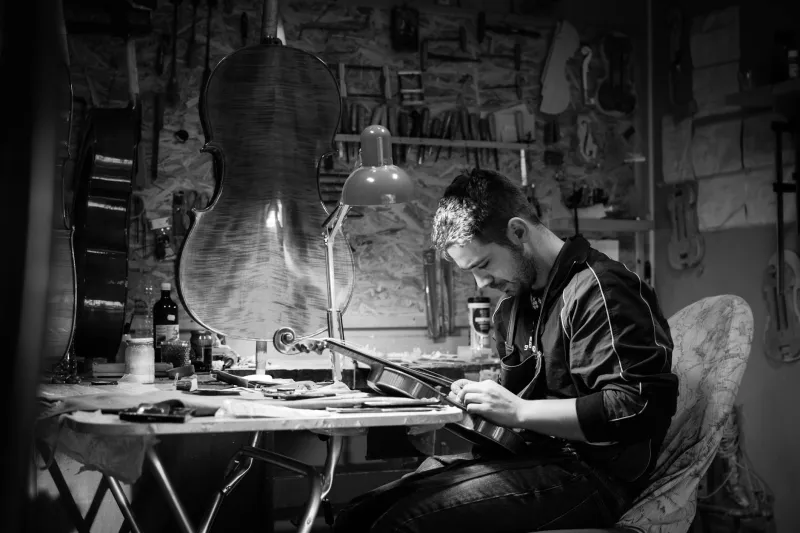
In a narrow workshop behind St. Paul's Cathedral, Thomas Urquhart bent over his workbench, delicately adjusting the soundpost of a violin that would outlive him by three centuries. The year was 1680, and Urquhart represented the flowering of a uniquely British tradition in instrument making — a craft that combined Germanic precision with English innovation, creating instruments that would grace the world's finest concert halls whilst remaining distinctly products of their island home.
 Photo: St. Paul's Cathedral, via c8.alamy.com
The Tudor Foundation: When England First Sang Through Wood
Britain's instrument-making tradition emerged during the Tudor period, when Henry VIII's musical enthusiasms created unprecedented demand for sophisticated instruments. The King's own collection included over 150 instruments, from delicate lutes to powerful sackbuts, many crafted by English artisans who learned their trade from Flemish and Italian masters before developing distinctive national characteristics.
The viol family dominated early English instrument making, with craftsmen such as John Rose the Elder establishing workshops that would influence generations of makers. Rose's viols, distinguished by their particularly sweet tone and elegant proportions, became the standard against which other English makers measured their work. These instruments weren't merely functional tools but artistic statements, their carved heads and intricate purfling demonstrating the maker's skill whilst contributing to the instrument's acoustic properties.
 Photo: John Rose the Elder, via image-cdn.hypb.st
English viol makers developed innovations that distinguished their work from continental models. The characteristic 'English' rose sound-hole, the preference for particular wood combinations, and subtle modifications to internal bracing all contributed to a national sound that musicians recognised immediately. These weren't accidental developments but conscious artistic choices that reflected English musical preferences and aesthetic sensibilities.
The Violin Revolution: When London Rivalled Cremona
The seventeenth century brought the violin family to prominence, challenging English makers to master new techniques whilst preserving their distinctive approach. The workshop of Thomas Urquhart, established around 1650, became legendary among contemporary musicians for instruments that combined Italian elegance with robust English construction. Urquhart's violins possessed a particular tonal warmth that made them favourites of English composers and performers.
The Restoration period witnessed an explosion of violin making in London, with craftsmen such as Barak Norman and Edward Lewis establishing international reputations. Norman's instruments, characterised by their distinctive amber varnish and powerful projection, were sought after by continental musicians who recognised their exceptional quality. These makers didn't merely copy Italian models but developed genuine innovations that influenced violin making throughout Europe.
The English School of violin making reached its zenith during the early eighteenth century with makers such as Daniel Parker and Benjamin Banks. Their instruments possessed a distinctive character — less overtly brilliant than contemporary Italian work but with a particular sweetness and complexity of tone that suited English musical tastes. Many of these instruments remain in professional use today, testament to their makers' extraordinary skill and artistic vision.
The Keyboard Kingdom: Harpsichords and the English Touch
Whilst continental Europe dominated violin making, Britain established clear supremacy in keyboard instruments. English harpsichord makers, led by figures such as Hermann Tabel and Jacob Kirkman, created instruments that set international standards for power, elegance, and mechanical reliability. The 'English' harpsichord became a distinct type, recognisable for its particularly rich bass register and brilliant treble clarity.
Kirkman's workshop, established in London around 1730, produced instruments that were coveted throughout Europe. His harpsichords possessed mechanical innovations — improved jack construction, more responsive key action, superior tuning stability — that made them preferred instruments for professional musicians. The workshop's output included both single and double manual instruments, each carefully crafted to meet specific musical requirements.
The transition from harpsichord to piano witnessed another burst of English innovation. John Broadwood, initially trained as a cabinet maker, revolutionised piano construction through systematic experimentation with string tension, frame construction, and action mechanics. His instruments possessed a particular singing quality that made them favourites of composers such as Beethoven, who specifically requested a Broadwood piano for his final years.
The Victorian Piano Empire: Industrial Craft Meets Artisanal Excellence
The nineteenth century transformed piano making from craft workshop production to industrial scale manufacturing, yet the finest English makers maintained artisanal standards whilst embracing new technologies. The Broadwood company, by then under successive generations of the founding family, produced instruments that graced the world's most prestigious concert halls whilst remaining accessible to the expanding middle-class market.
Erard's London workshops, established by the French maker Sébastien Érard, became centres of innovation in piano action design. The famous 'double escapement' action, perfected in London workshops, enabled the rapid repetition that became essential for Romantic piano technique. These mechanical innovations weren't merely technical improvements but artistic enablers that expanded musical possibilities for composers and performers.
The Victorian period also witnessed the emergence of distinctly English piano characteristics: the preference for particularly warm, singing tone; the emphasis on mechanical reliability over flashy brilliance; and the integration of furniture-making traditions that created instruments as beautiful to observe as to hear. These qualities reflected English musical values whilst establishing commercial advantages in international markets.
The Organ Builders: Cathedrals of Sound
No discussion of British instrument making can ignore the extraordinary tradition of organ building that created some of the world's finest instruments. The workshops of 'Father' Smith, Harris, and their successors established English organ building as a distinct school with international influence. These makers didn't merely assemble mechanical devices but created architectural instruments that transformed sacred and secular spaces into cathedrals of sound.
The English organ tradition emphasised particular tonal qualities: the famous 'English Diapason' sound that became synonymous with Anglican worship; the preference for gentle reed voices over aggressive continental models; and the integration of orchestral colours that reflected English musical tastes. These weren't technical specifications but artistic choices that shaped the sound of English musical life for centuries.
Victorian organ builders such as Henry Willis and William Hill created instruments of unprecedented scale and complexity, their workshops combining traditional craft skills with industrial production methods. The great organs at Royal Albert Hall, St. Paul's Cathedral, and countless parish churches represent not merely functional installations but artistic statements that continue shaping musical experience today.
The Modern Challenge: Preserving Ancient Skills
Contemporary British instrument making faces profound challenges unknown to previous generations. The decline of amateur music-making has reduced demand for student instruments, whilst global manufacturing has shifted production to lower-cost regions. Yet remarkable craftsmen continue the tradition, their workshops maintaining skills and standards that connect directly to Tudor and Georgian predecessors.
Modern makers such as Roger Rose (descendant of the Tudor viol maker) and contemporary violin makers working in the English tradition demonstrate how ancient skills adapt to contemporary conditions. These craftsmen don't merely preserve historical techniques but develop them through ongoing experimentation and innovation, ensuring that British instrument making remains a living tradition rather than a museum curiosity.
The restoration and maintenance of historical instruments has become increasingly important as museums and collectors recognise the irreplaceable value of original instruments. British workshops specialising in historical restoration maintain skills and knowledge that would otherwise disappear, ensuring that future generations can experience the authentic sound of instruments crafted by master craftsmen.
The Enduring Legacy of Silent Artisans
What distinguishes Britain's instrument-making tradition is not merely technical excellence but a particular approach to the relationship between maker, instrument, and musician. The finest British instruments possess qualities that transcend mere functionality: they become partners in musical expression, enabling rather than constraining artistic vision.
This tradition reminds us that musical culture depends not only on composers and performers but on the silent artisans whose skill and devotion create the tools that transform musical ideas into audible reality. Every sublime performance, every moment of musical transcendence, relies upon instruments crafted with extraordinary care by makers whose names often remain unknown but whose legacy resonates through every note.
The British instrument-making tradition represents something precious and irreplaceable: a form of cultural expression that combines practical skill with artistic vision, individual craftsmanship with collective tradition, and technical innovation with aesthetic sensitivity. In an age of mass production and digital simulation, these workshops remind us that some forms of excellence can only emerge from the marriage of human skill, artistic vision, and patient dedication to craft perfection.