Greasepaint and Glory: Why Britain's Amateur Operatic Societies Remain Irreplaceable
Greasepaint and Glory: Why Britain's Amateur Operatic Societies Remain Irreplaceable
The rehearsal schedule has been pinned to the noticeboard of the church hall since September. By November, the cast of forty-three — a retired headmistress, a plumber, two sixth-formers, a retired nurse, a quantity surveyor, and a remarkable number of people who work in local government — will have spent the equivalent of several working weeks learning their parts, their movements, and their harmonies. The production will run for four nights in a civic theatre that has hosted amateur opera since the 1920s. Every performance will sell out.
This scene, replicated in some form across hundreds of towns and villages throughout the United Kingdom, represents one of the most tenacious and least celebrated expressions of British cultural life. The amateur operatic society — or, in many cases, the amateur musical theatre society, the boundaries having blurred pleasingly over the decades — is an institution of considerable antiquity and remarkable vitality. It is also, in the current cultural climate, something more than a local entertainment. It is an argument.
Origins of a Movement
The roots of the British amateur operatic tradition reach back into the Victorian period, when the expansion of civic life, the growth of the railway network, and the extraordinary popular success of Gilbert and Sullivan's comic operas combined to create conditions in which amateur performance could flourish at scale. The first productions of H.M.S. Pinafore and The Mikado by amateur companies appeared within years of the professional premieres, and the D'Oyly Carte Opera Company's decision to licence its works for amateur performance — a policy maintained, with varying degrees of rigidity, for many decades — effectively provided the nascent movement with a ready-made repertoire of works that were dramatically satisfying, musically challenging without being prohibitively so, and enormously popular with audiences.
 Photo: D'Oyly Carte Opera Company, via static.vecteezy.com
By the Edwardian period, amateur operatic societies had been established in virtually every town of any size in England, Scotland, and Wales. Many were affiliated with choral societies or church choirs; others grew from workplace recreational clubs or the social programmes of civic institutions. What united them was a shared conviction — rarely articulated explicitly, but powerfully felt — that the pleasures of opera and musical theatre were not the exclusive property of the wealthy or the professionally trained, and that the act of making such music together was itself a form of cultural participation with value beyond the performances it produced.
The Oldest Survivors
Several of the societies established during this formative period are still operating today, and their histories constitute minor epics of institutional resilience. The Hanley Amateur Operatic Society, founded in the Potteries in 1892, survived two world wars, the decline of the local industries that had sustained its membership, and several periods of near-extinction to continue staging productions in the twenty-first century. Similar stories of longevity and perseverance can be found across the country — in Yorkshire mill towns, in Midlands cities, in Scottish burghs, in Home Counties market towns where the operatic society has been a fixture of the social calendar for longer than most current members have been alive.
 Photo: The Potteries, via i.pinimg.com
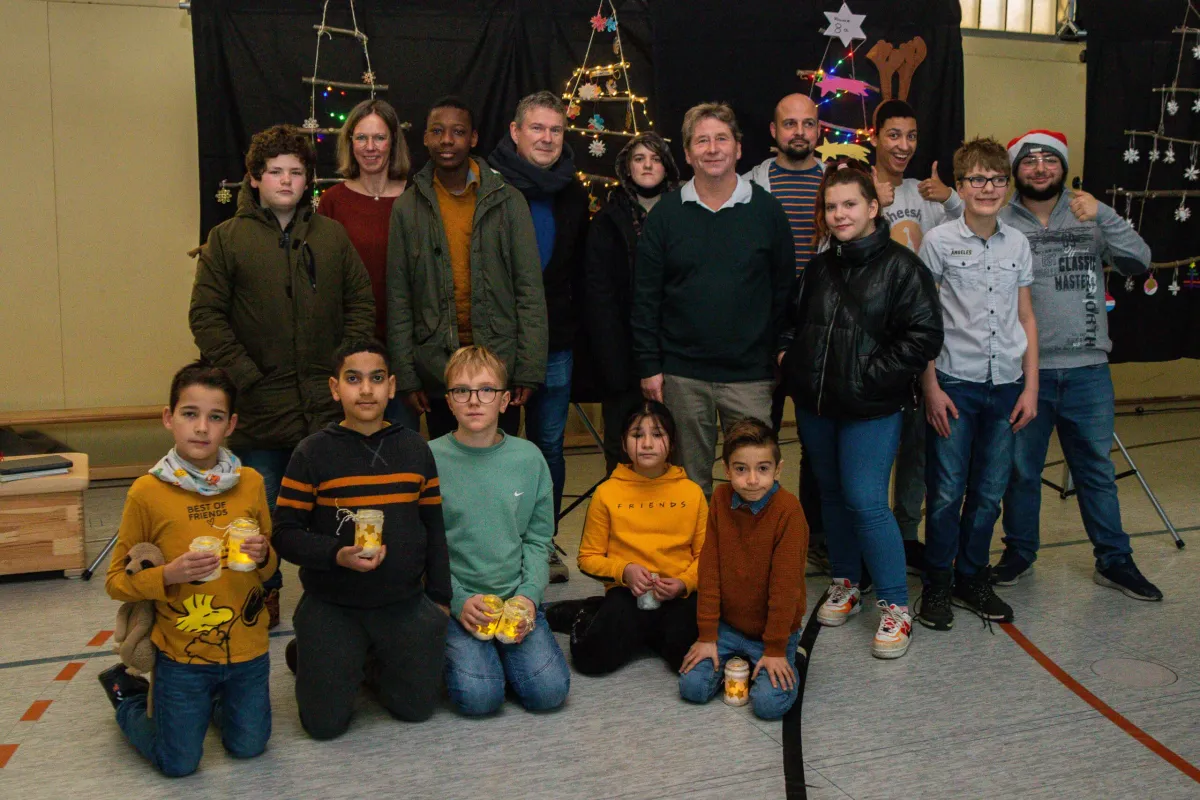 Photo: Hanley Amateur Operatic Society, via www.wirindortmund.de
These older societies carry their histories with a mixture of pride and practicality. Archive photographs line the walls of rehearsal rooms; programmes from productions staged in the 1930s are preserved in folders alongside modern equivalents. For many members, joining a society that one's parents or grandparents also belonged to is an entirely natural act — a form of cultural inheritance as straightforward as any other.
'My grandmother was in this society,' says one soprano in her late thirties, currently preparing for a lead role in a Yorkshire company's production of The Merry Widow. 'My mother was in it. I joined when I was nineteen. It is simply part of what this family does. Part of what this town does.'
What Amateurs Do That Professionals Cannot
The word 'amateur' carries, in some quarters, a faintly dismissive connotation — an implication of the approximate, the enthusiastic but technically deficient. Applied to Britain's operatic societies, this implication is not merely unfair but demonstrably wrong. Many amateur productions achieve standards of musical and theatrical accomplishment that would not disgrace a professional company. More importantly, however, the amateur operatic society does something that no professional opera company, however excellent, can replicate: it embeds the performance of great music in the fabric of a specific community.
When a professional opera company visits a town, it brings its own world with it — its cast, its sets, its production values — and departs when the engagement ends. The amateur society, by contrast, is composed of the town's own residents. The tenor who sings Alfredo in La Traviata is the same person who serves on the parish council and coaches the under-twelves football team. The contralto who anchors the chorus works at the local school. Their performance, however polished or however rough, is an act of self-expression by the community itself — and audiences respond to this with a warmth and engagement that is qualitatively different from the reception accorded to visiting professionals.
This is not a counsel of mediocrity. The best amateur companies set themselves high standards and work hard to meet them. But the standard is not, ultimately, the point. The point is the act of collective creation, and the relationship between that act and the community in which it occurs.
The Case for Continuation
In an age when an individual can access, via a smartphone, recordings of the world's finest opera companies performing the complete standard repertoire, the question of why anyone would drive to a church hall on a Tuesday evening to rehearse The Pirates of Penzance with forty-two of their neighbours deserves a serious answer.
The answer, in essence, is that recorded music — however magnificent — cannot do what live, participatory music-making does. It cannot create the specific social bonds that form between people who have struggled together through a difficult ensemble passage and finally achieved something approaching unity. It cannot produce the particular quality of attention that an audience brings to a performance given by people they know. It cannot generate the collective pride that a community feels when its own members have created something beautiful.
These are not trivial benefits. They are, in fact, among the most significant contributions that any cultural institution can make to the health of a society. Amateur operatic societies have been making them, quietly and without fanfare, for the better part of a century and a half.
Challenges and Resilience
The movement is not without its difficulties. Recruiting younger members is a persistent challenge; the time commitment required by a full operatic production is considerable, and the competing demands on the leisure hours of people in their twenties and thirties are formidable. The costs of staging a production — hiring a theatre, engaging a musical director and accompanist, commissioning or hiring costumes and sets — have risen substantially, while public subsidy for amateur arts remains limited.
And yet the societies endure. New members arrive; productions are staged; audiences fill the seats. The tradition continues because the need it answers — for communal creativity, for live performance, for the particular joy of singing together in a large room — is not a need that any technology has yet succeeded in making obsolete.
In market towns and city suburbs, in village halls and municipal theatres, the rehearsals go on. The greasepaint is applied. The curtain rises. Britain's amateur operatic societies, unsponsored and largely unsung, continue to do what they have always done: bring opera to the people who made it their own.