Against the Grain of Time: Britain's Music Archivists and the War on Decay
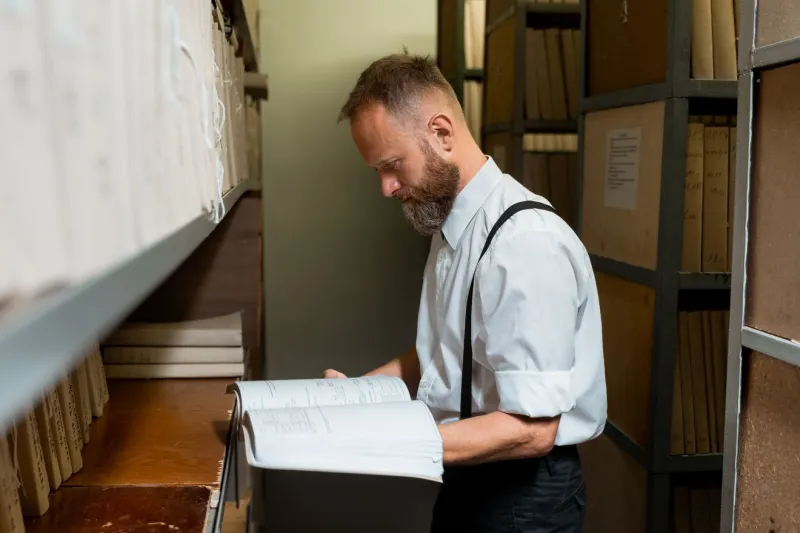
There is a particular quality of stillness in the rooms where Britain's musical past is kept. Temperature-controlled, dimly lit, and meticulously ordered, these spaces feel less like offices and more like antechambers to history itself. Yet the professionals who occupy them are anything but passive. They are engaged in a continuous, often desperate campaign against the forces that would reduce handwritten orchestral parts, wax cylinder recordings, and composers' private letters to dust and static.
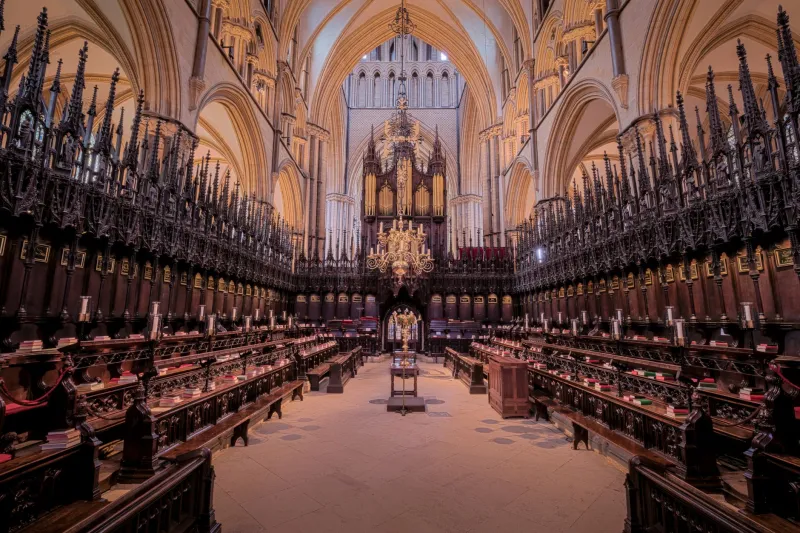
The scale of what Britain holds is extraordinary. From the British Library's music collections to the archives of cathedral libraries, conservatoires, and county record offices, the nation possesses one of the most significant repositories of musical documentation in the world. The challenge is not merely one of storage. It is one of survival.
The Fragility of the Record
Paper, as any conservator will explain, is a profoundly unstable material. Victorian manuscript paper, used extensively by composers from Elgar to Parry, contains high levels of wood pulp and acidic compounds that cause the fibres to yellow, become brittle, and eventually disintegrate. Scores that appeared robust a century ago are now handled with the same delicacy accorded to archaeological fragments.
Magnetic tape presents an equally sobering set of problems. A significant portion of Britain's mid-twentieth-century broadcast recordings, including live performances by conductors and soloists now regarded as national treasures, were captured on acetate and polyester tape that is susceptible to a condition archivists call 'sticky shed syndrome'—a deterioration of the binder that holds the magnetic particles in place. When played, such tapes shed their coating onto the recording heads of playback machines, destroying both the equipment and the recording simultaneously.
Conservators working with such materials must first bake the tapes in carefully calibrated ovens, temporarily reversing the chemical deterioration long enough to transfer the audio to digital formats. It is painstaking, expensive work, and the window of opportunity is narrow. Estimates suggest that a considerable proportion of Britain's mid-century recorded heritage could become unplayable within the next two decades if action is not taken.
The Detective's Art
Preservation is only one dimension of the archivist's role. Equally demanding is the work of authentication and cataloguing—the intellectual detective work that transforms an unmarked bundle of manuscripts into a coherent piece of musical history.
Consider the complexities involved in cataloguing a composer's working papers. A single symphony may generate dozens of drafts, each bearing annotations, crossings-out, and marginal sketches that illuminate the creative process. Identifying which hand made which correction, and at what stage of composition, requires a working knowledge of musical notation, manuscript studies, and often the broader biographical context of the composer's life. A letter from a publisher, inserted between two leaves of a score, may fundamentally alter the dating of a work and, consequently, its place in the compositional canon.
The British Library's music archivist teams regularly consult with musicologists at universities across the country, cross-referencing handwriting samples and paper watermarks with published scholarship. In some cases, the detective work extends to forensic analysis—ultraviolet light revealing erased passages, or chemical testing of inks to establish approximate dates of composition.
The Digital Dilemma
Digitisation is frequently presented as the solution to the preservation crisis, and it is certainly a vital tool. High-resolution scans of fragile manuscripts allow researchers worldwide to consult materials that could not withstand repeated physical handling. Online portals maintained by institutions such as the Royal College of Music and the Bodleian Libraries have made accessible, for the first time, collections that previously required a journey to London or Oxford.
Yet archivists are cautious about treating digitisation as a panacea. Digital formats are not inherently permanent. File formats become obsolete, storage media fail, and the institutional memory required to maintain digital collections is itself vulnerable to budget cuts and staff turnover. There is also the question of what digitisation cannot capture: the texture of a page, the faint impression left by a pen pressed hard in a moment of creative urgency, the marginalia added in pencil so lightly that only direct examination reveals them.
Many archive professionals speak of a two-track imperative: to digitise as much as possible, as quickly as resources allow, while simultaneously ensuring that the physical originals are preserved with equal rigour. These are not competing priorities but complementary ones, and both demand sustained funding.
A Crisis of Resources
That funding is, by almost universal acknowledgement, inadequate. Local authority archives have faced particularly severe retrenchment since the austerity programmes of the 2010s, and many music collections held by county councils or civic institutions have seen their professional staffing reduced to a minimum. Volunteer programmes, admirable as they are, cannot substitute for the specialist expertise that proper conservation demands.
The Heritage Lottery Fund, now operating as The National Lottery Heritage Fund, has provided vital support to a number of digitisation and conservation projects. Yet competition for grants is fierce, and the application process places considerable administrative burdens on institutions already stretched thin. Smaller collections—the archive of a regional choral society, the manuscript holdings of a provincial cathedral—may lack the capacity to mount competitive bids, even when their holdings are of genuine national significance.
The Human Dimension
Behind every catalogued score and every stabilised recording is a human being who chose, often against the logic of financial reward, to dedicate their professional life to the preservation of other people's creativity. Many archivists speak of their work in terms that are almost devotional: a sense of responsibility to composers who trusted their manuscripts to posterity, and to future generations who will have cause to be grateful—or to lament—depending on what survives.
There is also, they acknowledge, an element of mourning. Every archivist can speak of items that arrived too late, of recordings too degraded to recover, of letters dissolved beyond legibility by water damage. These are not abstract losses. They are permanent silences in the record of British musical life.
The work continues nonetheless. In temperature-controlled rooms across the country, in cathedral libraries and university basements, in the back offices of institutions that receive far less attention than the concert halls they serve, the custodians of Britain's musical memory persist in their quiet, essential labour. It is work that demands recognition, sustained support, and a collective acknowledgement that the heritage they protect belongs not to institutions, but to the nation entire.