Souls in Ink: The Private Writings of Britain's Greatest Composers
Souls in Ink: The Private Writings of Britain's Greatest Composers
When we speak of a composer's legacy, we instinctively turn to the music — the symphonies, the song cycles, the grand operatic structures that have outlasted their creators by centuries. Yet for those willing to look beyond the stave, an equally remarkable inheritance awaits. Britain's greatest composers were, in many cases, writers of uncommon depth and sensitivity. Their letters, diaries, and private journals constitute a parallel literature: one that illuminates not only the mechanics of artistic creation, but the aching human experience behind it.
To read these documents is to encounter the composer as a complete person — uncertain, passionate, frequently exhausted, and always searching. They are, in the truest sense, literary artefacts worthy of their own celebration.
Elgar's Melancholy Pages
Edward Elgar left behind one of the most substantial bodies of personal correspondence in British musical history. Held largely within the collections of the Elgar Birthplace Museum in Broadheath, Worcestershire, and the British Library, his letters span decades and reveal a man of profound contradictions. The composer of Enigma Variations and the Cello Concerto — works of imperial confidence and autumnal sorrow in equal measure — was privately riven by self-doubt.
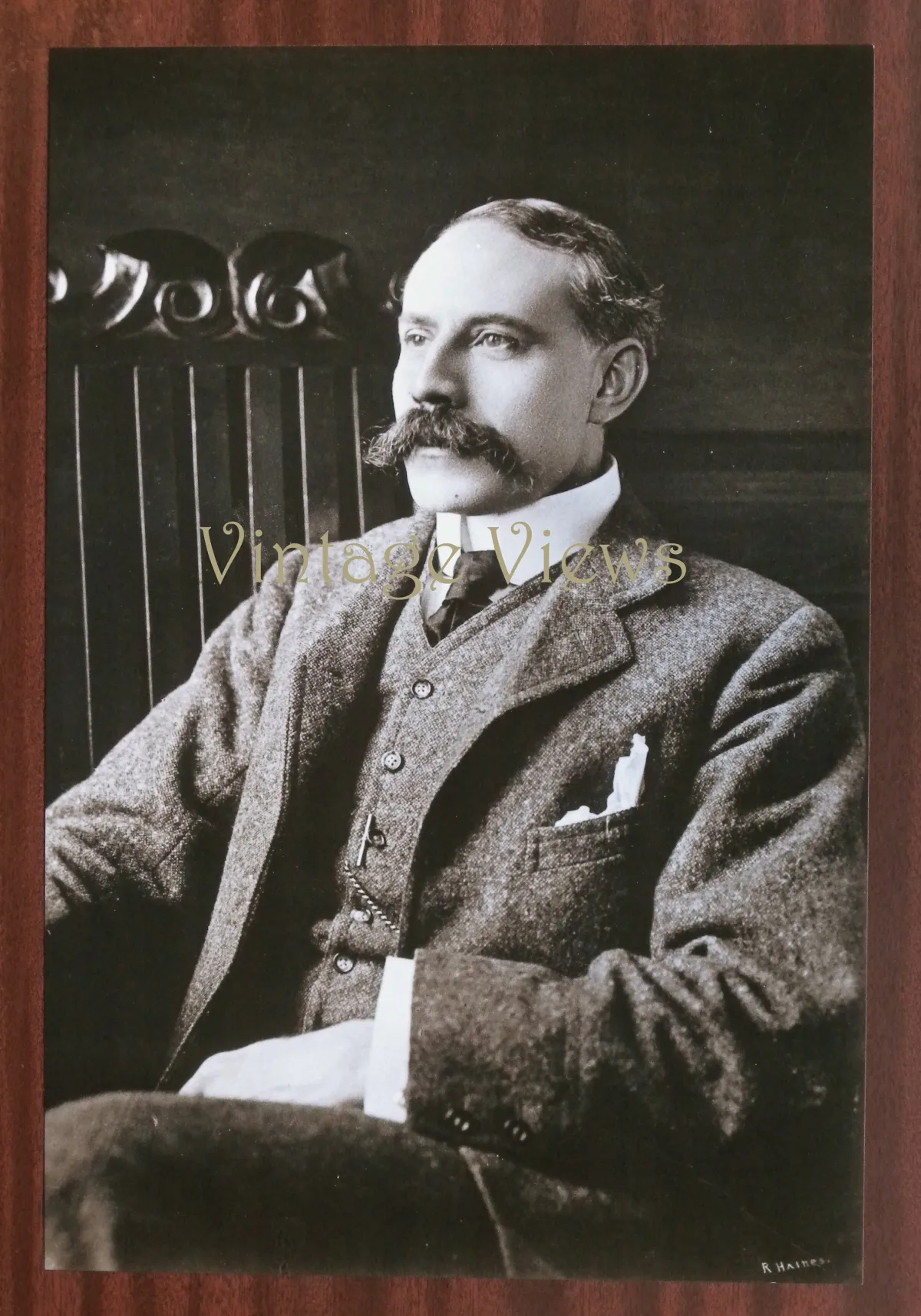 Photo: Edward Elgar, via i.etsystatic.com
Writing to his close friend and publisher Augustus Jaeger in 1900, Elgar confided: "I am not a great composer — I know that — but I am a genuine one." The sentence carries the weight of a man perpetually measuring himself against the continental giants he revered. His letters to Jaeger, affectionately nicknamed "Nimrod" — the very figure immortalised in the Enigma — read as one of the great epistolary friendships in British cultural life. They are funny, self-lacerating, tender, and at times almost unbearably melancholic.
Elgar's later correspondence, written during the long creative silence that followed his wife Alice's death in 1920, is particularly striking. The letters grow sparse and desolate, mirroring the unfinished Third Symphony that haunted his final years. As literary documents, they rank with the finest examples of the form.
Britten's Candid Interior
If Elgar's letters speak of a man in permanent dialogue with his own inadequacy, Benjamin Britten's diaries reveal something altogether sharper and more unsettling. Kept with remarkable regularity from his teenage years, Britten's journals — many now held at the Britten-Pears Arts archive in Aldeburgh — chart the development of one of the twentieth century's most singular musical minds with an almost forensic candour.
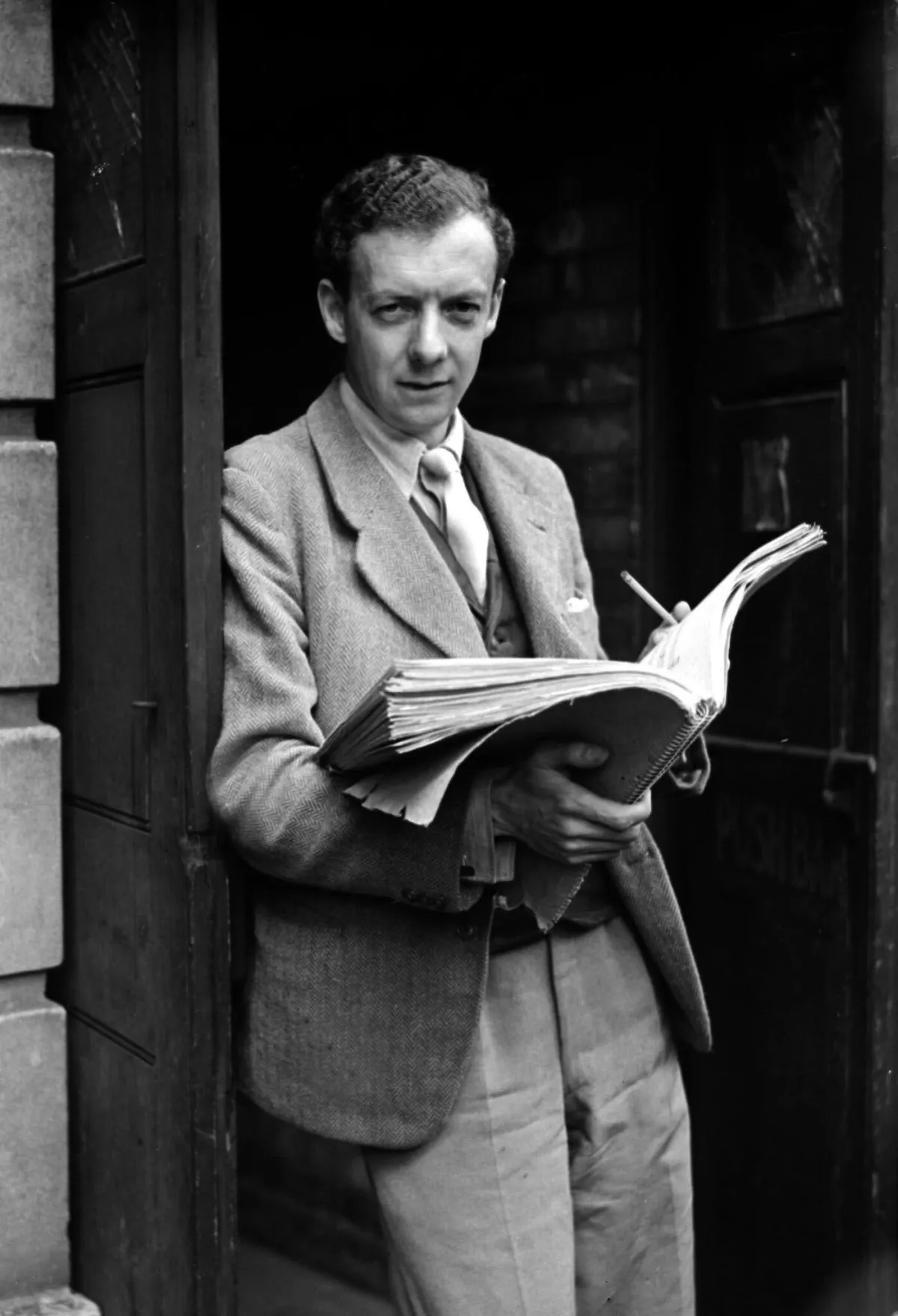 Photo: Benjamin Britten, via static01.nyt.com
The young Britten is opinionated, frequently harsh in his judgements of other musicians, and deeply conflicted about his own emotional life. His observations on performances he attended, composers he admired or dismissed, and the slow emergence of his operatic ambitions make for compulsive reading. The entries surrounding the composition of Peter Grimes in the mid-1940s are particularly valuable: here one can trace, almost day by day, the transformation of George Crabbe's verse into one of the defining works of British opera.
Britten's letters to Peter Pears, his lifelong partner and creative collaborator, form another strand of this rich written legacy. They are love letters in the most classical sense — devoted, at times ecstatic, always acutely alive to the world of sound and sensation they shared. Read alongside the music, they cast everything in a different light.
Vaughan Williams and the Written Landscape
Ralph Vaughan Williams was not a natural diarist, but his essays and letters more than compensate. His prose style — direct, unpretentious, occasionally combative — mirrors the democratic spirit of his musical output. His celebrated lectures and published writings, gathered in collections such as National Music and Other Essays, reveal a composer who thought deeply about the relationship between artistic tradition and living culture.
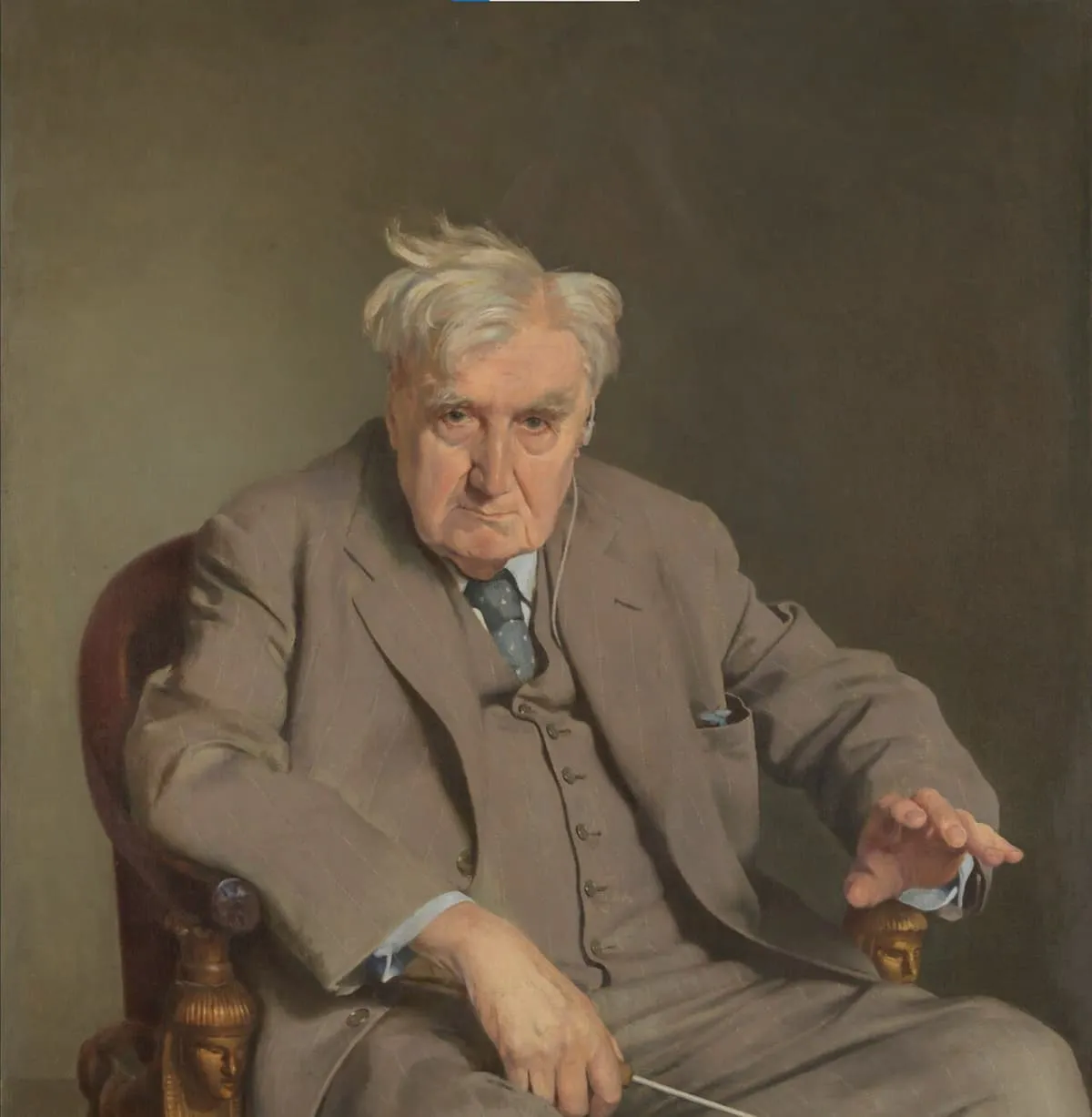 Photo: Ralph Vaughan Williams, via interlude-cdn-blob-prod.azureedge.net
His correspondence with fellow composer Gustav Holst, conducted over nearly forty years, is among the most remarkable exchanges in British musical history. The two men read each other's works with unflinching honesty, offering criticism that was as generative as it was frank. "You know you are the one person I can always trust to tell me when I go wrong," Vaughan Williams wrote to Holst in one particularly revealing letter. The friendship, and the written record it produced, constitutes a masterclass in creative fellowship.
The Overlooked Tradition
Elgar, Britten, and Vaughan Williams represent only the most prominent examples of a far broader tradition. Henry Purcell's few surviving letters, though fragmentary, offer tantalising glimpses of life in Restoration London's musical world. William Walton's correspondence with Constant Lambert crackles with wit and irreverence. The diaries of Ethel Smyth — composer, suffragette, and formidable personality — are among the most vivid cultural memoirs of the early twentieth century, and deserve far wider readership than they currently enjoy.
Smyth in particular demonstrates how the written word and the musical voice can be equally forceful expressions of a single artistic temperament. Her memoir Impressions That Remained is a work of genuine literary distinction, and its neglect outside specialist circles represents a quiet cultural injustice.
A Literature Awaiting Discovery
The challenge, and the opportunity, is one of access and framing. Many of these documents remain in archives, consulted primarily by academic researchers rather than the general reading public. Some have been published in scholarly editions that, whilst invaluable, do not always present the material with the sense of literary occasion it merits.
There is a compelling case for approaching Britain's composers' personal writings as we approach the letters of Keats or the journals of Dorothy Wordsworth — as works of the imagination in their own right, not merely as biographical supplements to the music. The emotional and intellectual range on display is extraordinary: grief, ambition, friendship, creative exhilaration, and the particular loneliness of the artist working at the limits of their ability.
For institutions such as the Britten-Pears Arts centre, the Elgar Birthplace Museum, and the British Library, there may be a growing role in presenting these materials to broader audiences — through curated exhibitions, accessible published anthologies, and events that read these letters aloud in the manner of the great epistolary traditions they recall.
The Score Behind the Score
To read a composer's private writing is, ultimately, to hear a different kind of music. The cadences of Elgar's prose carry the same autumnal weight as his late orchestral works. Britten's diary entries move with the same controlled intensity that marks his finest vocal writing. Vaughan Williams writes as he composed — with clarity, earthiness, and an abiding sense of purpose.
These documents remind us that the creative life is always larger than any single art form. Britain's composers were not merely musicians; they were observers, correspondents, diarists, and thinkers. Their written words are the ink that echoed — a second voice, quieter than the orchestra, but no less worthy of our attention.
To rediscover them is to deepen our understanding not only of the music they accompanied, but of the rich and complex cultural world from which that music sprang.