Performance Under the Stars: Britain's Ancient Passion for Theatre by Night
Photo: Ian T. McFarland from Los Angeles, USA, CC BY-SA 2.0, via Wikimedia Commons
Performance Under the Stars: Britain's Ancient Passion for Theatre by Night
There is something in the British temperament that has always responded with unusual intensity to the combination of darkness and performance. Perhaps it is the particular quality of a northern night sky, or the atmospheric weight of ruins and ancient landscapes that surround so many of these islands' most celebrated open spaces. Whatever the origin, Britain possesses a theatrical tradition of remarkable antiquity and distinctive character: drama conceived not for the lit interior of a purpose-built playhouse, but for the open air after sundown, where flame, shadow and the sounds of the natural world become collaborators in the dramatic enterprise.
The Medieval Inheritance
The roots of this tradition lie deep in the religious drama of the Middle Ages. The mystery and miracle plays performed across England from the twelfth century onwards were not exclusively nocturnal affairs, but darkness played a significant role in their most ambitious staging. At York, Wakefield and Chester, the great cycles of biblical drama unfolded over extended periods, and torchlight was an essential theatrical resource — illuminating the face of the actor playing Christ, casting dramatic shadows across the wagon stages that processed through narrow streets, and lending to the whole spectacle a quality of sacred unreality that daylight could not have achieved.
The open-air performances staged in churchyards and market squares were already exploiting the dramatic possibilities of the liminal hour — that threshold between the familiar world of day and the more uncertain territories of night. Darkness, in the theological imagination of medieval England, was the domain of both spiritual peril and divine mystery, and theatre staged at its edge carried a weight of meaning that no indoor performance could replicate.
Masques, Moonlight and the Aristocratic Garden
The Tudor and Stuart masque transferred these instincts into the more rarefied atmosphere of the court and the great house, where darkness became a setting for elaborate allegorical spectacle. The Jacobean masques devised by Ben Jonson and staged with machinery and scenery designed by Inigo Jones were predominantly indoor entertainments, but the tradition of the outdoor masque — performed on a summer evening in a formal garden, with the house itself as backdrop — ran alongside them with considerable vigour.
By the Georgian period, the nocturnal garden theatrical had become a recognised and much-anticipated feature of aristocratic social life. At houses such as Stowe in Buckinghamshire and Stourhead in Wiltshire, the carefully designed landscape gardens — with their temples, grottos and artificial lakes — provided ready-made theatrical settings of extraordinary beauty. Performances staged on warm evenings, with lanterns strung between trees and the surface of ornamental water catching the reflected light, created an atmosphere that no indoor theatre could rival.
These were not merely amateur diversions. The most ambitious garden theatricals engaged professional performers and composers, and the programmes devised for them drew on the full resources of the contemporary operatic and dramatic repertoire. Handel's music was frequently performed in such settings, its grandeur finding a natural home beneath an open sky.
The Ruined Abbey and the Romantic Imagination
The Romantic movement of the late eighteenth and early nineteenth centuries brought a new intensity to Britain's relationship with nocturnal performance. The fashion for Gothic sensibility, with its appetite for ruins, moonlight and atmospheric melancholy, found theatrical expression in performances staged at some of England's most evocative ancient sites. Ruined abbeys — Fountains in North Yorkshire, Tintern in the Wye Valley, Rievaulx in the North York Moors — became settings for musical and dramatic events that exploited their grandeur with deliberate theatrical calculation.
At Fountains Abbey, performances of sacred choral music staged by torchlight in the roofless nave created an experience that contemporary accounts describe as almost overwhelming in its emotional power. The combination of ancient stonework, open sky, and music written for enclosed ecclesiastical spaces produced a dissonance that was entirely intentional — a reminder that the beauty of the past existed in productive tension with the present, and that art performed in the presence of ruins carries a particular charge of mortality and transcendence.
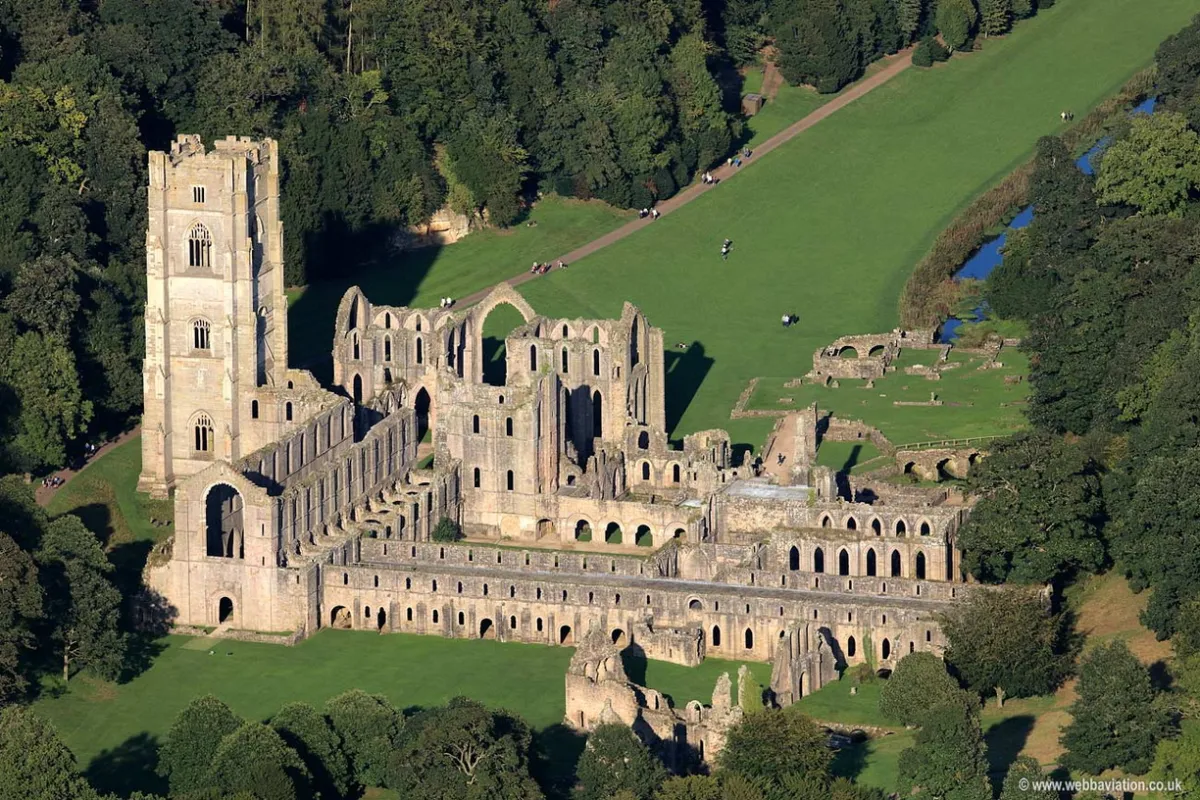 Photo: Fountains Abbey, via www.webbaviation.co.uk
Victorian Pageantry and the Open-Air Revival
The Victorian era brought its own distinctive contribution to the tradition in the form of the historical pageant — a theatrical form that flourished in Britain from the 1880s onwards and found its most celebrated practitioner in the producer Louis Napoleon Parker. Parker's pageants, staged at Sherborne, Warwick and elsewhere, were enormous community undertakings involving hundreds of participants and unfolding over several evenings in outdoor settings of historical significance.
The nocturnal episodes of these pageants were among their most celebrated features. Scenes depicting the English Civil War, the dissolution of the monasteries, or the progress of a medieval monarch through a market town acquired a quality of genuine historical haunting when performed after dark, with participants in period costume emerging from shadows and receding into them again as the narrative demanded. The pageant tradition represented a democratic expansion of the nocturnal theatrical impulse — no longer the preserve of the aristocratic estate, but a communal art form available to the towns and cities of provincial England.
The Enduring Enchantment
Britain's love affair with nocturnal performance has not diminished in the contemporary era. Open-air theatre festivals, from the celebrated Minack Theatre in Cornwall — cut into the cliff face above the sea — to the summer Shakespeare productions staged in the grounds of country houses across England, continue to draw audiences who understand instinctively that there is something a theatre building cannot provide. The darkening sky, the cooling air, the sounds of birds settling for the night, the first appearance of stars above an unroofed stage — these are not inconveniences to be managed but gifts to be received, elements of a theatrical experience that connects its participants to a tradition as old as the nation's dramatic imagination.
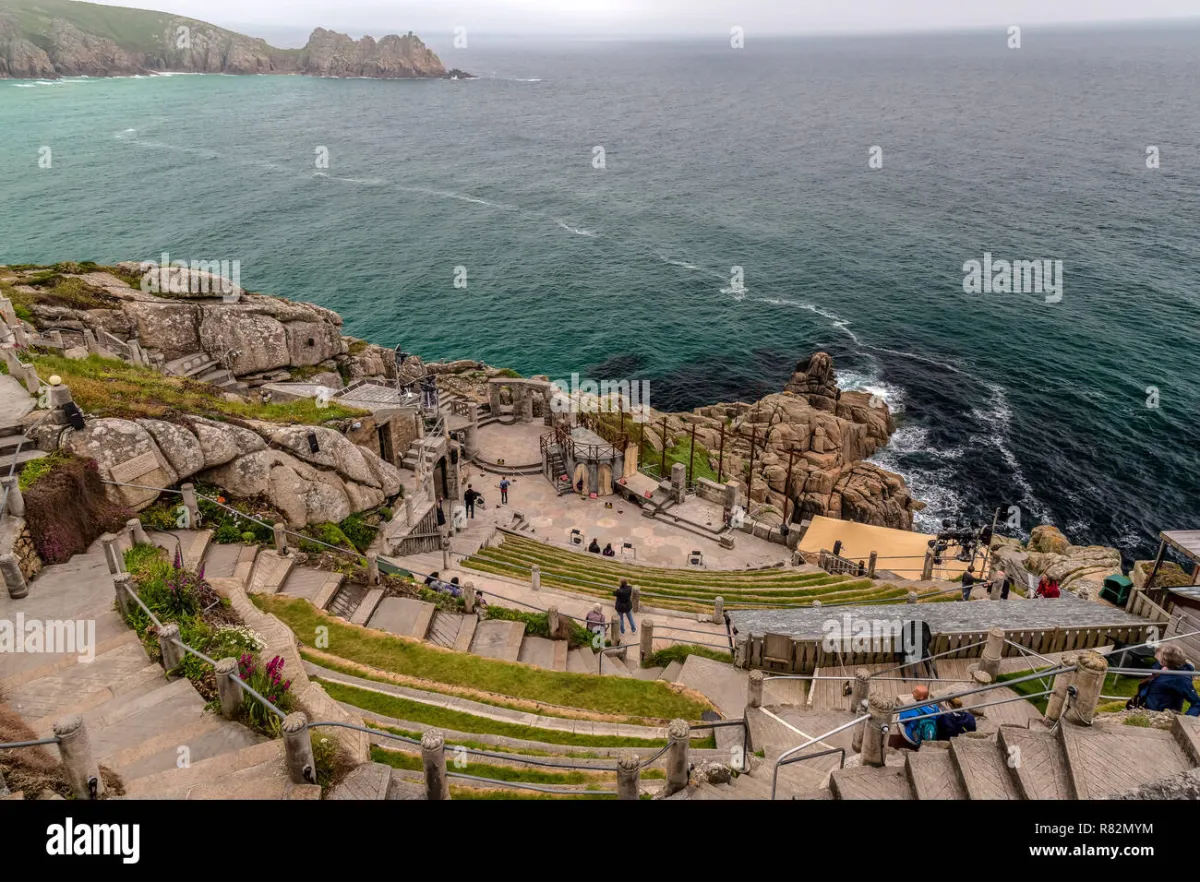 Photo: Minack Theatre, via c8.alamy.com
To watch a performance beneath an open sky at nightfall is to participate in something that medieval churchyard audiences, Georgian garden guests and Victorian pageant spectators would all have recognised: the peculiarly British conviction that drama is most fully itself when it reaches beyond walls and ceilings to engage with the wider world of nature, time and the transforming dark.