Needles and Notes: The Women Who Preserved Britain's Musical World in Silk and Thread
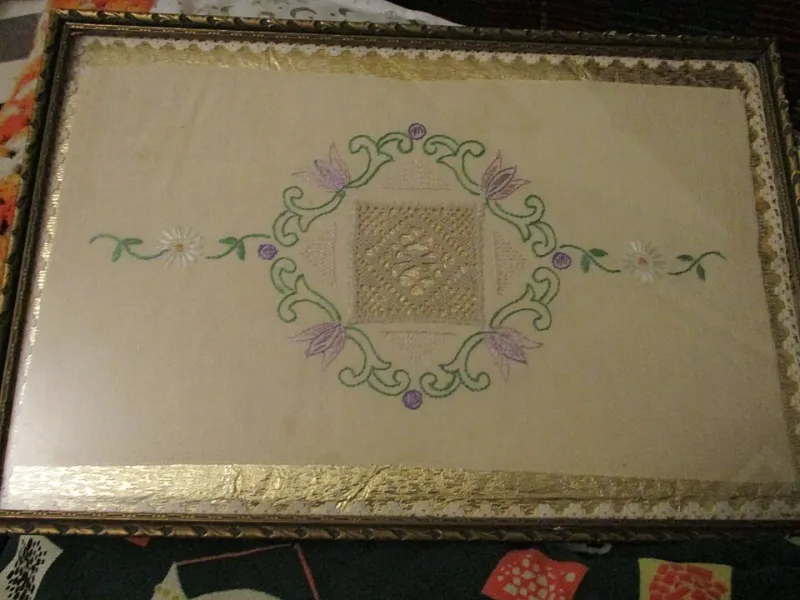
Photo: Unknown 19th century needelwork artist, photo by J T Demitz 2018, Public domain, via Wikimedia Commons
Needles and Notes: The Women Who Preserved Britain's Musical World in Silk and Thread
In the long centuries before photography, before the gramophone, before any mechanical means of capturing the fleeting experience of musical performance, it was often the needlewoman who served as cultural archivist. Across the great houses, parish churches and domestic interiors of Britain, skilled embroiderers — most of them women whose names history has largely declined to preserve — created works of textile art that depicted the musical world with a fidelity and affection that speaks across the centuries. Lutes and virginals, singing figures and concert scenes, composer portraits and allegorical representations of Music herself: all found their way into canvas and silk, stitched by hands whose technical mastery was the equal of any art form their era produced.
This body of work constitutes one of the most original and least examined archives of musical culture in Britain. To engage with it seriously is to recover not only a visual record of how music was practised and understood across the centuries, but also the largely unacknowledged contribution of women to the preservation and transmission of cultural knowledge.
The Earliest Threads
The association between embroidery and musical imagery in Britain can be traced at least to the medieval period, when ecclesiastical needlework of extraordinary sophistication — the tradition known as Opus Anglicanum, or English Work, which was celebrated across Europe for its quality — incorporated musical angels and heavenly choirs into vestments, altar frontals and liturgical furnishings. The angel musicians of English medieval embroidery, playing rebecs, shawms, portatives and psalters, represent the earliest systematic visual documentation of musical instruments in British art, and their makers — almost certainly professional needleworkers, many of them women working in London workshops — were creating images of considerable iconographic precision.
Surviving examples held in the collections of the Victoria and Albert Museum in London and the Burrell Collection in Glasgow demonstrate the degree to which the embroiderer's art could rival illuminated manuscript in its capacity to convey musical information. The instruments depicted are not generic or symbolic but specific and recognisable, suggesting that the women who stitched them possessed genuine musical knowledge or worked closely with those who did.
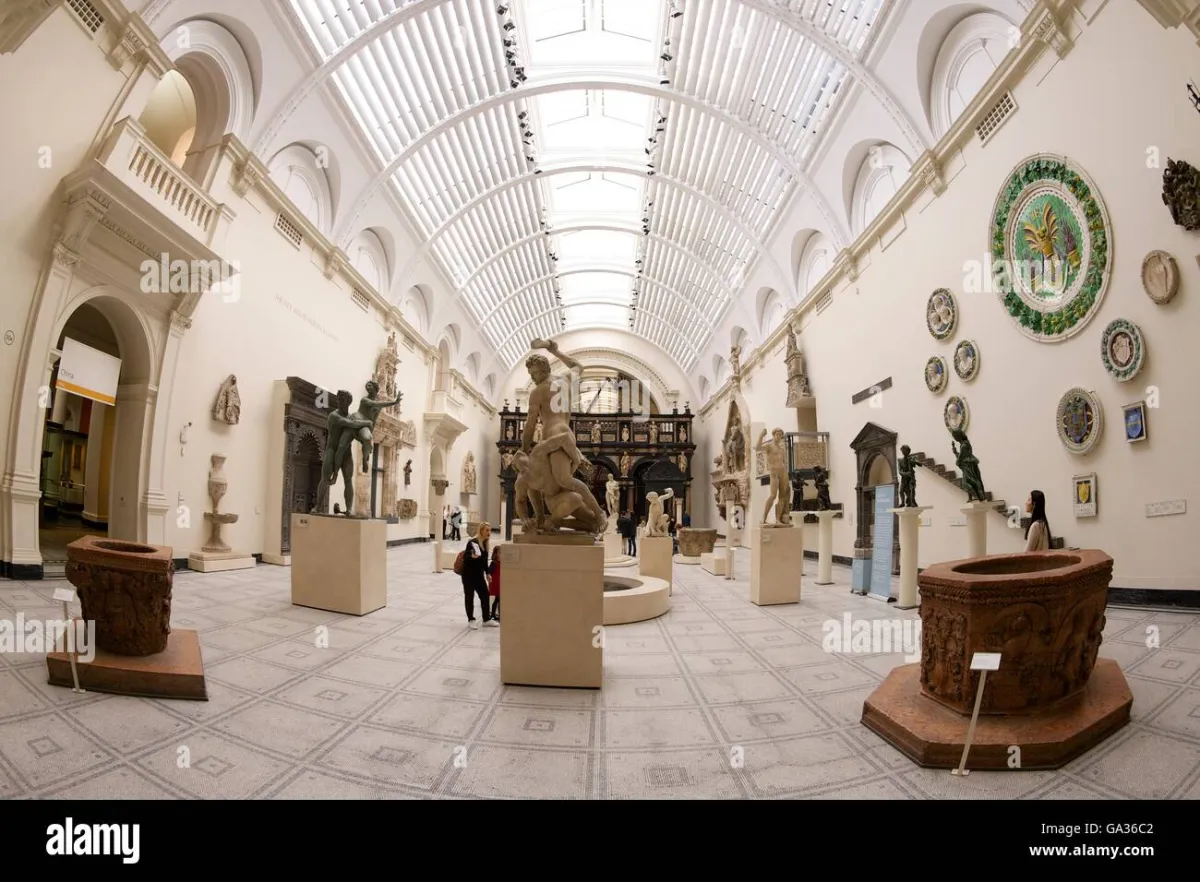 Photo: Victoria and Albert Museum, via c8.alamy.com
Tudor Domesticity and the Musical Interior
The Tudor period saw the tradition of musical needlework move from the ecclesiastical into the domestic sphere, where it flourished with particular vigour. The great houses of sixteenth-century England were filled with embroidered furnishings — bed hangings, cushion covers, table carpets and fire screens — that depicted scenes of courtly life in which music played a central role. Virginals and lutes appear with remarkable frequency in these domestic textiles, reflecting the central place that musical accomplishment occupied in the social life of the Tudor elite.
Mary Queen of Scots, whose embroidery skills were celebrated by her contemporaries, is known to have worked pieces that incorporated musical imagery during her long years of captivity in England. Several works attributed to her — or to the collaborative enterprise she shared with her lady-in-waiting Bess of Hardwick — survive in the collections of Hardwick Hall in Derbyshire, one of the great repositories of historic embroidery in Britain. These pieces speak to the way in which needlework served imprisoned and constrained women as both creative outlet and cultural statement: a means of asserting intellectual and artistic identity when other forms of expression were denied.
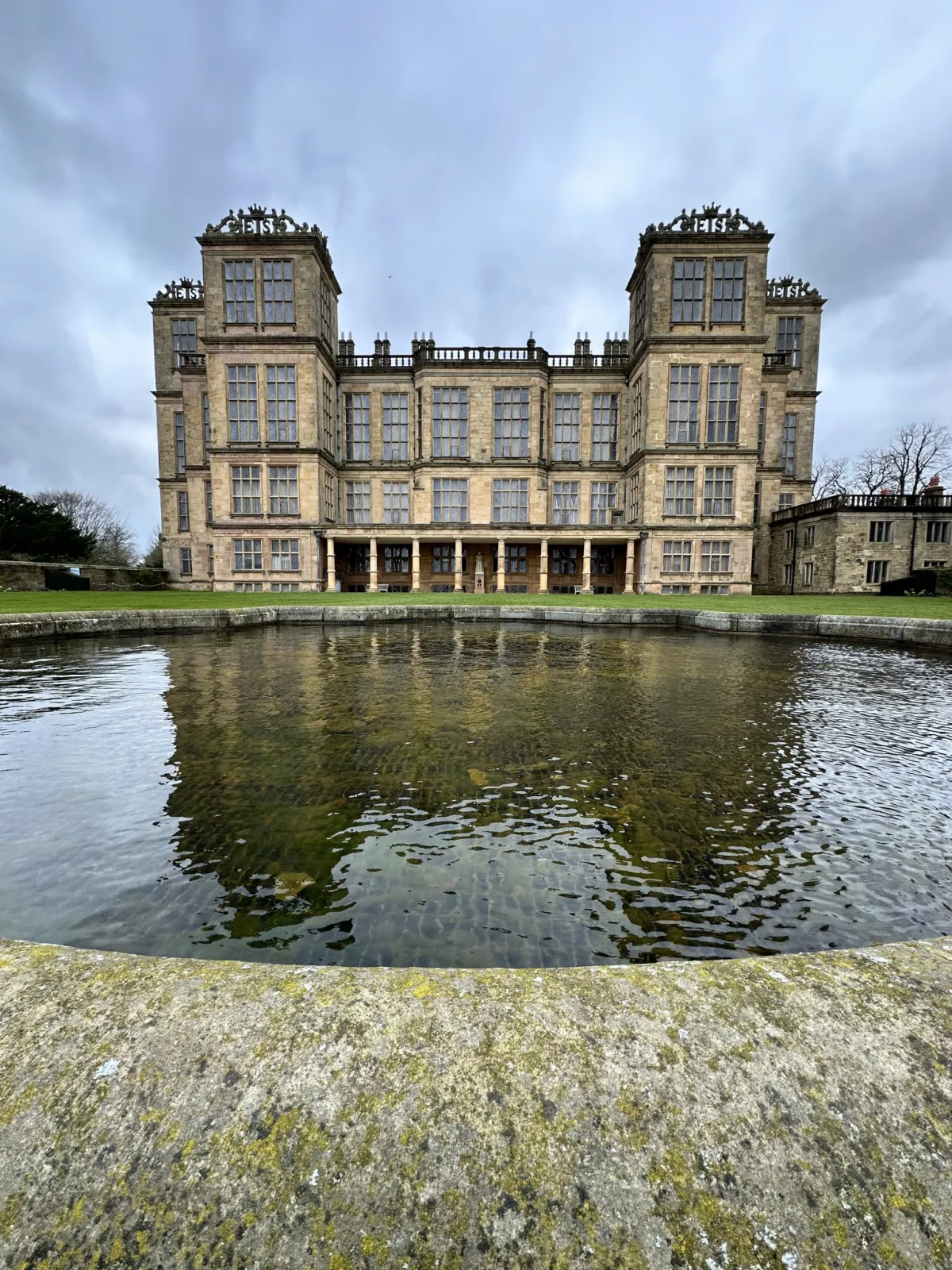 Photo: Hardwick Hall, via thetudortravelguide.com
The Georgian Sampler as Musical Record
By the Georgian period, the sampler had become the primary vehicle through which girls and young women acquired and demonstrated their needlework skills, and musical imagery featured prominently in the most ambitious examples. Schoolroom samplers depicting singing figures, keyboard instruments and sheet music notation survive in considerable numbers in regional museum collections across England, Scotland and Wales, and they constitute a fascinating record of the musical aspirations and educational priorities of the middling classes.
The collection held by the Fitzwilliam Museum in Cambridge includes several exceptional examples in which the embroiderer has depicted not merely generic musical scenes but identifiable instruments and, in some cases, recognisable notation — fragments of hymn tunes or popular airs stitched with sufficient precision to be decipherable by a trained musician. The skill required to translate musical notation into the grammar of cross-stitch and tent stitch was considerable, and the women who achieved it were engaging in a form of cultural translation that deserves recognition as an intellectual as well as a manual accomplishment.
Country House Commissions and the Grand Scale
At the upper end of the social scale, needlework depicting musical subjects reached a scale and ambition that places it firmly within the tradition of decorative art patronage. Several of Britain's great country houses retain embroidered panels and hangings that were almost certainly commissioned works, designed by professional artists and executed by skilled needlewomen — sometimes the mistress of the house and her companions, sometimes professional embroiderers engaged for the purpose.
At Oxburgh Hall in Norfolk, a National Trust property, embroidered panels of exceptional quality depict allegorical figures associated with the arts, including Music, in a manner that reflects the sophisticated visual culture of the Elizabethan and Jacobean periods. At Hardwick Hall, the embroidered furnishings that survive in situ provide an almost unparalleled opportunity to understand how musical imagery functioned within the decorative programme of a great Elizabethan interior — not as incidental ornament, but as a statement of the cultural values and intellectual aspirations of the household.
 Photo: Oxburgh Hall, via www.lynnnews.co.uk
Recovering the Makers
Perhaps the most significant challenge facing those who seek to engage seriously with this tradition is the near-total anonymity of its practitioners. Unlike the painters and sculptors whose names have been preserved in sale records, exhibition catalogues and critical notices, the women who created Britain's musical needlework are overwhelmingly unknown as individuals. Their works survive; their identities, in almost every case, do not.
This anonymity is not accidental. It reflects the systematic undervaluing of women's creative labour that characterised British cultural life for centuries, and the related tendency to classify embroidery as craft rather than art — a distinction that served to exclude it from the institutional frameworks through which artistic reputation was built and preserved. Recovering these makers, even in the most fragmentary way, requires patient work in household accounts, letters and inventories — the documentary margins of domestic history where women's labour occasionally left its trace.
A Living Tradition
The tradition of musical needlework did not expire with the Victorian era. Contemporary textile artists in Britain continue to engage with musical subjects, and a number of significant recent works — including commissions for concert halls and music institutions — demonstrate the enduring vitality of the connection between thread and tone. These modern works stand in a lineage that reaches back through the Georgian schoolroom and the Tudor great house to the medieval workshop, connecting the present to a past in which the needle was as legitimate an instrument of cultural memory as the pen or the brush.
To view a piece of musical embroidery — whether in the hushed gallery of a national museum or the candlelit interior of a country house — is to encounter a form of cultural testimony that demands both close attention and genuine respect. The women who made these works were not merely decorating interiors; they were preserving, in the most enduring medium available to them, their understanding of what music meant to the world they inhabited.