Market Square Symphonies: When Britain's Villages Became Concert Halls
The Green Cathedral
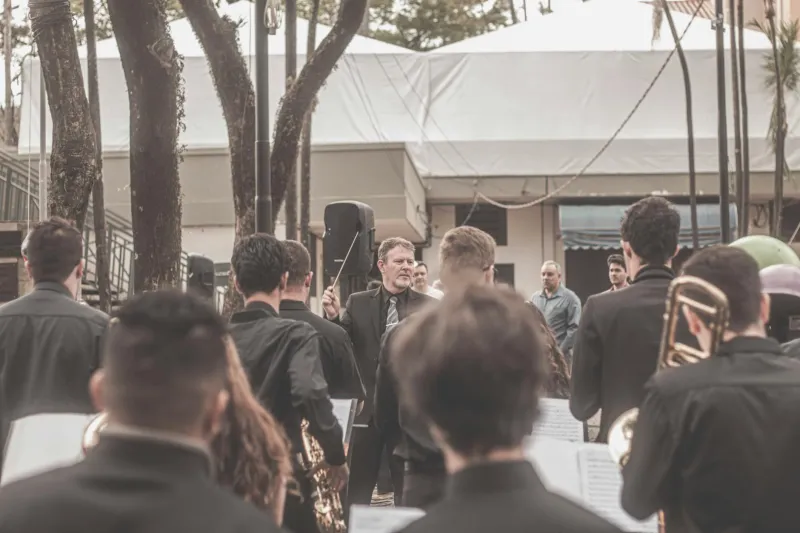
In the summer of 1897, the market square of Ludlow transformed into an unlikely cathedral of music. Under a canvas pavilion hastily erected between the butter cross and the ancient guildhall, the London Symphony Orchestra performed Beethoven's Pastoral Symphony to an audience of farmers, shopkeepers, and gentry who had travelled from across Shropshire. The programme notes, printed on locally-made paper, proclaimed this "a celebration of music for all God's children, regardless of station or circumstance."
This scene, replicated across hundreds of British market towns and village greens throughout the late Victorian and Edwardian eras, represents one of our most remarkable yet forgotten cultural phenomena. The rural music festival movement brought orchestral and choral performances of the highest calibre to communities that might otherwise never have encountered such artistic excellence, creating a grassroots appreciation for classical forms that would endure for generations.
Beyond the Metropolitan Elite
The origins of Britain's rural festival tradition can be traced to the democratic impulses of the mid-nineteenth century, when reformers recognised that cultural enrichment should not remain the exclusive preserve of urban elites. The Great Exhibition of 1851 had demonstrated the public's hunger for edification, and forward-thinking musicians began to envision a network of festivals that would carry this spirit into the countryside.
Dr. Edward Bunnett, a largely forgotten figure today, emerged as the movement's most passionate advocate. A Cambridge-educated musician who had abandoned a promising career in London's concert halls, Bunnett believed that "the soul of Britain resides not in her great cities, but in her market towns and village churches." From his base in Chester, he organised what would become known as the Northern Counties Festival Circuit, a rotating series of events that brought professional orchestras to communities across Lancashire, Yorkshire, and the Lake District.
The logistics were formidable. Instruments had to be transported by rail and horse-drawn cart, temporary stages erected on village greens, and accommodation found for dozens of musicians in communities unaccustomed to such influxes. Yet the enthusiasm of local organisers proved boundless. Parish councils raised funds through subscription lists, local businesses donated materials and labour, and country house owners opened their gardens for overflow audiences.
The Wessex Renaissance
Perhaps the most remarkable of these forgotten festivals flourished in Thomas Hardy's Wessex, where the novelist himself served as patron of the Dorchester Music Society's annual gatherings. From 1889 to 1914, the society transformed the county town into what one contemporary described as "a rustic Salzburg," hosting performances that attracted musicians and audiences from across southern England.
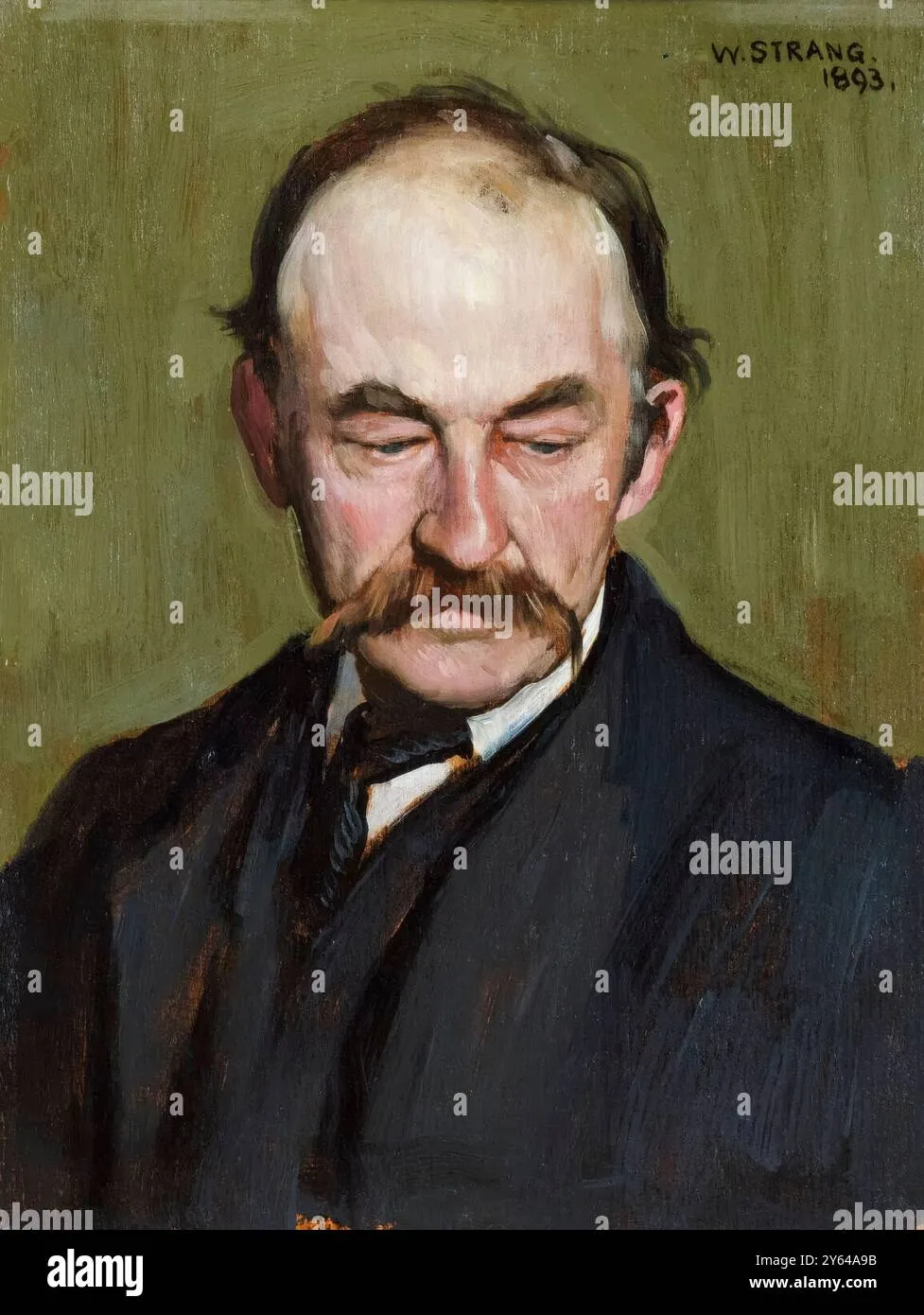 Photo: Thomas Hardy, via c8.alamy.com
The festival's programmes reveal an ambitious scope that would challenge even modern arts organisations. Handel's Messiah was performed with a chorus of 200 voices drawn from church choirs across Dorset, Somerset, and Devon. Chamber music recitals featured visiting artists from the continent, whilst local composers premiered works inspired by the surrounding landscape. Hardy himself contributed programme notes that wove together musical analysis with observations on the relationship between art and rural life.
The festival's impact extended far beyond its annual fortnight. Village choirs, established to participate in the main performances, continued throughout the year, creating a network of musical activity that enriched countless lives. The Dorchester Music Society's lending library, stocked with vocal scores and instrumental parts, served communities across the region, whilst its annual competition for young composers discovered talent that might otherwise have remained hidden.
The Welsh Awakening
Wales developed its own distinctive festival tradition, rooted in the ancient eisteddfod but embracing European classical forms with characteristic Welsh passion. The National Eisteddfod, whilst primarily focused on bardic traditions, increasingly featured orchestral and choral works that blended Celtic themes with continental sophistication.
More remarkable were the smaller gatherings that flourished in the mining valleys and market towns of Wales. The Rhondda Valley Festival, established in 1903, brought together colliery brass bands and visiting string quartets in programmes that celebrated both local pride and universal artistic excellence. Miners who had never ventured beyond their valley heard Brahms and Schumann performed by musicians from London and Vienna, whilst their own musical traditions gained new respect and sophistication.
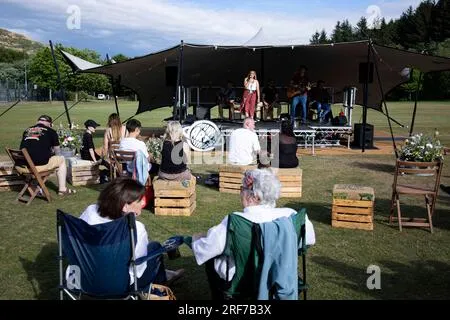 Photo: Rhondda Valley Festival, via l450v.alamy.com
The festival's founder, Dr. Morgan Davies, believed that "music transcends the accidents of birth and circumstance." His vision of cultural democracy resonated throughout Wales, inspiring similar events in Merthyr Tydfil, Carmarthen, and dozens of smaller communities. These festivals created a generation of Welsh musicians who would go on to enrich Britain's musical life, from the chorus singers of Covent Garden to the principals of regional orchestras.
The Great Disruption
The First World War dealt a devastating blow to Britain's rural festival movement. Young men who had sung in village choirs or played in brass bands perished in Flanders fields, whilst the economic disruption of wartime made it impossible to maintain the complex logistics that such events required. Some festivals attempted to resume in the 1920s, but the world had changed irrevocably.
The rise of wireless broadcasting and gramophone recording meant that high-quality musical performances were no longer the exclusive preserve of live events. Rural communities could now access the finest orchestras and soloists from their own sitting rooms, reducing the incentive to organise elaborate outdoor gatherings. The motor car, paradoxically, both expanded and diminished the festival tradition—whilst audiences could now travel greater distances, they were equally likely to journey to established venues rather than support local initiatives.
By the 1930s, most of Britain's rural music festivals had vanished, leaving only fading photographs and programme collections in local archives. The democratic vision that had inspired their creation lived on in the wireless concerts of the BBC and the expanding network of municipal concert halls, but something essential had been lost—the sense of music as a communal celebration rooted in specific places and communities.
Seeds of Revival
Yet perhaps all is not lost. In recent years, a new generation of festival organisers has begun to rediscover the appeal of outdoor musical gatherings, from the Latitude Festival in Suffolk to the classical programme at Glyndebourne's touring productions. These modern events, whilst different in scale and commercial structure, share something of the democratic spirit that animated their Victorian predecessors.
The challenge for contemporary Britain lies in recapturing the sense of local ownership that made the original rural festivals so remarkable. Rather than simply transplanting metropolitan cultural offerings to countryside venues, today's organisers might learn from their historical predecessors' commitment to nurturing local talent whilst maintaining the highest artistic standards.
The market squares and village greens of Britain await their next musical renaissance. In an age of digital isolation and cultural centralisation, the vision of communities coming together to celebrate artistic excellence has never been more relevant or necessary. The forgotten festivals of our past offer both inspiration and instruction for those bold enough to revive this most English of cultural traditions.