The Manuscripts That Silence Kept: Britain's Unfinished Masterworks and the Stories They Carry
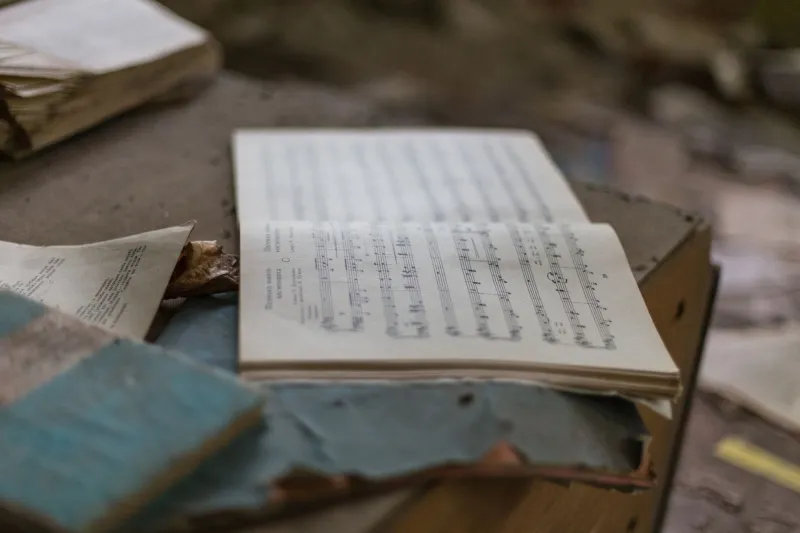
There is a particular kind of sorrow attached to an unfinished manuscript. It differs from the grief of a lost work — something destroyed or never transcribed — because the evidence of intention remains. The paper is there, the notation is there, sometimes the handwriting grows hesitant or trails away mid-phrase, and the reader is left to contemplate what the next bar might have contained. Britain's musical history is populated by such moments of arrested creation, and the stories behind them are as varied and revealing as the fragments themselves.
Some of these incomplete works have achieved a curious fame of their own. Others languish in archival folders, examined only by specialists. Together, they constitute a shadow repertoire — a catalogue of what might have been — that illuminates the creative processes of their composers with an intimacy that finished works rarely afford.
Elgar's Third Symphony: The Most Famous Silence in British Music
No discussion of unfinished British musical manuscripts can proceed far without arriving at Edward Elgar's Third Symphony. Commissioned by the BBC in 1932, the work occupied the final years of his life without ever reaching completion. When Elgar died in 1934, he left behind a substantial body of sketches — some fully orchestrated passages, some mere melodic fragments — that had been heard by a small number of visitors to his home at Marl Bank in Worcester but had never been assembled into a performable whole.
For decades, Elgar's executors honoured what they believed to be his wishes: the sketches were not to be used by another hand. It was not until 1997, when the musicologist and conductor Anthony Payne completed a performing version based on the surviving material, that British audiences heard something approaching what Elgar had envisioned. The premiere was received with a combination of wonder and controversy that has not entirely dissipated since.
Payne's achievement was remarkable, but it also raised questions that remain genuinely unresolved. How much of what audiences hear is Elgar, and how much is Payne's sympathetic but inevitably interpretive reconstruction? Is a completed version of an unfinished work a form of completion, or a form of replacement? These are not merely academic questions; they concern the integrity of artistic intention and the ethics of posthumous intervention.
The sketches themselves, held at the Elgar Birthplace Museum in Broadheath, Worcestershire, are among the most studied documents in British musicology. Scholars continue to debate which passages represent settled decisions and which were provisional, whether certain melodic ideas were intended for the symphony or for other projects, and what the completed work's emotional character might ultimately have been.
Schubert's Shadow Over British Composers
Elgar's situation invites inevitable comparison with Franz Schubert's Unfinished Symphony — a work so thoroughly absorbed into the concert repertoire that its incompleteness has become almost invisible. The British tradition, however, has produced its own variants of this predicament, some no less poignant for being less celebrated.
Hubert Parry, now remembered chiefly for Jerusalem and I Was Glad, left several substantial works in states of partial completion at his death in 1918. His Fifth Symphony, composed in 1912, exists in a version that he himself considered unsatisfactory and withheld from publication; the question of whether it represents a genuinely unfinished work or a completed one that failed to meet his standards is one that his biographers have debated at length. The distinction matters, because it determines whether the work invites completion or simply awaits sympathetic performance.
William Hurlstone, a composer of considerable promise who died in 1906 at the age of thirty, left behind an unfinished piano concerto that has attracted periodic attention from scholars interested in the Edwardian repertoire. The surviving pages suggest a work of real originality, shaped by influences that place it somewhat apart from the dominant currents of its time. That it remains unheard in any complete form is a loss that becomes more apparent with each revival of interest in the period.
The Detective Work of Musicology
Reconstructing or completing an unfinished manuscript is among the most demanding tasks in musicology, requiring equal measures of historical scholarship, analytical rigour, and musical intuition. The process begins with establishing what actually exists — a task that is less straightforward than it might appear.
Composers' sketches are rarely tidy documents. They may contain multiple versions of a single passage, notations in different inks suggesting different stages of composition, marginal annotations that are difficult to interpret, and pages that are numbered inconsistently or not at all. Establishing the order in which material was composed, and distinguishing between settled decisions and exploratory jottings, demands intimate familiarity with a composer's working methods and handwriting.
The British Library holds extensive collections of compositional manuscripts, and its curators have developed sophisticated techniques for analysing paper types, ink compositions, and notational styles to assist in dating and sequencing fragmentary material. Similar work is undertaken at the Royal College of Music's archive and at several university music libraries. The collaboration between archivists and performing musicians in this field has produced some of the most productive partnerships in recent British musical scholarship.
For contemporary composers asked to complete historical fragments, the challenge is simultaneously intellectual and creative. Anthony Payne has spoken candidly about the tension between fidelity to a composer's apparent intentions and the necessity of making decisions that Elgar himself never made. More recently, the composer Matthew Taylor has engaged with incomplete works from the British tradition in ways that acknowledge their fragmentary status rather than attempting to disguise it — a different but equally legitimate approach to the problem.
What Incompleteness Reveals
There is an argument — advanced with some conviction by a number of musicians and scholars — that unfinished works possess a particular kind of value precisely because of their incompleteness. A finished composition presents itself as a resolved statement; the listener's engagement is with a world that has been fully constructed. A fragment, by contrast, draws the listener into the act of creation itself. The gaps are not merely absences; they are spaces in which imagination is invited to operate.
This perspective has influenced the way some performers approach incomplete works. Rather than presenting a reconstructed version as though it were the original, they choose to perform the surviving material as it stands, allowing audiences to hear the architecture of a composition still under construction. The effect can be deeply affecting — a kind of intimacy with the composer's mind that no finished work entirely permits.
The manuscripts of British composers who died young or in circumstances that prevented completion of their ambitions carry this quality with particular force. The fragmentary works of George Butterworth, killed at the Somme in 1916, and of Ernest Farrar, who died in the same conflict, speak not only of interrupted artistic development but of a generation's loss. Their incompleteness is inseparable from its historical context.
A Living Archive
The study of Britain's unfinished musical manuscripts is not a purely retrospective enterprise. New discoveries continue to emerge from private collections and institutional archives, and the tools available to scholars — including digital imaging techniques that can recover erased or overwritten notation — are expanding the possibilities of reconstruction.
More significantly, the questions raised by these fragments remain urgently contemporary. As the works of twentieth-century British composers enter the public domain and their papers become accessible to researchers, a new generation of incomplete works is attracting attention. The responsibilities of completion, performance, and interpretation must be negotiated afresh with each discovery.
What endures, across all of these cases, is the fundamental humanity of the unfinished manuscript: evidence of a mind at work, reaching towards something not yet achieved, leaving behind the trace of an aspiration that time interrupted but could not entirely extinguish.