Grooves in the Countryside: How Britain's Village Libraries Became Sanctuaries for Classical Vinyl
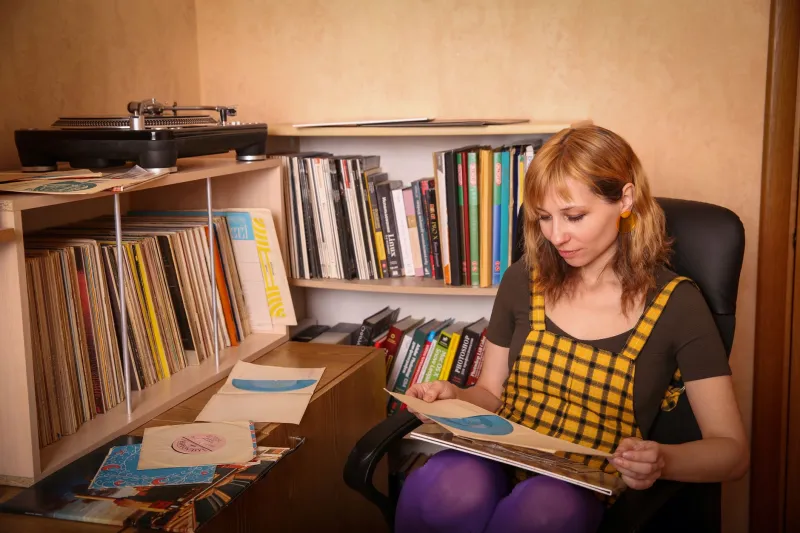
In a converted reading room in rural Shropshire, between shelves of well-thumbed paperbacks and a noticeboard advertising the local horticultural society, sits something rather unexpected: a wooden cabinet housing nearly four hundred vinyl records, arranged with the meticulous care one might associate with a national archive. Handwritten index cards identify each entry. A turntable of modest but capable quality occupies a corner table. On certain Tuesday afternoons, the room fills with the sound of Vaughan Williams, and a handful of villagers gather not merely to listen, but to remember.
This scene, once singular, is now being replicated in communities across England, Wales, and Scotland. Britain's village and suburban libraries — institutions that have weathered decades of funding pressures and digital disruption — are quietly becoming home to a different kind of collection altogether. Classical vinyl, donated, catalogued, and championed by passionate local volunteers, is finding a second life in precisely the places one might least expect it.
The Origins of a Quiet Revival
The phenomenon did not emerge from a national policy directive or an arts council initiative. It grew, as so many enduring cultural traditions do in Britain, from the determined efforts of individuals who refused to allow something of value to disappear.
In many cases, the catalyst was inheritance. As the generation that built its listening life around vinyl — purchasing recordings of the Berlin Philharmonic or Janet Baker through mail-order catalogues and provincial music shops — has aged, their collections have required new stewards. Children and grandchildren, however well-intentioned, have frequently found themselves without the means or inclination to maintain hundreds of fragile twelve-inch discs. The result, all too often, was dispersal through charity shops or, worse, landfill.
A number of local librarians and community volunteers recognised an opportunity within this predicament. Rather than allow these collections to scatter, they began accepting donations, establishing rudimentary cataloguing systems, and creating dedicated listening spaces within their institutions. The response from communities has, in many instances, been remarkable.
"We began with perhaps sixty records," recalls the volunteer coordinator of one such scheme in a market town in Worcestershire. "Within eight months, we had over five hundred, and we had to start making decisions about what to accept. The breadth of what people were willing to give away was extraordinary — everything from early Decca pressings of Beethoven symphonies to rare recordings of British chamber music that I suspect you would struggle to find anywhere else."
Analogue Listening as a Cultural Act
What distinguishes these village library collections from a simple act of preservation is the deliberate insistence on the listening experience itself. Unlike digital streaming, which delivers music with frictionless convenience but little ceremony, vinyl demands engagement. The record must be selected, handled, cleaned, and placed. The needle must descend. There is a ritual quality to the process that many participants describe as integral to their appreciation of the music.
For classical music in particular, this quality carries special significance. A symphony or a string quartet is not background sound; it is architecture, intended to occupy time and attention in a particular way. The slight warmth of an analog recording, the faint surface noise that reminds the listener of a performance captured in a specific moment, lends the experience an intimacy that digital reproduction, for all its technical superiority, has not entirely replicated.
Several of the library schemes have built this philosophy explicitly into their programming. Listening sessions are structured rather than casual, with volunteer guides introducing recordings, providing brief contextual notes on composers and performers, and encouraging discussion afterwards. In this respect, they bear a closer resemblance to the informal music appreciation societies of the early twentieth century than to anything conceived in the digital age.
New Audiences in Unexpected Places
Perhaps the most striking aspect of this revival is its success in reaching people who do not consider themselves classical music enthusiasts. The library context removes barriers that concert halls and specialist record shops can inadvertently impose. There is no ticket price, no dress code, no expectation of prior knowledge. The setting is familiar and unthreatening.
Volunteers report a consistent pattern: initial visitors arrive out of curiosity or mild interest, drawn by a poster or a recommendation from a neighbour. Many return. Some begin borrowing records — where schemes permit it — and discover that their domestic listening habits have shifted. A retired schoolteacher in North Yorkshire described how a borrowed recording of Elgar's cello concerto, played on a turntable she retrieved from a loft, prompted her to attend a live performance for the first time in thirty years.
Younger participants, too, have found their way into these spaces. Contrary to the assumption that vinyl holds appeal primarily for those with nostalgic attachments to the format, a number of libraries report visits from people in their twenties and thirties who have encountered vinyl through the broader record-collecting revival but had little prior exposure to classical repertoire. The library collections offer them an approachable entry point.
The Challenges of Stewardship
Maintaining these collections is not without its difficulties. Vinyl is susceptible to damage, and the resources available to community libraries are necessarily limited. Cleaning equipment, storage solutions, and replacement styli represent ongoing costs that fall largely upon volunteers and local fundraising. The question of cataloguing presents its own challenges: many donations arrive without documentation, and identifying obscure pressings or establishing the provenance of particular recordings requires considerable expertise.
Some schemes have sought partnerships with local universities or music colleges, whose students occasionally provide cataloguing assistance as part of their studies. Others have connected with organisations dedicated to the preservation of recorded sound. These collaborations, while modest in scale, suggest the potential for a more formalised network of support.
There is also the matter of institutional uncertainty. Village libraries themselves occupy a precarious position within local authority funding structures, and a collection of vinyl records, however valued by its community, cannot always be guaranteed permanence. Advocates for these schemes argue that their cultural significance deserves recognition at a policy level — that a community listening collection represents a form of heritage asset no less worthy of protection than a local archive or a listed building.
A Living Tradition
What the vinyl renaissance in Britain's village libraries ultimately represents is something rather difficult to quantify: the persistence of a belief that music of lasting quality deserves to be heard in conditions that honour it, and that communities, given the opportunity, will organise themselves around that belief.
These are not museums. The records are played, discussed, borrowed, and returned. The collections grow and change. The conversations they prompt range from the technical to the deeply personal. In this respect, they continue a tradition of communal engagement with classical music that has roots in the brass band movement, the choral societies, and the Workers' Educational Association concerts of earlier centuries — the conviction that great music is not the exclusive property of the metropolis or the conservatoire, but belongs, in some essential sense, to everyone.
In a Shropshire reading room, on a Tuesday afternoon, the needle descends again.