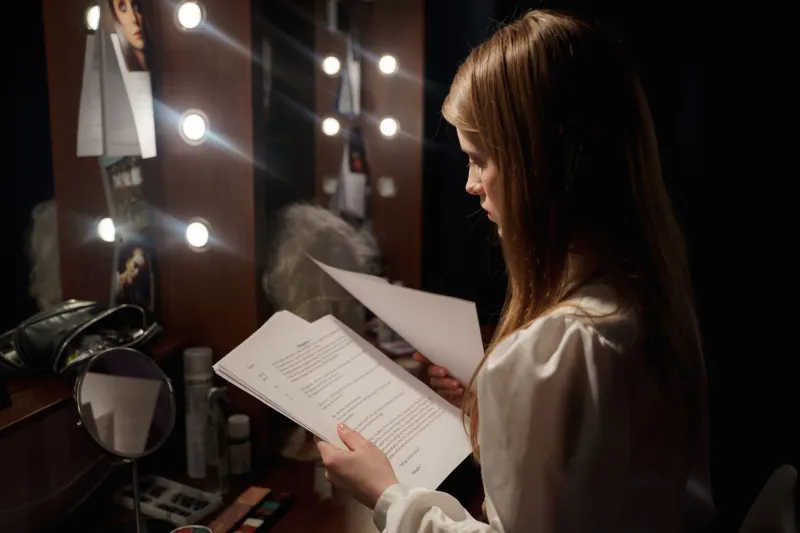
The Living Voice: How Britain's Stage Actors Once Carried Shakespeare Directly Into the Nation's Schools
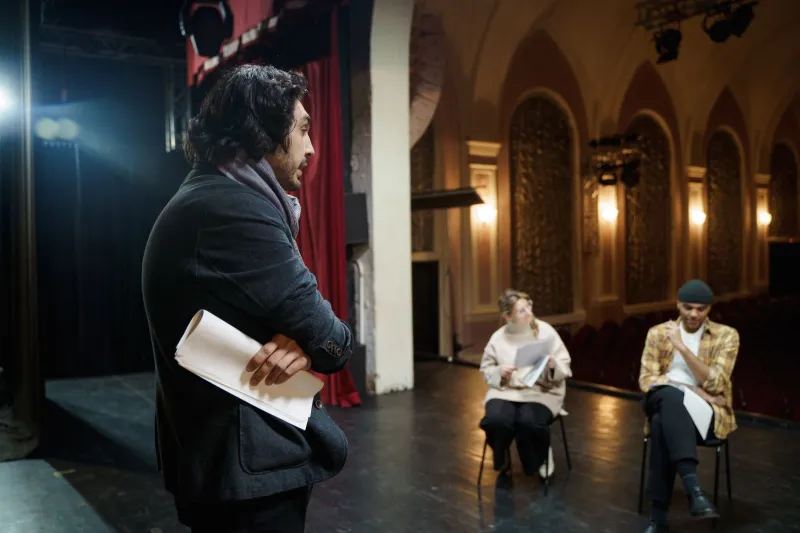
Before the Projector Screen
There was a time, not so very long ago, when a visit from a professional actor was the most remarkable thing that could happen in a British school. Not remarkable in the way that a visiting sports personality or a careers adviser might be remarkable — useful, perhaps, but essentially peripheral to the life of the mind — but remarkable in the way that an encounter with genuine artistic authority is always remarkable: unsettling, enlarging, and, for certain children, permanently transformative.
The tradition of bringing professional Shakespearean performance into British schools is older than most people suppose, and richer in human detail than the institutional histories that occasionally acknowledge it tend to suggest. It encompasses touring companies that rattled through the provinces in draughty vans, distinguished actors who considered the school hall as legitimate a stage as the Aldwych, and education pioneers who argued, with a passion that sometimes bordered on the evangelical, that the spoken word was the only truly adequate medium for Shakespeare's art.
The Touring Tradition and Its Roots
The habit of bringing theatre to audiences who could not readily come to the theatre is as old as theatre itself, and the Victorian and Edwardian periods saw its vigorous application to the cause of Shakespearean education. The travelling companies that crisscrossed Britain during the late nineteenth century, performing condensed or adapted versions of the plays in town halls, mechanics' institutes, and school rooms, were motivated by a mixture of commercial necessity and genuine educational purpose.
Among the most significant figures in this early history is Frank Benson, whose touring company, active from the 1880s until the First World War, brought Shakespeare to audiences across Britain with an energy and geographical reach that the London theatres could not match. Benson was not primarily an educationalist — he was an actor-manager of the old school, concerned above all with the quality of the performance — but he understood that the audiences of the future were being formed in the schools of the present, and he made it his business to perform for them whenever the opportunity arose.
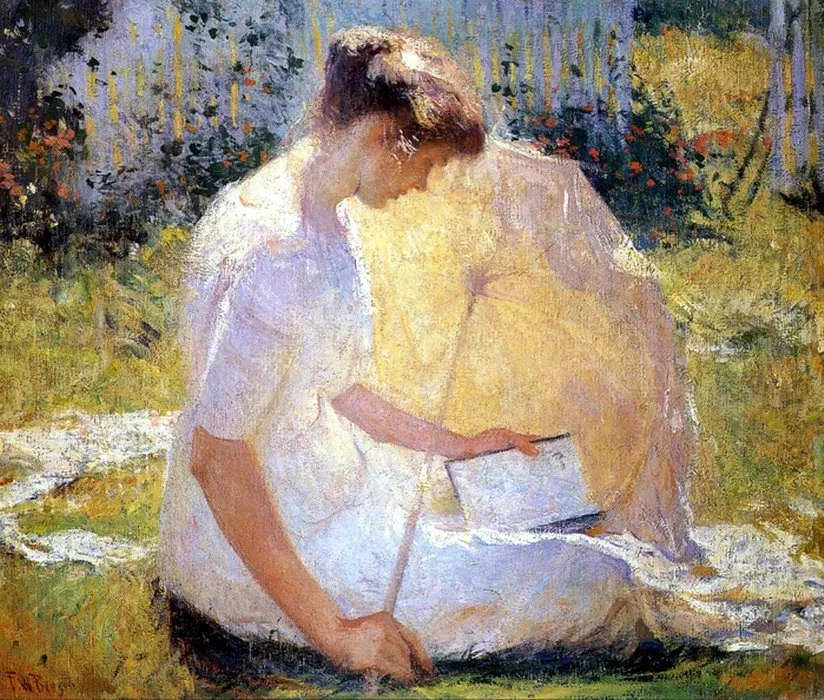 Photo: Frank Benson, via 3.bp.blogspot.com
The educational dimension of theatrical touring was formalised during the early decades of the twentieth century by organisations such as the British Drama League, founded in 1919, which worked to establish networks of amateur and professional performance that could reach communities — and schools — beyond the metropolitan centres. The conviction animating these efforts was straightforward: that Shakespeare belonged to the nation, not merely to its educated classes, and that the nation's children deserved to encounter the plays as living theatrical events rather than as texts to be construed in silence.
Post-War Ambition and the Schools Matinée
The period immediately following the Second World War saw a dramatic expansion of the ambition to bring professional Shakespeare into British schools. This was, in part, a consequence of the broader cultural democratisation that the post-war settlement encouraged — the sense that the arts, like education and healthcare, were properly the inheritance of every citizen. It was also a response to the practical reality that many children, particularly in working-class communities, would never attend a professional theatre unless a professional theatre, in some form, came to them.
The Old Vic's schools matinée programme, which developed during the 1950s under the influence of figures such as Lilian Baylis's successors, offered children the experience of watching professional productions in the theatre itself — an important distinction from the school visit, but part of the same impulse. Meanwhile, smaller companies and individual actors were taking the work directly into schools, performing in gymnasiums and assembly halls with minimal scenery and maximum vocal commitment.
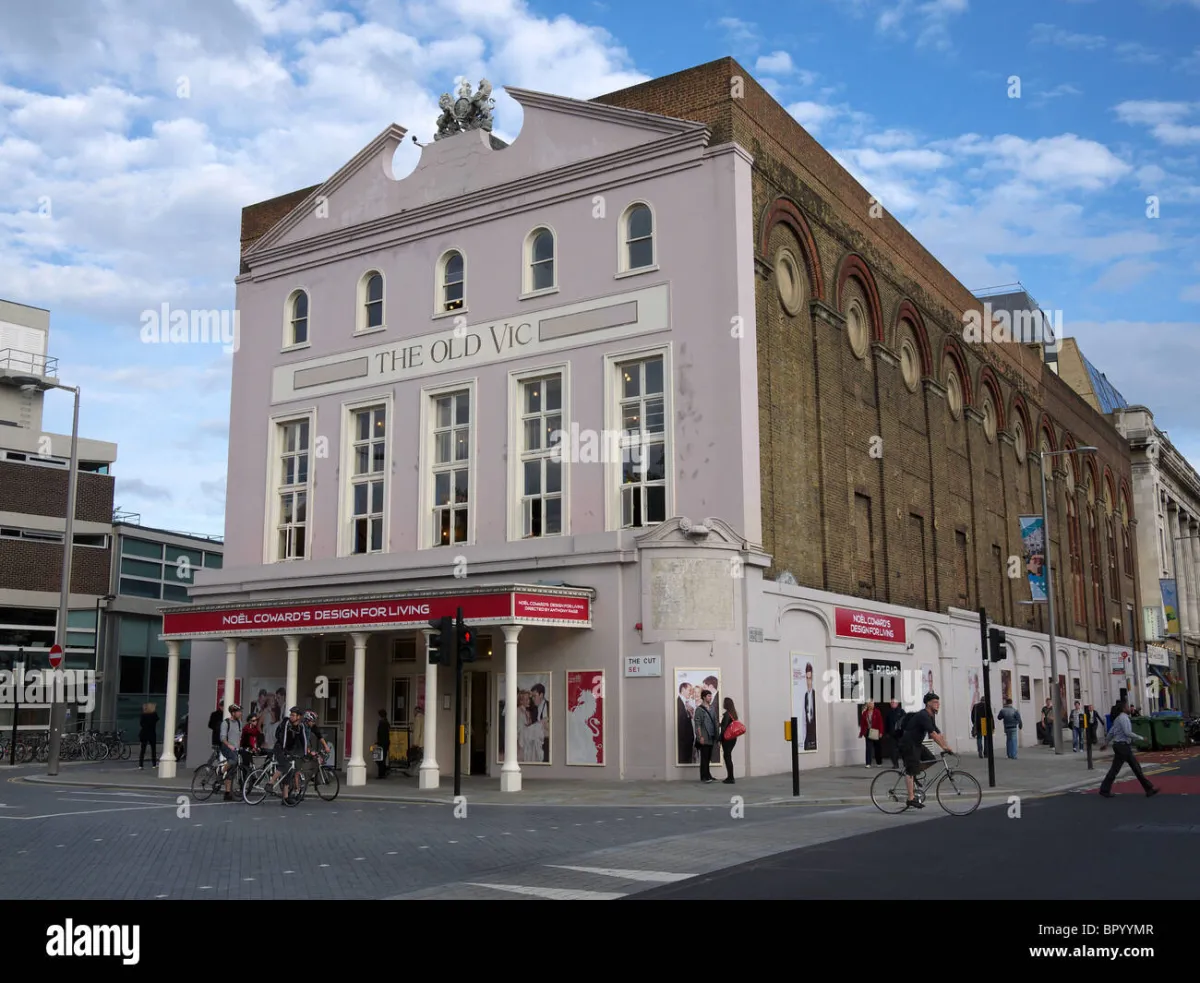 Photo: Old Vic, via c8.alamy.com
It was in this context that actors of genuine distinction — people who had performed at Stratford, at the Old Vic, at the major regional theatres — began to appear in school halls across Britain, reciting speeches, performing scenes, and engaging children in conversation about the plays with a directness and an enthusiasm that no classroom lesson could replicate. The names of many of these individuals have not been preserved in the historical record with the prominence they deserve. They were not, in most cases, performing for the applause of critics or the attention of producers. They were performing because they believed it mattered.
The Pedagogical Argument
Underlying the entire tradition was a pedagogical conviction that deserves to be stated plainly: that Shakespeare's language, encountered first as a written text to be studied, annotated, and examined, is a fundamentally different thing from Shakespeare's language heard aloud in performance. This is not a controversial claim among those who have thought seriously about theatrical art, but it has always been contested, implicitly or explicitly, by an educational establishment more comfortable with the measurable outcomes of textual analysis than with the less quantifiable effects of live performance.
The actors who came into schools were, in a sense, making an argument with their bodies and their voices. When a trained performer speaks the opening lines of King Lear or the sleepwalking scene from Macbeth in a school gymnasium, something happens in the room that cannot happen when a teacher reads the same lines from a textbook. The language reveals its physical dimension — its rhythm, its weight, its capacity to inhabit and transform the space in which it is spoken. Children who had found Shakespeare opaque or alienating in the classroom frequently discovered, in the presence of a skilled performer, that the language was not a barrier to be overcome but a pleasure to be entered.
This discovery, when it occurred, was not merely aesthetic. It was, for many children, an encounter with a form of human excellence they had not previously known existed — an encounter that could alter their sense of what language was capable of, and by extension what they themselves might be capable of.
Digital Shortcuts and the Living Chain
The question of what has been lost — or what risks being lost — in the contemporary period is not a simple one. Digital resources have made Shakespeare more accessible in certain respects than he has ever been: filmed productions of extraordinary quality are available to schools at negligible cost, and interactive educational platforms offer forms of engagement with the texts that would have been inconceivable a generation ago. These are genuine benefits, and it would be churlish to deny them.
But there is a distinction — one that the great advocates of the school visit tradition always insisted upon — between accessibility and presence. A filmed production, however distinguished, mediates the theatrical experience through a screen. It fixes a performance that was originally fluid, translates into two dimensions what was conceived in three, and removes from the encounter the irreducible fact of live human beings occupying shared space. The child watching a filmed Hamlet on a classroom screen is watching a record of a performance. The child watching a trained actor speak the same soliloquy in the same room is participating, however modestly, in a performance.
This distinction matters because theatrical transmission has always been, at its deepest level, a matter of physical presence. The chain that connects a contemporary actor to the tradition of Shakespearean performance runs through generations of practitioners who learned their craft partly by watching other practitioners perform it. When that chain is interrupted — when the living voice is replaced, however conveniently, by the recorded one — something genuinely irreplaceable is at risk.
A Tradition Worth Defending
Organisations such as the Royal Shakespeare Company and the National Theatre continue to maintain schools outreach programmes of considerable ambition, and many regional theatres support education work that brings professional performers into contact with young audiences. The tradition has not died. But it has contracted, under the pressure of funding constraints, curriculum demands, and the seductive convenience of digital alternatives, in ways that ought to concern anyone who cares about the future of Britain's theatrical culture.
The actors who carried Shakespeare into the nation's schools across the twentieth century were engaged in an act of cultural stewardship as significant, in its own way, as the preservation of historic manuscripts or the restoration of great buildings. They understood that a living tradition must be transmitted by living means — that the language of the plays is not merely a text to be studied but a voice to be heard, and that the hearing of it, in the presence of someone who has made it their life's work to understand it, is an experience that no digital medium has yet found a way to replicate.