Crown and Competition: The Grand Festivals That Once Forged Britain's Musical Champions
A Stage Built on Merit
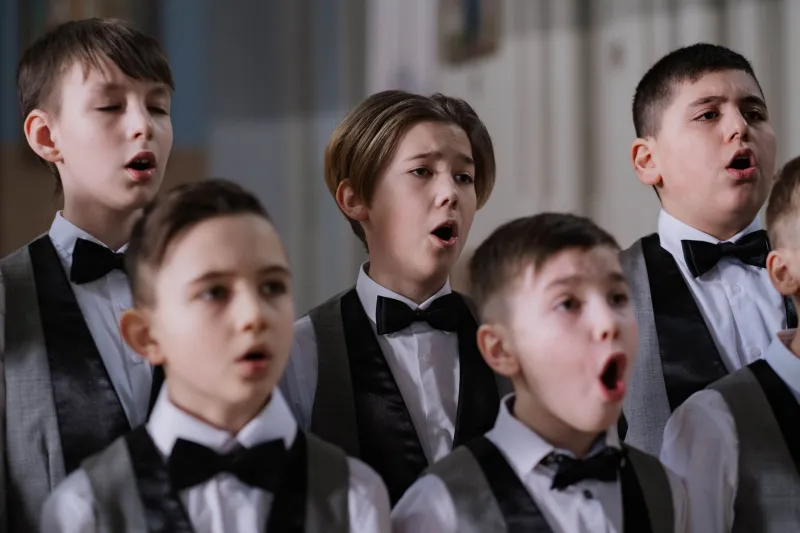
There is a particular kind of silence that falls over a competition hall in the moments before a young performer steps forward to be judged. It is not the silence of indifference, nor of mere courtesy. It is the silence of a community holding its breath — of neighbours, teachers, and strangers united in the shared understanding that something of consequence is about to occur. That silence, once heard in hundreds of British towns and cities each year, has grown considerably rarer. Yet for well over a century, it was one of the defining sounds of British musical life.
The competitive festival — distinct from the concert, the recital, or the civic celebration — occupied a singular place in Britain's cultural landscape. It was, at its finest, a meritocratic institution of remarkable power: a forum in which talent born in a Rhondda valley or a Lancashire mill town could be measured against the best the nation had to offer, without the mediation of wealth, connection, or institutional privilege.
The Eisteddfod and Its Children
No account of British musical competition can begin anywhere other than Wales. The National Eisteddfod, with its roots stretching back through the medieval bardic tradition to the celebrated gathering at Cardigan Castle in 1176, represents perhaps the most enduring competitive cultural institution in the European world. What began as a contest of poets and harpists evolved, by the nineteenth century, into a vast and emotionally charged annual gathering that encompassed choral singing, solo performance, and composition at the highest level.
 Photo: National Eisteddfod, via www.carnifest.com
The Eisteddfod's genius lay not merely in its antiquity but in its architecture of participation. The Gorsedd ceremonies, the chairing of the bard, the thunderous responses of the crowd — these were not spectacle for spectacle's sake. They were the outward expression of a belief, deeply held across Welsh society, that artistic excellence was a communal achievement and that its recognition was a matter of genuine public consequence. When a choir from the Rhondda defeated competitors from across the principality, the victory belonged to an entire community.
The Welsh model inspired imitation across Britain. The competitive festival movement of the late Victorian and Edwardian eras produced hundreds of local and regional contests — in Blackpool, Morecambe, Stratford-upon-Avon, and countless market towns — that drew participants from every social stratum and every level of accomplishment.
The Victorian Contest and Its Democratic Promise
The great municipal music competitions of Victorian England were, in their way, as remarkable a social phenomenon as the mechanics' institutes or the public library movement. Funded by local councils, philanthropic industrialists, and subscription from the public, they offered prizes that could transform a working-class musician's prospects and adjudicators whose verdicts carried genuine professional weight.
Sir John Stainer, Sir Charles Villiers Stanford, and later figures such as Sir Walford Davies served as adjudicators at regional festivals, bringing with them the full authority of the metropolitan musical establishment. Their written reports — often published in local newspapers — were read with an intensity that modern audiences might reserve for major critical reviews. A commendation from Stanford at a Morecambe festival could open doors that years of private study alone might not.
Crucially, these competitions were not merely auditions for the professional world. They were ends in themselves: occasions for the measurement of progress, the cultivation of rigour, and the experience of performing under pressure before a knowledgeable audience. The discipline they instilled was, many musicians of that era testified, more formative than any private lesson.
Careers Forged in Competition
The list of significant British musicians whose early careers were shaped by competitive festivals is a long and distinguished one. Kathleen Ferrier, who would become one of the most beloved contraltos of the twentieth century, first attracted serious attention through her performances at local competitive festivals in the north of England, winning prizes that encouraged her to pursue singing as a vocation rather than a pastime. Her trajectory from amateur competitor to international concert artist remains one of the most compelling illustrations of what these institutions could achieve.
Similarly, many of the great choral societies that defined British musical life throughout the nineteenth and early twentieth centuries — the Huddersfield Choral Society foremost among them — maintained their standards in part through the discipline of competitive performance. The knowledge that one's choir would be publicly assessed against rivals of comparable ambition concentrated the mind of conductor and singer alike in ways that routine concert preparation rarely matched.
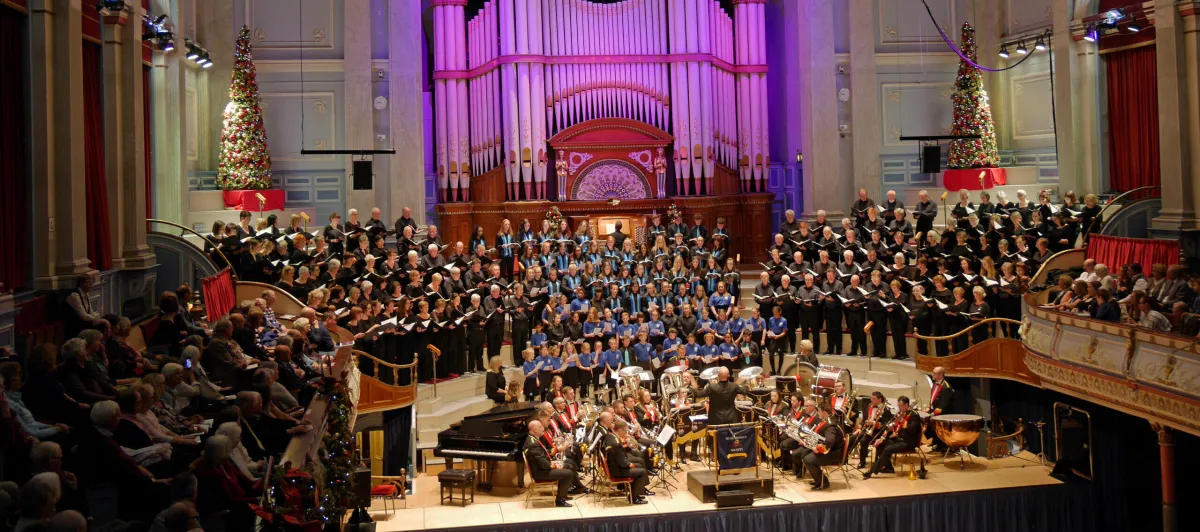 Photo: Huddersfield Choral Society, via www.huddersfieldchoral.com
The Slow Retreat
The decline of the competitive festival tradition was gradual rather than sudden, and its causes were multiple. The expansion of formal music education following the Butler Act of 1944, and the subsequent growth of conservatoire training, created alternative pathways to professional recognition that did not depend upon the civic festival circuit. Television talent competitions — which arrived as a populist substitute — offered visibility without the rigour of adjudication by informed specialists. Funding pressures on local authorities eroded the financial foundations upon which many regional festivals had depended for generations.
What was lost in this retreat was not merely a series of events but an entire ecosystem of musical aspiration. The competitive festival had functioned as a connective tissue between amateur and professional musical life, providing a ladder whose rungs extended from the beginner's class to the senior open competition, and whose ascent was visible to an entire community. Without it, the journey from talented child to accomplished musician became at once more private and more dependent upon resources that not every family could provide.
The Case for Revival
There are encouraging signs that the tradition has not entirely perished. The British and International Federation of Festivals continues to support several hundred competitive festivals across the United Kingdom, and organisations such as the Making Music network have worked to sustain the amateur competitive tradition against considerable headwinds. In Wales, the National Eisteddfod endures with undiminished passion, its annual gathering still capable of moving thousands to tears and rousing ovations.
Yet the ambition that once animated the great Victorian municipal contests — the belief that a town's honour could be measured in the quality of its musicians — has not been adequately recovered. A genuine revival would require not merely the restoration of events but the rebuilding of the civic conviction that musical excellence is a public good worthy of public investment and public celebration.
The silence that precedes a young performer's entrance in a competition hall remains one of the most eloquent sounds in cultural life. It deserves to be heard far more often than it presently is.