Between the Movements: The Quietly Enduring British Institution of the Concert Interval
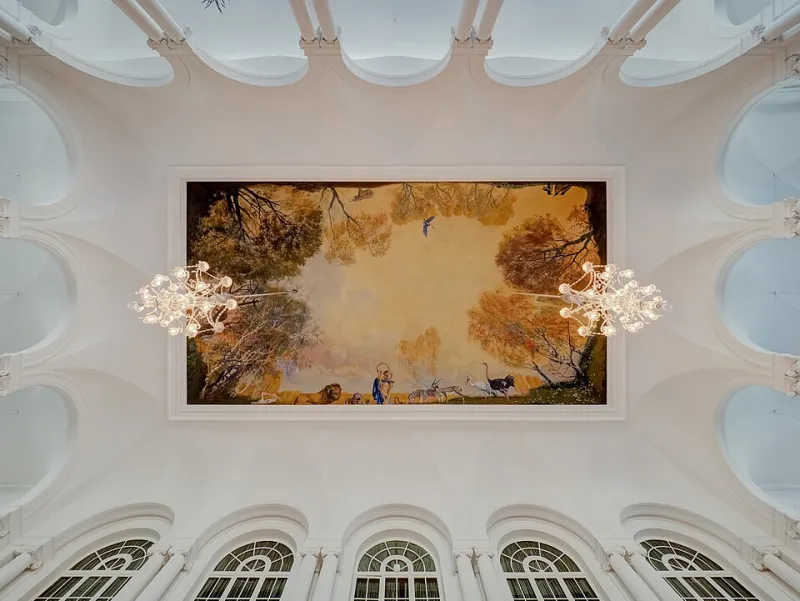
Photo: Ermell, CC BY-SA 4.0, via Wikimedia Commons
There is a particular sound that belongs to no composer: the rustle of a thousand programmes being closed at once, the scrape of velvet seats, the sudden murmur of a full auditorium released into conversation. For twenty minutes, the concert stops being a concert and becomes something else entirely — a ritual as British as queuing and rather more delicious.
Gaps for Carriages
The interval was not born of artistic philosophy but of horse-drawn practicality. In the opera houses of the eighteenth and nineteenth centuries, performances were punctuated so that audiences might return home in stages; the rich arrived early and departed late, but the middle orders needed windows in which to summon their conveyances. What began as a logistical courtesy hardened into custom, and custom, in Britain, is the strongest binding agent we possess.
The Victorian promenade concerts of the great London halls gave the pause a new social texture. Here the divisions between movements were opportunities to stroll, to take refreshment among the crowd, to see and be seen beneath the gaslight. The concert was a promenade in the truest sense — an evening's constitution punctuated by music rather than the reverse.
The Ice Cream Clause
Ask any concert-goer of a certain age what the interval means, and the answer will arrive in a cardboard tub. The institutional ice cream — that slightly hollowed brick of vanilla with its tiny wooden spoon — became so bound up with the British concert experience that it attained a kind of protected status. Woe betide the hall that attempts to modernise the offering; audiences have been known to register formal complaints over a change of brand.
The bar, too, developed its own liturgy: the strategic queue formed before the final chord has even faded, the interval drink ordered in advance to avoid the crush, the ritual complaint that twenty minutes is insufficient for the purpose. These are not inconveniences to be engineered away. They are the choreography of a national evening out.
Why Britain Kept It
Continental practice has drifted elsewhere. Many European houses now run straight through, and the pandemic-era experiments with shortened, interval-less programmes have found a foothold abroad. Yet here the interval endures, defended by audiences and managers alike.
The reasons are revealing. There is the practical argument — the older concert-goer's need for respite, the bar staff's livelihood, the natural length of an evening built around a full symphony or a pairing of works. But beneath the practicality lies something more telling: a belief that music is best received in company, and that company requires breathing space. The British do not merely listen together; we digest together, debate together, and compare notes on the conductor's tempo choices over a lukewarm white wine.
There is, too, the matter of the work itself. A long symphony is an architecture, and the interval allows the listener to carry the first half's argument into the second half with renewed attention. Done well, the pause is not an interruption of the experience but a frame around it — the silence between movements writ large.
An Argument Worth Keeping
Critics have periodically proposed abolishing the interval in the name of artistic intensity, and occasionally the experiment succeeds for a single evening. But the institution has outlasted every reformer, because it answers to something deeper than aesthetics: the British conviction that an evening should have chapters. The interval is our shared intermission from ourselves — twenty minutes in which strangers exchange opinions, old friends arrange suppers, and the music continues to sound, faintly, in the collective memory of the room.
Long may the tubs be stacked by the doors at half past eight.