Bound in Harmony: The Victorian Publishers Who Made Classical Music a Literary Affair

Photo: Tangerineduel, CC BY-SA 4.0, via Wikimedia Commons
Long before the gramophone crackled Beethoven into the drawing rooms of Britain, it was the printed page that first carried the language of classical music to a curious and increasingly literate public. In an age when concert tickets remained beyond the means of many, and musical education was largely the preserve of the privileged, a remarkable cohort of publishers recognised that literature could serve as a gateway to the symphony hall. The alliance that followed between Britain's most distinguished publishing houses and the world of classical composition produced a body of work both elegant and enduring — volumes that shaped how ordinary men and women understood, loved, and argued about music for well over a century.
Macmillan and the Missionary Spirit
Among the earliest and most committed champions of this literary-musical crossover was Macmillan and Co., whose Victorian catalogue extended far beyond the novels and philosophy for which the house is best remembered. Macmillan's editors were alert to the growing appetite among educated middle-class readers for serious engagement with the arts, and they responded with a series of composer biographies and critical studies that combined scholarly rigour with genuine accessibility. Their volumes on Handel and Purcell, in particular, were conceived not merely as reference works but as acts of cultural advocacy — persuasive arguments that these composers deserved a place in the national conversation alongside Shakespeare and Milton.
The editorial sensibility at Macmillan during the 1870s and 1880s was shaped in part by the broader conviction that the Victorian reading public was ready to be elevated. Music, in this vision, was not an ornamental accomplishment but a serious art form demanding serious intellectual engagement. The publisher's willingness to invest in lavishly produced volumes, complete with portrait frontispieces and facsimile manuscripts, signalled a belief that the reader of musical literature deserved the same aesthetic pleasure as the concertgoer.
Novello and the Democratising Impulse
No examination of this cultural alliance would be complete without sustained attention to Novello and Company, whose contribution to the democratisation of musical knowledge in Britain was arguably without parallel. Founded in London in 1811 by the publisher and organist Vincent Novello, the firm had by the mid-Victorian period established itself as the foremost purveyor of accessible musical literature in the country. Novello's celebrated series of cheap editions of choral scores had already placed Handel's Messiah and Mendelssohn's Elijah within reach of amateur choral societies across the land; their literary publications extended this missionary impulse into the realm of prose.
The firm's decision to commission and publish music primers, analytical guides to major works, and biographical sketches aimed at the general reader was a conscious act of cultural inclusion. Writers such as Edward Dannreuther and John Hullah contributed essays that were both authoritative and warmly readable, stripping away the mystique that had surrounded classical composition without diminishing its grandeur. These were texts designed for the schoolmaster in Yorkshire, the mill-owner's wife in Lancashire, and the self-improving clerk in a Midlands town — readers who might never attend a Philharmonic concert but who wished to understand what all the reverence was about.
The Role of the Essay and the Illustrated Volume
Beyond the biography and the primer, a third literary form proved particularly powerful in bridging the worlds of ink and music: the extended critical essay. Publishers including John Murray and George Bell issued anthologies and collected writings in which leading critics of the day — among them George Bernard Shaw, whose musical journalism remains some of the most brilliant ever produced in the English language — examined composers and their works with an energy and wit that made the reading experience genuinely pleasurable.
 Photo: George Bernard Shaw, via c8.alamy.com
The illustrated volume occupied an equally important niche. Publishers understood that readers who had never seen a conductor's baton or a manuscript score could be drawn into the world of classical music through images — portraits of composers in their studies, engravings of celebrated concert halls, reproductions of title pages from first editions. Houses such as Cassell and Company produced gift-quality volumes that blurred the boundary between art book and musical biography, presenting composers as figures of heroic cultural significance whose lives were as compelling as any novel.
Editorial Visionaries and Their Legacy
Behind these publications stood individual editors whose personal enthusiasm for music gave the enterprise its particular character. At Dent, founded in 1888, Ernest Rhys — better known as the founding editor of Everyman's Library — championed the inclusion of musical titles within that celebrated series, ensuring that volumes on Bach, Mozart and Wagner sat alongside Dante and Defoe on the shelves of the aspiring reader. The message was unmistakable: classical music belonged to the same inheritance as great literature, and access to both was a matter of cultural birthright.
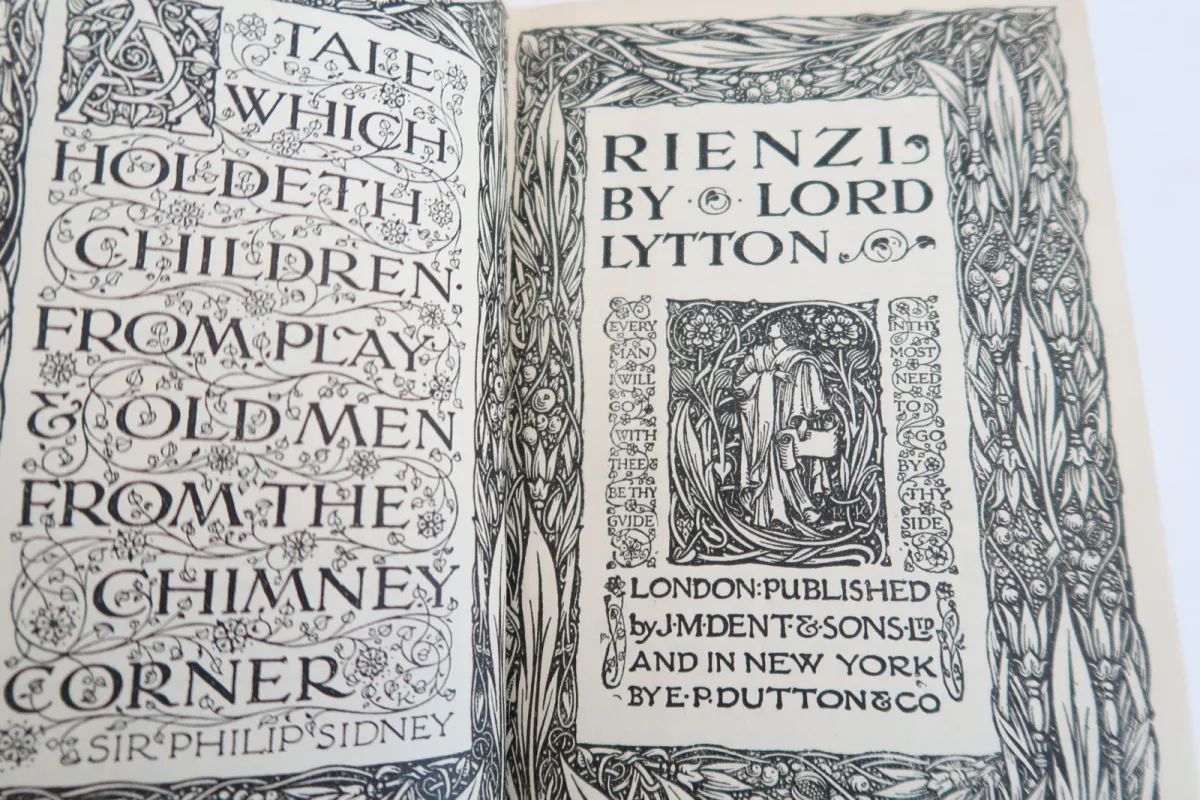 Photo: Ernest Rhys, via i.ebayimg.com
At Augener, a firm whose primary business lay in sheet music publication, the literary side of the catalogue was entrusted to editors who understood the value of contextualising musical works within their historical and biographical settings. The analytical programme notes commissioned by Augener for concert use were frequently expanded into standalone publications, creating a body of work that served both the practising musician and the attentive listener.
A Forgotten Alliance Deserving Remembrance
The cultural alliance between Britain's literary publishers and the classical music world did not survive the twentieth century entirely intact. The rise of the gramophone, and later broadcasting, transformed the means by which music reached its audience, reducing the urgency of the printed intermediary. Publishers, responding to changing markets, gradually withdrew from the kind of sustained literary advocacy for classical music that had characterised the Victorian and Edwardian eras.
Yet the volumes produced during that remarkable period retain their value — not merely as historical artefacts, but as evidence of a profound conviction that literature and music are not separate kingdoms but neighbouring provinces of a single imaginative country. The editors and publishers who built that alliance deserve to be remembered as cultural pioneers, men and women who understood that the love of great art is most durably kindled not in the concert hall alone, but on the printed page, in the quiet of a private room, where a well-chosen sentence can open the ear as surely as any overture.