Visions Behind the Velvet: How Britain's Stage Designers Shaped the Nation's Classical Imagination
The designer's name rarely appears on the playbill in large type. It is the soprano, the leading actor, the conductor whose image adorns the programme cover and whose reputation draws the audience through the doors. Yet step inside any theatre of consequence and you are immediately, inescapably, inside a designed world — a world of colour, proportion, texture, and light that has been assembled with deliberate care to prepare the audience's imagination for what is about to unfold. The designer's work is everywhere, and almost nowhere acknowledged.
This invisibility is, in one sense, the measure of success. When a stage picture functions as it should, the audience does not see design; it sees a world made credible, an emotion made visible, a period made present. But the invisibility has also permitted a long and unjust neglect of the individuals responsible for some of the most significant visual experiences in British cultural history.
The Victorian Foundation
The story of British theatrical design as a self-conscious discipline begins, with reasonable precision, in the Victorian era. Prior to the mid-nineteenth century, scenic painting was a practical trade rather than an artistic calling. Backdrops were executed by skilled craftsmen working to established conventions, with little expectation of individual expression or artistic coherence.
What changed this was partly the influence of archaeological scholarship — the Victorian passion for historical accuracy that manifested in elaborate recreations of ancient Rome or medieval England — and partly the emergence of the actor-manager as a figure of cultural ambition. Men such as Charles Kean and, later, Herbert Beerbohm Tree understood that the visual dimension of their productions was not merely decorative but rhetorical. A stage picture could argue for the seriousness, the legitimacy, the cultural weight of theatrical entertainment at a moment when theatre was still viewed with suspicion in certain quarters of respectable society.
The scenic artists who executed their visions — figures such as William Telbin and his son William Lewis Telbin — were men of considerable technical accomplishment and, increasingly, genuine artistic sensibility. Their work introduced audiences who might never have visited a gallery to the visual conventions of classical and Renaissance painting: the receding perspective, the dramatic chiaroscuro, the architectural grandeur. The theatre became, for many working-class Victorians, their primary point of contact with the visual culture of antiquity.
Costume as Argument
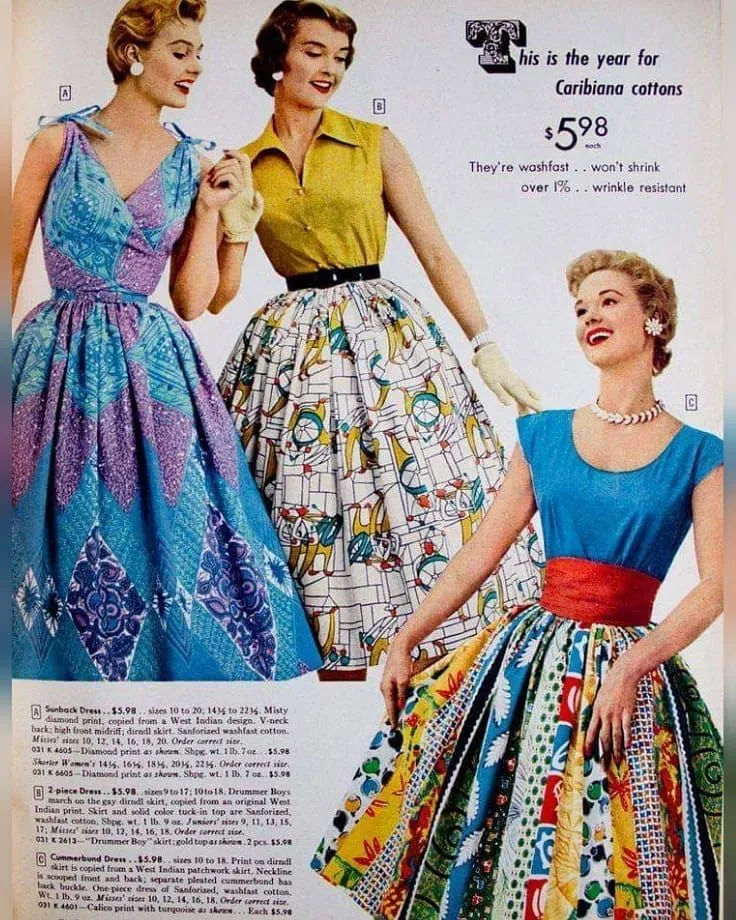
If scenic design educated the eye, costume design educated the imagination of class and history. The Victorian theatre's insistence on historically accurate dress — painstakingly researched from manuscripts, effigies, and portrait collections — introduced audiences to the visual grammar of different periods and cultures with an immediacy that no book could match.
The designers responsible for this work occupied a curious social position. Many were women, working in a profession that offered unusual scope for female expertise and authority at a time when such scope was severely limited elsewhere. Their knowledge of historical textiles, embroidery traditions, and period silhouette was formidable, and their influence extended beyond the stage. The fashions of the theatre had a demonstrable effect on fashions in the street; what audiences admired on stage they frequently wished to approximate in life.
This cultural transmission was not incidental. It was, at least in part, deliberate. Designers such as Percy Anderson, whose work spanned the late Victorian and Edwardian periods, understood that they were performing an act of popular education. Anderson's costumes for operatic productions at Covent Garden and the Lyceum brought the visual world of classical mythology and Renaissance Italy to audiences whose formal education had provided them with little preparation for such encounters.
The Modernist Rupture and Its Consequences
The arrival of modernism in British theatrical design — delayed somewhat by the conservatism of the commercial West End, but eventually irresistible — produced a profound shift in the relationship between design and classical material. Where the Victorian tradition had sought to recreate historical worlds with maximum fidelity, the modernist impulse was to strip away, to abstract, to find the essential rather than the particular.
Edward Gordon Craig, whose theoretical writings on theatrical design were as influential as his practical work, argued that the stage should aspire to a condition of visual poetry rather than visual prose. His designs — angular, symbolic, suffused with a mysterious half-light — bore no resemblance to the painted realism of his predecessors, yet they possessed an austere beauty that contemporaries found both disturbing and compelling.
Craig's influence on British design was profound but indirect; much of his significant work was done abroad, and his difficult temperament limited his practical collaborations. The designers who translated modernist principles into the mainstream of British theatre — figures such as Motley (the collective name for the design trio of Sophia and Margaret Harris and Elizabeth Montgomery) — did so with greater pragmatism and wider impact. Their work for the Old Vic and for Stratford in the 1930s and 1940s demonstrated that classical texts could be served by a visual language that was simultaneously contemporary and timeless.
Democratising the Classical
Perhaps the most significant social consequence of British theatrical design in the century between 1850 and 1950 was its democratising function. The theatre was, for much of this period, one of the few cultural institutions genuinely accessible to working-class audiences. Penny-gaff performances, popular melodramas, and eventually the music hall all drew audiences from across the social spectrum. When those audiences encountered classical material — Shakespeare performed at a civic theatre, opera presented at a touring company's provincial stop — it was the designer's work that made the experience comprehensible and emotionally accessible.
A woman who had never read a line of Greek tragedy could nonetheless be moved by a stage picture that conveyed, through proportion and colour and the eloquent arrangement of draped fabric, something of the grandeur and gravity of the classical world. This was not a trivial achievement. It was, in the truest sense, cultural education by other means.
Contemporary designers working in classical repertoire are acutely conscious of this inheritance. 'The Victorians understood something that we sometimes forget,' observes one leading British opera designer. 'The audience needs to be welcomed into the world of the work. Design is the handshake. It says: this is real, this matters, this is for you.'
A Legacy Awaiting Its Historians
Despite the evident importance of their contribution, Britain's theatrical designers remain significantly underrepresented in the broader cultural histories of the periods they served. Monographs on individual figures are few; systematic accounts of design traditions and their social effects are fewer still. The archives that survive — costume drawings, model boxes, correspondence, production photographs — are scattered across theatre collections, university libraries, and private hands.
The work of recovery is urgent, not merely for reasons of scholarly completeness, but because the history of British theatrical design is inseparable from the history of how this country came to understand, value, and love its classical heritage. The designers who worked behind the velvet curtain were not auxiliaries to that story. In many respects, they were its principal authors.