When Words and Music Converged
The image of the solitary writer, hunched over a desk in splendid isolation, has dominated our conception of literary creation for generations. Yet this romantic notion obscures a fascinating truth: many of Britain's most celebrated authors lived double lives as accomplished musicians, their relationship with melody and harmony proving as profound as their mastery of language. These literary musicians didn't merely dabble in music as a pleasant diversion—they inhabited a world where the boundaries between verbal and musical expression dissolved entirely.
This hidden musical dimension of British literary life reveals itself in unexpected places: the precise rhythmic structures of Gerard Manley Hopkins' poetry, the symphonic architecture of Virginia Woolf's novels, the folk-influenced cadences of Thomas Hardy's prose. Understanding these writers' musical lives doesn't merely add biographical colour—it unlocks new ways of reading and appreciating their literary achievements.
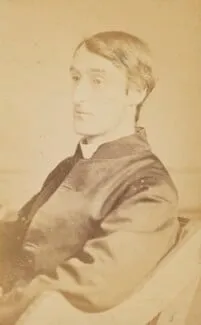 Photo: Gerard Manley Hopkins, via collectionimages.npg.org.uk
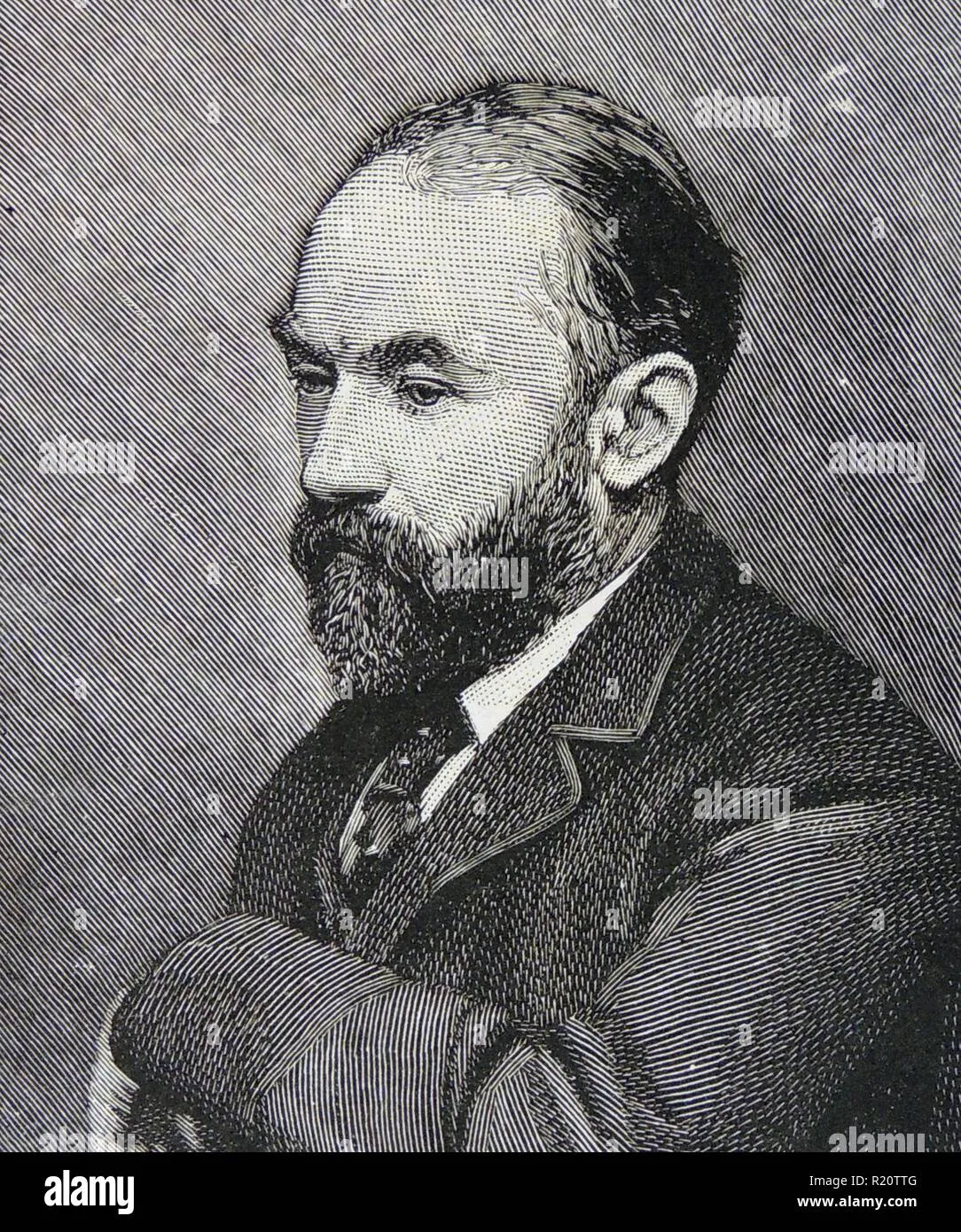 Photo: Thomas Hardy, via c8.alamy.com
The Sage of Wessex and His Fiddle
Thomas Hardy's musical life began long before his literary career took flight. As a young man in rural Dorset, he played violin at village dances, weddings, and church services, continuing a family tradition that stretched back generations. His father and grandfather had been members of the Stinsford church choir, and Hardy absorbed not just the technical aspects of performance but the social fabric that music wove through rural communities.
This musical apprenticeship profoundly shaped Hardy's literary voice. The rhythms of country dances pulse through his novels, whilst the seasonal cycle of musical celebrations provides the temporal framework for works like Under the Greenwood Tree. Hardy understood music as a communal art that both expressed and created social bonds—a perspective that infuses his fiction with a deep awareness of how individual stories connect to larger cultural patterns.
Hardy's notebooks reveal a sophisticated understanding of musical structure that influenced his approach to literary composition. He analysed the way folk melodies developed through variation and repetition, techniques he later employed in constructing the recursive patterns of fate that drive his major novels. The famous 'President of the Immortals' passage in Tess of the d'Urbervilles achieves its devastating effect through musical principles of development and resolution that Hardy learned through years of practical performance.
The Composer-Novelist of Victorian England
Samuel Butler represents perhaps the most accomplished musician among major British writers. His musical compositions, including several anthems and a cantata, demonstrate genuine technical skill that went far beyond amateur enthusiasm. Butler studied counterpoint and harmony with the same systematic rigour he brought to his literary work, and his notebooks reveal a composer's mind grappling with problems of structure and development.
 Photo: Samuel Butler, via biographicon.net
Butler's novel The Way of All Flesh employs musical principles of thematic development that reflect his compositional training. Characters and situations recur with variations, building cumulative emotional impact through techniques borrowed directly from sonata form. His satirical masterpiece Erewhon demonstrates similar structural sophistication, with its palindromic title suggesting the kind of symmetrical thinking that characterises musical composition.
More significantly, Butler's musical activities connected him to broader networks of Victorian cultural life. Through his participation in amateur musical societies and his friendships with professional musicians, he gained insights into the social dynamics of artistic creation that enriched his literary portraits of creative personalities.
The Professor's Wagnerian Passion
C.S. Lewis's devotion to Richard Wagner represents one of the most intense musical obsessions in British literary history. Lewis didn't simply enjoy Wagner's operas—he inhabited them, learning German specifically to understand the texts and spending countless hours analysing their mythological and philosophical dimensions. His letters reveal a man who could discuss Wagnerian leitmotifs with the same analytical precision he brought to medieval allegory.
This musical passion profoundly influenced Lewis's fantasy writing. The cosmic scope of The Chronicles of Narnia reflects Wagner's mythological ambitions, whilst the structural principles of The Lord of the Rings (which Lewis helped shape through his friendship with Tolkien) echo the cyclical narrative techniques of Der Ring des Nibelungen. Lewis understood that Wagner had created a new form of narrative art that combined multiple expressive modes—a lesson he applied to his own experiments in fantasy literature.
Lewis's Christian apologetics also bear traces of his musical thinking. His arguments for the existence of God often employ the kind of cumulative development found in Wagnerian music drama, building emotional and intellectual conviction through the systematic presentation and variation of thematic material. The famous 'Lord, liar, or lunatic' argument in Mere Christianity achieves its rhetorical power through musical principles of tension and resolution.
The Rhythmic Revolutionary
Gerard Manley Hopkins represents the most radical fusion of musical and poetic techniques in Victorian literature. His concept of 'sprung rhythm' emerged from his deep study of musical metre and his practical experience as a church musician. Hopkins didn't simply write about music—he attempted to recreate musical effects through purely verbal means.
Hopkins's notebooks reveal extensive musical analysis alongside his poetic experiments. He studied the relationship between word stress and musical accent, developing theories about how poetic rhythm could achieve the flexibility and expressiveness of musical phrasing. His revolutionary approach to prosody influenced generations of later poets who sought to break free from traditional metrical constraints.
The famous opening of 'The Windhover'—'I caught this morning morning's minion'—demonstrates Hopkins's musical thinking in action. The repetition of 'morning' creates a rhythmic effect analogous to musical sequence, whilst the alliteration provides harmonic colouring that reinforces the poem's emotional trajectory. Hopkins had discovered how to make language sing without losing its semantic precision.
The Bloomsbury Symphonist
Virginia Woolf's relationship with music was more complex but equally profound. Though not a performer like Hardy or a composer like Butler, Woolf possessed an intuitive understanding of musical structure that revolutionised her approach to narrative. Her friendship with the composer Ethel Smyth provided insights into the creative process that influenced her most experimental works.
Woolf's late novels employ techniques borrowed directly from musical composition. The Waves achieves its extraordinary effects through the systematic development of recurring motifs—the imagery of water, light, and seasonal change—that function like leitmotifs in a symphonic work. The novel's six-part structure mirrors the classical symphony, with each section exploring different aspects of the central thematic material.
More broadly, Woolf understood that music offered a model for non-representational art that could express pure emotion and psychological states. Her stream-of-consciousness technique attempts to recreate in prose the immediate emotional impact of musical performance, bypassing rational analysis to achieve direct emotional communication.
The Living Tradition
These literary musicians represent more than historical curiosities—they embody a living tradition that continues to enrich British cultural life. Contemporary writers like Kazuo Ishiguro and Ali Smith demonstrate sophisticated understanding of musical principles in their narrative techniques, whilst poets like Carol Ann Duffy and Simon Armitage frequently collaborate with composers to create hybrid art forms.
The persistence of this tradition suggests something fundamental about the relationship between music and literature in British culture. Both art forms deal with the organisation of time, the creation of meaning through pattern and repetition, and the transformation of raw experience into structured artistic expression. The writers who mastered both discovered that their dual expertise didn't divide their attention—it multiplied their expressive possibilities.
For contemporary readers, understanding the musical dimensions of literary works opens new avenues for appreciation and analysis. Hardy's novels gain additional richness when read with awareness of their folk music foundations, whilst Lewis's fantasy achieves new depths when understood in relation to his Wagnerian obsessions. These writers invite us to listen as well as read, discovering the hidden harmonies that run through Britain's greatest literary achievements.