Guardians of the Literary Soul: Britain's Independent Bookshops as Cultural Sanctuaries

The Last Bastions of Literary Civilisation
There exists in Britain today a network of cultural sanctuaries so vital to our literary heritage that their disappearance would constitute nothing short of national tragedy. These are not museums or galleries, but the surviving independent bookshops that continue to serve as guardians of our classical literary tradition, repositories of knowledge where passionate booksellers perform the irreplaceable role of cultural curator.
In our digital age, when algorithms determine reading choices and convenience trumps discovery, these intimate spaces represent something that cannot be replicated online: the irreplaceable human element in literary exploration. Here, amongst carefully curated shelves, genuine literary conversation still flourishes, and the art of recommendation remains a personal craft rather than a computational process.
Blackwell's Oxford: The Cathedral of Learning
No discussion of Britain's literary sanctuaries can begin without acknowledging Blackwell's of Oxford, that labyrinthine temple to learning that has served scholars and book lovers since 1879. Descending into the famous Norrington Room—carved from beneath Trinity College's foundations—one enters what can only be described as a secular cathedral, its shelves reaching skyward like gothic arches, housing three miles of books in underground splendour.
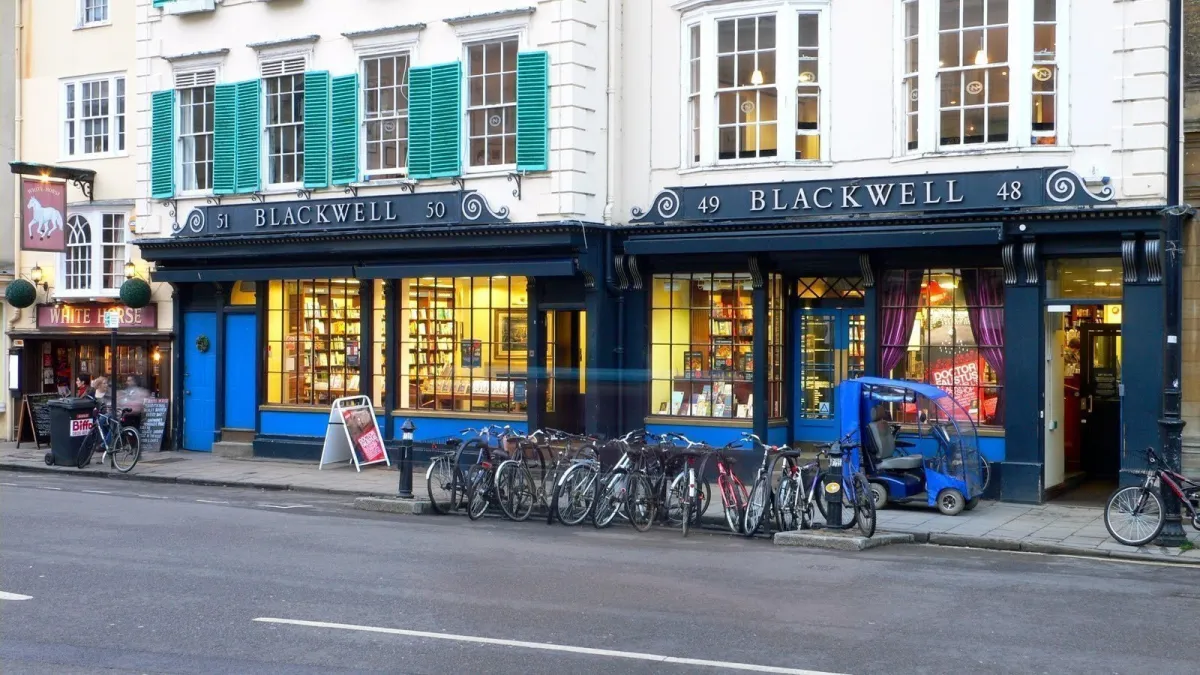 Photo: Blackwell's Oxford, via theoxfordmagazine.com
What sets Blackwell's apart is not merely its size but its curation. Here, classical literature occupies pride of place, with dedicated sections for medieval manuscripts, Renaissance poetry, and Romantic literature that would shame many university libraries. The staff—many holding advanced degrees in literature—serve as more than mere sales assistants; they are literary guides capable of leading readers through the complexities of Dante's cosmology or the intricacies of Metaphysical poetry.
This is where the algorithmic approach to book recommendation reveals its poverty. No computer programme can replicate the moment when a knowledgeable bookseller, having listened to a customer's interests, reaches for an obscure translation of Ovid or a forgotten Victorian novel, explaining with genuine enthusiasm why this particular edition matters, why this translator's approach illuminates aspects of the original that others miss.
Daunt Books: The Art of Literary Architecture
In Marylebone, Daunt Books occupies a space that perfectly embodies the marriage of literature and aesthetic beauty. The original Edwardian shop, with its soaring oak galleries and stained-glass ceiling, creates an environment where browsing becomes a form of pilgrimage. Here, books are arranged not by commercial categories but by country and culture, encouraging the kind of serendipitous discovery that feeds literary curiosity.
 Photo: Daunt Books, via i.ytimg.com
The shop's approach to classical literature is particularly noteworthy. Rather than segregating ancient texts into academic ghettoes, Daunt integrates classical works throughout its geographical arrangement. Greek tragedies sit alongside contemporary Greek fiction, Roman poets neighbour modern Italian writers, creating conversations across centuries that illuminate the continuity of literary tradition.
This curatorial philosophy reflects a profound understanding of how literature actually works—not as isolated artifacts but as part of ongoing cultural conversations. When a reader discovers Cavafy whilst searching for contemporary Greek writers, or encounters Virgil alongside modern Italian poetry, they experience literature as a living tradition rather than a historical curiosity.
Hatchards: The Custodian of Literary Tradition
Established in 1797, Hatchards of Piccadilly carries the weight of British literary history in its very floorboards. This is where Byron's scandalous verses were first sold, where Dickens held court, where the literary establishment of three centuries has gathered to celebrate new publications and mourn departed masters.
What makes Hatchards irreplaceable is its institutional memory. The staff here understand not merely current literary trends but the deep currents of British literary culture. They can guide readers through the evolution of the English novel, explain the significance of particular editions, and illuminate the connections between seemingly disparate works and writers.
The shop's approach to classical literature reflects this historical consciousness. Their poetry section, for instance, doesn't simply stock the latest collections but maintains comprehensive coverage of the English poetic tradition from Chaucer to the present day. More importantly, the staff can explain why particular editions matter—why the Oxford edition of Pope includes crucial variants, why this translation of Homer captures nuances that others miss, why certain critical editions have shaped scholarly understanding.
The Irreplaceable Human Element
What distinguishes these independent bookshops from their digital competitors is not merely their physical presence but their commitment to literary culture as a living tradition requiring active curation. The booksellers in these establishments are not retail workers but cultural custodians, individuals who have dedicated themselves to understanding and preserving literary heritage.
This human element proves crucial in several ways. First, these booksellers serve as filters, helping readers navigate the overwhelming abundance of published material to find works of genuine literary merit. In an age when anyone can publish anything, the curatorial function becomes more valuable than ever.
Second, they provide context that no algorithm can match. When a bookseller recommends a particular translation of Proust, they do so based on deep knowledge of the translator's approach, the critical reception of different versions, and an understanding of what the individual reader might appreciate. This is literary guidance in its highest form.
The Cultural Imperative
The survival of these literary sanctuaries represents more than mere commercial concern—it touches the very heart of British cultural identity. These bookshops serve as bridges between past and present, ensuring that classical literature remains accessible not as museum pieces but as living works capable of speaking to contemporary readers.
In their careful curation, passionate advocacy, and deep knowledge, Britain's independent booksellers perform a cultural function that cannot be replicated by digital platforms. They remind us that literature is not merely entertainment but a form of cultural conversation requiring knowledgeable guides and thoughtful curation.
As these sanctuaries face increasing pressure from digital retailers and rising rents, their preservation becomes a matter of cultural urgency. For when the last independent bookshop closes its doors, we will have lost more than retail outlets—we will have severed a vital connection to our literary heritage, silencing voices that have kept classical literature alive for generations of readers.