The Marriage of Landscape and Language
The relationship between English poetry and the physical landscape runs deeper than mere inspiration—it represents a profound spiritual communion between artist and environment that has shaped the very essence of our literary tradition. Across centuries, poets have not simply observed the natural world but absorbed it into their creative DNA, allowing specific places to become integral to their artistic voice.
These landscapes continue to call to visitors today, offering the same elemental encounters that once transformed observation into immortal verse. Here are ten English locations where geography became poetry, and where the attentive traveller can still experience the transformative power of place.
1. The Lake District: Wordsworth's Cathedral of Nature
No literary landscape resonates more powerfully in the English imagination than Wordsworth's Lake District. Yet the poet's relationship with this terrain transcended simple scenic appreciation. At Dove Cottage, Grasmere, Wordsworth developed his revolutionary understanding of nature as active spiritual force rather than passive backdrop.
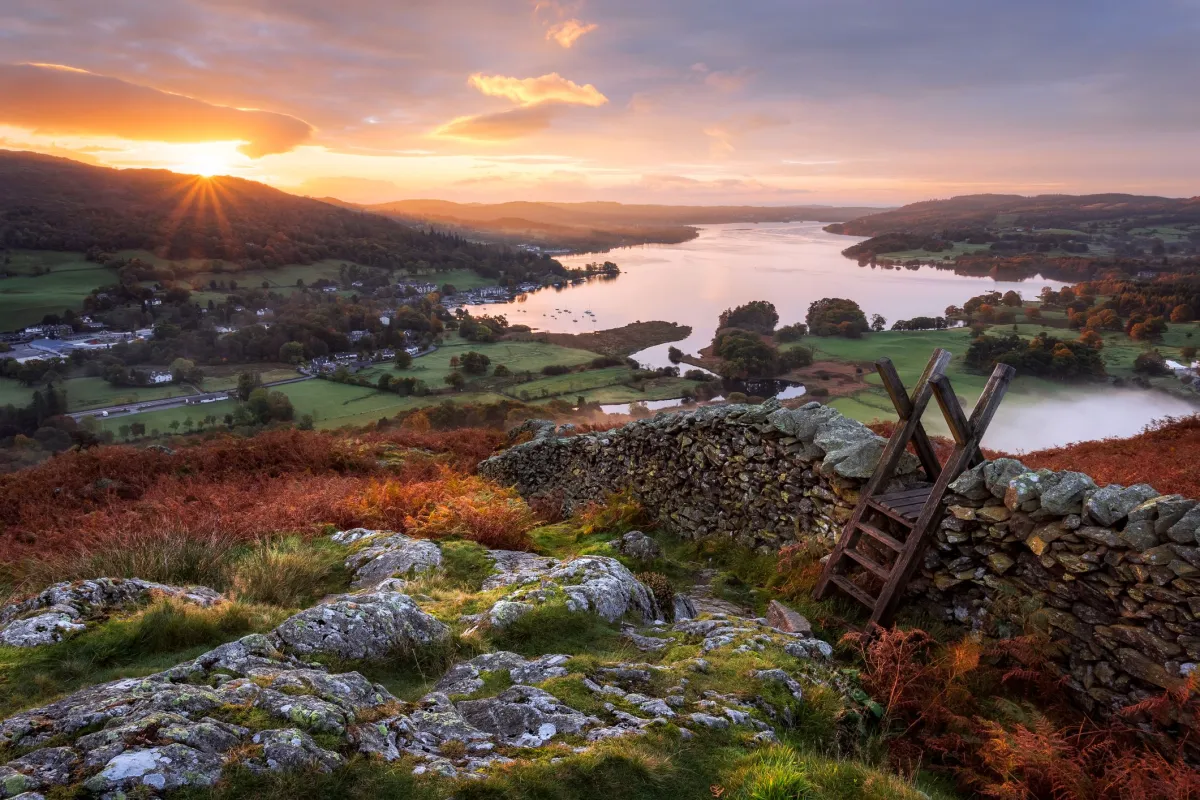 Photo: Lake District, via www.tripsavvy.com
Walking the paths around Rydal Water and Grasmere, visitors encounter the same interplay of light, water, and fell that taught Wordsworth to perceive "a motion and a spirit, that impels all thinking things." The landscape here doesn't merely inspire—it instructs, offering what the poet termed "wise passiveness" to those willing to surrender to its rhythms.
The seasonal transformations that so captivated Wordsworth remain unchanged. Spring's return to the valley, with its "host of golden daffodils," still provides the same shock of renewal that prompted his most famous lyric.
2. Hardy's Wessex: Where Landscape Becomes Character
Thomas Hardy's fictional Wessex overlays the ancient kingdom's boundaries onto Dorset, Wiltshire, and surrounding counties, creating perhaps literature's most fully realised imaginary geography. Yet Hardy's genius lay in recognising that this landscape possessed its own moral authority, shaping human destiny as surely as any literary character.
Egdon Heath, immortalised in The Return of the Native, stretches across present-day Dorset heathland near Wareham. Here, Hardy perceived a landscape of "Titanic form" whose "sombre stretch of rounds and hollows" reflected humanity's deepest struggles. Walking these paths today, particularly at dusk, visitors understand why Hardy saw the heath as "a face on which time makes but little impression."
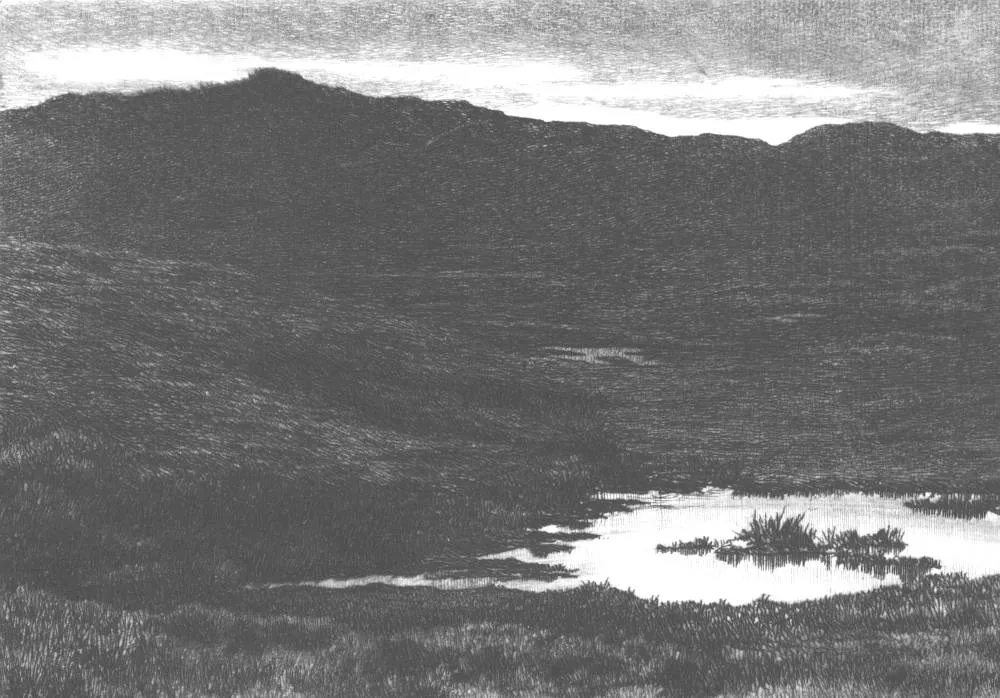 Photo: Egdon Heath, via victorianweb.org
The rolling chalk downs around Dorchester (Hardy's Casterbridge) reveal how topography becomes psychology in Hardy's work. The elevation and exposure of these hills mirror the emotional vulnerability of his characters, whilst the ancient earthworks scattered across the landscape speak to continuities that dwarf individual human drama.
3. Tennyson's Lincolnshire Wolds: The Poetry of Vast Skies
Alfred Tennyson's childhood in the Lincolnshire Wolds instilled a sensibility shaped by horizontal vastness and enormous skies. The gently rolling hills around Somersby, where the poet was born, offer perspectives that stretch to seemingly infinite horizons—a geography that profoundly influenced Tennyson's meditative, expansive poetic voice.
The "dark fens" and "dreary moorland" of Tennyson's verse reflect the Lincolnshire landscape's capacity for both melancholy and transcendence. At Somersby, visitors can trace the "brook that flows through the valley" of his famous poem, understanding how this modest waterway became metaphor for life's journey from source to sea.
The Wolds' ancient churches and isolated farmsteads, scattered across this sparsely populated landscape, reinforced Tennyson's sense of human transience against natural permanence—themes that would culminate in the cosmic perspective of In Memoriam.
4. Coleridge's Quantock Hills: Where Romanticism Was Born
The Quantock Hills of Somerset witnessed the extraordinary creative partnership between Coleridge and Wordsworth that produced Lyrical Ballads, the founding text of English Romanticism. The landscape's combination of intimate combes and expansive moorland provided the perfect setting for their revolutionary poetic experiments.
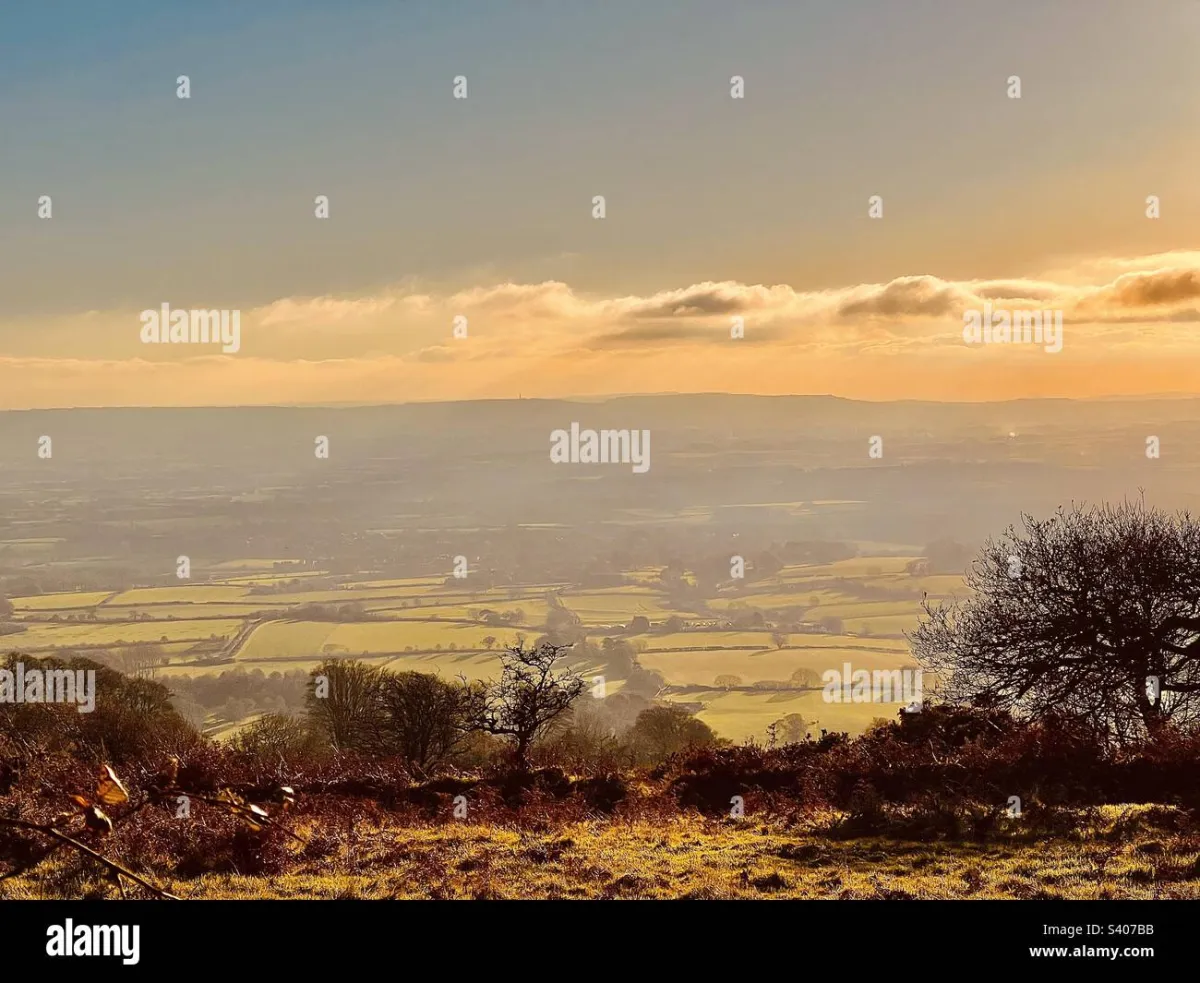 Photo: Quantock Hills, via c8.alamy.com
Walking from Nether Stowey to Alfoxden House, visitors follow paths where Coleridge conceived The Rime of the Ancient Mariner. The Quantocks' mysterious atmosphere—part pastoral, part wild—mirrors the supernatural elements that Coleridge brought to Romantic poetry. Local legend and ancient folklore seemed to rise naturally from these hills, feeding the poet's fascination with the mystical and otherworldly.
The view from Dowsborough hillfort, across the Bristol Channel to Wales, captures the sense of limitless possibility that characterised the Quantock years, when two young poets believed they could transform English literature.
5. Clare's Northamptonshire: The Democracy of Nature
John Clare's poetry emerged from intimate knowledge of a specific Northamptonshire landscape around Helpston, where every field, copse, and stream possessed individual character. Clare's genius lay in recognising the profound poetry inherent in seemingly ordinary countryside, elevating local observation to universal significance.
The landscape around Helpston, largely unchanged since Clare's time, reveals how detailed attention to familiar places can yield infinite poetic material. Clare's "spot of earth" encompassed barely twenty square miles, yet provided material for a lifetime's work. His poetry demonstrates that poetic inspiration requires not exotic locations but attentive observation of whatever landscape we inhabit.
Clare's tragic fate—incarceration in mental asylums far from his beloved countryside—underscores how deeply poets can be rooted in specific places. His later poems, written in confinement, repeatedly return to memories of Northamptonshire fields and woodlands.
6. Hopkins' Wales: The Inscape of Creation
Gerard Manley Hopkins discovered his distinctive poetic voice whilst serving as a Jesuit priest in Wales during the 1870s. The dramatic landscapes of North Wales, particularly around St Beuno's College near Denbigh, provided the perfect setting for Hopkins' revolutionary exploration of what he termed "inscape"—the unique inner nature of natural phenomena.
The Vale of Clwyd, viewed from St Beuno's, inspired Hopkins' recognition that landscape possesses its own spiritual signature. His poetry attempts to capture not merely visual appearance but the essential being of natural objects. Walking the hills above Denbigh, visitors encounter the same interplay of Welsh light and shadow that taught Hopkins to perceive "the dearest freshness deep down things."
The nearby Elwy Valley, celebrated in Hopkins' sonnet "In the Valley of the Elwy," demonstrates how specific geographical features can become vehicles for spiritual meditation. The river's movement through the valley provided Hopkins with a natural symbol for divine grace flowing through creation.
7. Housman's Shropshire: The Landscape of Lost Youth
A.E. Housman's A Shropshire Lad created an idealised county that exists as much in memory and imagination as in geography. Yet the real Shropshire landscape—its hills, market towns, and ancient boundaries with Wales—provided the essential foundation for Housman's elegiac vision of rural England.
The view from the Wrekin, Shropshire's most distinctive hill, encompasses the "blue remembered hills" of Housman's verse. This elevated perspective, looking across to the Welsh borders, captures the sense of distance and longing that permeates A Shropshire Lad. The landscape becomes a metaphor for the irretrievable past, beautiful precisely because it cannot be regained.
Ludlow, frequently mentioned in Housman's poetry, exemplifies the market town that anchored rural life. Its medieval streets and Norman castle represent the continuity that Housman both celebrated and mourned, recognising that tradition survives even as individual lives pass away.
8. Betjeman's Metroland: Poetry in Suburbia
John Betjeman discovered profound poetry in landscapes others dismissed as mundane. His celebration of suburban Middlesex, particularly the area served by the Metropolitan Railway (his beloved "Metroland"), revealed the aesthetic potential of apparently ordinary places.
The Thames Valley between London and the Chilterns, transformed by 20th-century suburban development, became Betjeman's distinctive territory. He recognised that new landscapes could be as emotionally resonant as ancient ones, finding genuine beauty in tennis clubs, railway stations, and semi-detached houses.
Betjeman's poetry teaches us that every landscape, however recent or apparently prosaic, possesses the potential for poetic transformation. His work demonstrates that literary inspiration adapts to changing environments, finding the eternal within the contemporary.
9. Hughes' Yorkshire: The Savage Muse
Ted Hughes' poetry emerged from the dramatic landscape of the Calder Valley in West Yorkshire, where his childhood was shaped by the contrast between industrial towns and wild moorland. The landscape around Mytholmroyd, Hughes' birthplace, combines pastoral valleys with forbidding hills, a geography that profoundly influenced his poetic sensibility.
The nearby Pennine moors, particularly around Hardcastle Crags, provided Hughes with images of natural power and violence that would dominate his mature poetry. These landscapes, where industrial history meets untamed nature, taught Hughes to perceive the savage beauty underlying surface tranquillity.
Hughes' later association with Devon, particularly the landscape around Court Green, demonstrates how poets can develop relationships with multiple landscapes, each contributing different elements to their artistic voice.
10. Larkin's Hull: Finding Poetry in Unlikely Places
Philip Larkin's thirty-year residence in Hull challenged assumptions about poetic inspiration requiring beautiful landscapes. Larkin discovered profound poetry in this industrial city's flat surroundings, finding in the Humber estuary and East Yorkshire's expansive skies a geography perfectly suited to his contemplative temperament.
The view from Hull across the Humber to Lincolnshire captures the sense of limitless space that influenced Larkin's meditative poetry. The city's position at the edge of England, where land meets water and civilization meets wilderness, provided metaphors for the existential themes that dominate Larkin's work.
Larkin's achievement demonstrates that poetic inspiration depends less on scenic beauty than on the poet's ability to find meaning in whatever landscape they inhabit. His Hull poems prove that every place possesses its own poetic potential.
The Continuing Call of Place
These ten landscapes continue to inspire visitors today, offering the same encounters with natural beauty, historical continuity, and spiritual resonance that once transformed observation into art. They remind us that poetry emerges not from abstract inspiration but from attentive engagement with specific places.
For contemporary readers, visiting these locations provides opportunity to experience firsthand the transformative power of landscape that shaped English poetry's greatest voices. In an age of increasing urbanisation and digital distraction, these places offer what they have always provided: the chance to encounter the natural world with the same openness and attention that creates lasting art.
The landscapes that inspired our greatest poets remain as accessible and inspiring as ever, waiting for new generations to discover their own creative responses to the enduring beauty of the English countryside.