Voices United: The Unsung Glory of Britain's Village Choir Movement
On any given evening across Britain, in draughty church halls and community centres from the Highlands to the Home Counties, something extraordinary occurs. Ordinary citizens—teachers, shopkeepers, pensioners, students—gather to create music of transcendent beauty. They are the unsung heroes of our cultural life: the amateur choristers whose collective voice has sustained one of the world's greatest musical traditions for centuries.
The Democratic Art Form
No other musical tradition offers such universal accessibility as choral singing. Unlike orchestral music, which requires expensive instruments and years of technical training, choral music demands only the voice—that most democratic of instruments, available to all regardless of economic circumstance. This fundamental equality has made choral singing the most participatory of all classical art forms, creating communities bound by harmony rather than divided by social distinction.
The British choral tradition encompasses an extraordinary range of musical expression, from the sublime polyphony of Tudor masters to the rousing choruses of Handel's oratorios, from the pastoral beauty of Vaughan Williams to the contemporary works of John Rutter and Bob Chilcott. Amateur choirs tackle this repertoire with enthusiasm that often compensates for any technical limitations, their passion bringing fresh life to familiar masterpieces.
Historical Roots, Living Branches
Britain's choral culture emerged from deep historical roots. Medieval parish churches fostered singing as an integral part of worship, whilst the Reformation's emphasis on congregational participation democratised musical expression. The eighteenth-century establishment of choral societies in industrial towns provided cultural enrichment for working communities, creating a tradition that flourished alongside Britain's economic expansion.
The great choral festivals of the nineteenth century—Three Choirs, Leeds, Sheffield—established Britain as the world's leading choral nation. These gatherings brought together amateur singers from across the country, creating temporary musical communities that transcended local boundaries. The tradition continues today, with festivals like the Llangollen International Musical Eisteddfod maintaining the spirit of musical fellowship that has sustained British choral culture for generations.
Cathedral Foundations
At the apex of Britain's choral tradition stand the cathedral and collegiate choirs whose daily round of services maintains an unbroken musical heritage stretching back five centuries. These institutions preserve not merely repertoire but performance traditions, their unique acoustic environments shaping a distinctly English choral sound characterised by clarity, precision, and spiritual intensity.
The boys' voices of King's College, Cambridge, or Westminster Abbey represent the distillation of centuries of musical evolution, their ethereal tones carrying forward a tradition that links us directly to Tallis and Byrd. Yet these professional ensembles exist in symbiosis with the amateur movement, many of their adult members having emerged from parish church choirs and local choral societies.
Parish Church Renaissance
Perhaps nowhere is the vitality of British choral culture more evident than in parish churches, where dedicated volunteers maintain musical traditions that date back centuries. These unsung heroes arrive early for rehearsals, struggle with challenging anthems, and perform week after week for congregations that may number in the dozens rather than hundreds.
Yet their contribution to cultural continuity cannot be overstated. Parish church choirs preserve vast repertoires of English church music, their performances keeping alive works that might otherwise exist only in scholarly editions. They provide musical education for children and adults alike, often serving as the first introduction to serious musical study for young voices who may go on to professional careers.
The recent revival of interest in traditional church music has brought new energy to parish choirs, with many recruiting singers from beyond their immediate congregations. The popularity of television programmes like "Songs of Praise" and the success of professional groups like The Sixteen have raised awareness of the treasures contained within the English choral tradition.
Community Choirs: A Modern Renaissance
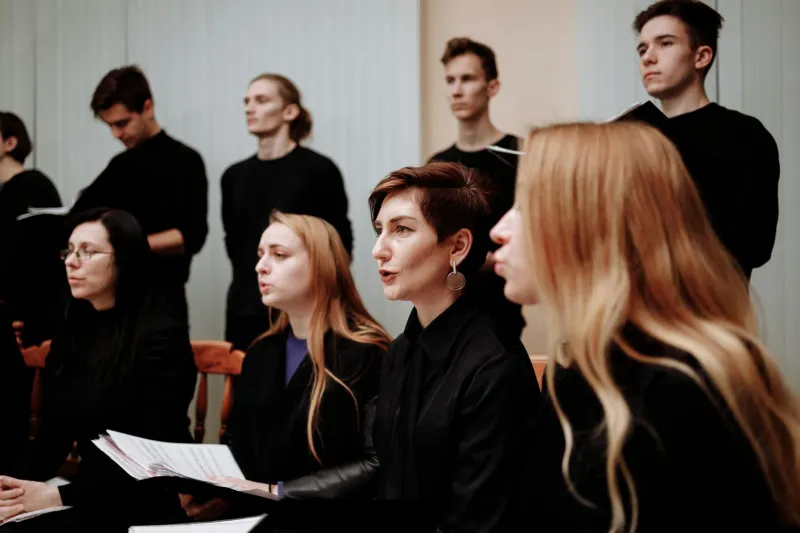
Alongside traditional church and society choirs, a new phenomenon has emerged: the community choir movement. These groups, often secular in orientation, attract singers seeking the social and emotional benefits of collective music-making without necessarily embracing religious worship. They represent a democratisation of choral singing, welcoming voices regardless of reading ability or previous experience.
Community choirs have expanded the choral repertoire to include popular music, world music, and specially commissioned works that reflect contemporary concerns. Groups like the London Community Gospel Choir and Gareth Malone's television-inspired ensembles have demonstrated that choral singing can be both accessible and ambitious, traditional and innovative.
The Science of Harmony
Recent research has confirmed what choristers have long known intuitively: singing together produces profound psychological and physiological benefits. The act of breathing in unison, of listening intently to other voices whilst contributing one's own, creates a form of meditation that reduces stress and promotes mental wellbeing. The social bonds formed through regular rehearsal and performance provide community connections increasingly rare in modern life.
For elderly singers, choir participation offers cognitive stimulation that may help prevent mental decline, whilst young voices develop not only musical skills but also discipline, teamwork, and cultural awareness. The intergenerational nature of many choirs creates unique learning environments where experience and enthusiasm cross traditional age boundaries.
Challenges and Opportunities
Despite its many strengths, the British choral movement faces significant challenges. Declining church attendance has reduced the natural recruitment pool for traditional choirs, whilst competing leisure activities draw potential singers towards less demanding pursuits. Many choirs struggle with ageing membership and difficulty attracting younger voices.
Yet opportunities abound for those willing to embrace change. The popularity of singing on television, the growth of world music influences, and increasing awareness of singing's health benefits all point towards potential expansion. Progressive choirs that adapt their repertoire and recruitment strategies whilst maintaining high musical standards often find themselves oversubscribed.
A Call to Harmony
The British choral tradition represents something precious and increasingly rare: a grassroots cultural movement that transcends social, economic, and generational divisions. In an age of increasing isolation and digital mediation, choral singing offers authentic human connection through shared artistic endeavour.
Every community in Britain likely harbours a choir seeking new voices. Whether drawn by religious devotion, musical ambition, or simple desire for fellowship, potential singers will find welcome in these ensembles. No previous experience is necessary—only willingness to join the centuries-old tradition of voices united in harmony.
The investment required is minimal: a few hours weekly, modest subscription fees, perhaps the purchase of music folders and concert attire. The returns, however, are immeasurable: the joy of creating beauty alongside others, the satisfaction of mastering challenging repertoire, the friendships forged through shared musical endeavour.
Preserving the Future
As custodians of this remarkable heritage, we bear responsibility for ensuring its continuation. Supporting local choirs through attendance at concerts, volunteering for administrative tasks, or simply spreading awareness of their existence all contribute to their survival. Those with children should consider the profound educational and social benefits that choir membership provides.
The British choral tradition has survived religious reformation, industrial revolution, two world wars, and social transformation. It will endure only if each generation rediscovers its relevance and beauty. In our village halls and parish churches, cathedral stalls and community centres, the voices of Britain continue to rise in harmony—a living testament to the power of collective artistic expression.
The invitation stands open to all: come, add your voice to this glorious tradition. In doing so, you join not merely a choir, but a centuries-old community of souls united in the pursuit of musical beauty and human fellowship.