Voices of Stone and Steel: The Mighty Organs That Define Britain's Musical Soul
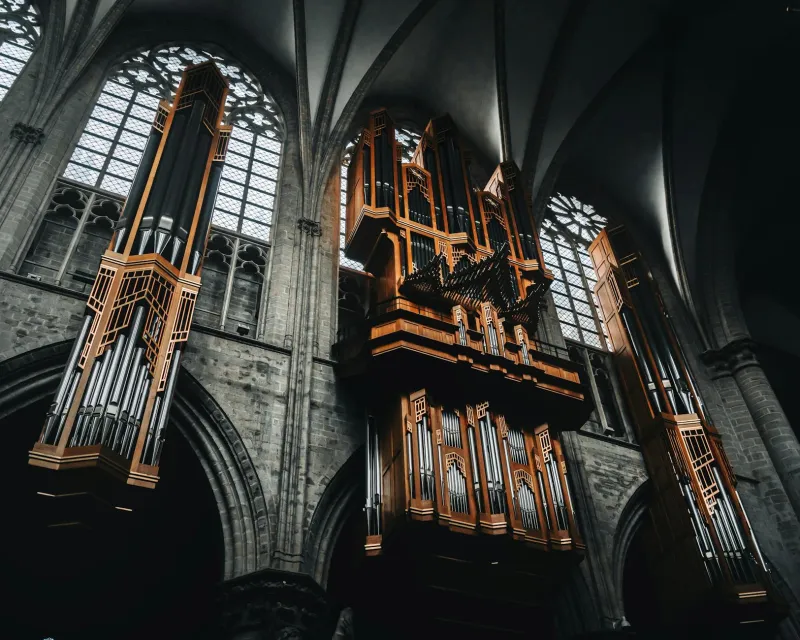
Voices of Stone and Steel: The Mighty Organs That Define Britain's Musical Soul
In the hushed moments before a service begins, when afternoon light filters through ancient stained glass, a single sustained note emerges from somewhere high above the congregation. It grows, joined by others, building into harmonies that seem to emanate from the very stones themselves. This is the voice of the pipe organ – an instrument so fundamental to British musical culture that its absence would leave cathedrals, churches, and concert halls eerily silent. Yet across the nation, hundreds of these magnificent instruments stand mute, victims of declining congregations, prohibitive maintenance costs, and a society that has largely forgotten their profound cultural significance.
The Golden Age of British Organ Building
Britain's love affair with the pipe organ reached its zenith during the Victorian era, when rapid industrialisation provided both the wealth and technical expertise necessary to create instruments of unprecedented size and complexity. The period between 1850 and 1920 witnessed an explosion of organ building that established British makers among the world's finest craftsmen.
Firms such as Harrison & Harrison of Durham, Hill & Son of London, and Willis & Sons became household names, their instruments gracing everything from village parish churches to the great cathedrals. These Victorian and Edwardian organs represented far more than mere musical instruments; they embodied the era's confidence in technological progress and its belief that mechanical ingenuity could serve spiritual purposes.
The organ at Royal Albert Hall, built by Henry Willis in 1871, exemplifies this golden age ambition. With nearly 10,000 pipes ranging from pencil-thin trebles to bass pipes standing thirty-two feet tall, it was designed to fill the vast circular space with sound that could accompany both intimate chamber music and massed choirs of thousands. Recent restoration has revealed the extraordinary sophistication of Willis's pneumatic action system, which allowed a single organist to control this mechanical leviathan with remarkable sensitivity.
Cathedral Treasures: The Nation's Musical Cathedrals
Britain's cathedrals house some of the world's most historically significant organs, instruments whose voices have shaped liturgical music for generations. At York Minster, the great organ represents five centuries of continuous musical evolution. The current instrument, largely rebuilt by Principal Pipe Organs in 1993, incorporates pipework dating back to the 17th century alongside cutting-edge digital technology, creating a unique dialogue between past and present.
Similarly, the organ at King's College, Cambridge, has become inseparable from Britain's Christmas traditions through the annual Festival of Nine Lessons and Carols. Built by Harrison & Harrison in 1934, this instrument's clear, bright tone perfectly complements the chapel's acoustic, creating the distinctive sound that millions associate with English choral music.
Yet perhaps the most remarkable cathedral organ stands in Liverpool's Anglican Cathedral, where the instrument built by Henry Willis III between 1908 and 1926 ranks among the largest in the world. With over 10,000 pipes distributed across five divisions, it possesses a dynamic range that can whisper intimate accompaniments or thunder with sufficient power to fill the cathedral's enormous nave. The organ's famous 64-foot Contra Violone pipes – among the longest wooden pipes ever constructed – produce notes felt as much as heard, creating physical sensations that no recording can replicate.
Parish Church Gems: Hidden Musical Treasures
Whilst cathedral organs attract scholarly attention and tourist admiration, Britain's parish churches contain equally remarkable instruments that often escape notice. These smaller organs, frequently built by local craftsmen or regional firms, provide intimate glimpses into changing musical tastes and community aspirations.
The organ at St. Bartholomew's, Armley, in Leeds, exemplifies this parish church tradition. Built by Edmund Schulze in 1869, this instrument represents the influence of German romantic organ building on British musical culture. Schulze's emphasis on foundational tone and seamless registration created an organ ideally suited to the German repertoire that was gaining popularity in Victorian Britain, yet flexible enough to accompany traditional Anglican liturgy.
Similarly, the remarkable organ at St. Michael's, Cornhill, in the City of London, demonstrates how parish churches could rival cathedrals in musical ambition. Built by Renatus Harris in 1684 and subsequently enlarged by various builders, this instrument has witnessed over three centuries of London's musical life, from Handel's performances in the 18th century to contemporary premieres by leading British composers.
The Seaside Splendours: Concert Hall Organs
Britain's Victorian enthusiasm for organ music extended far beyond religious settings. The period's great concert halls and public buildings featured magnificent instruments designed for secular entertainment, creating a unique tradition of organ recitals that democratised access to serious music.
The organ at Blackpool Tower Ballroom, built by Wurlitzer in 1929, represents this tradition's popular culmination. Though American-built, this instrument became quintessentially British through decades of seaside entertainment, its theatrical voices providing accompaniment to everything from tea dances to variety shows. Recent restoration has preserved not only the organ's mechanical components but also its cultural role as a symbol of British seaside leisure.
More seriously, the organ at Royal Festival Hall, built by Harrison & Harrison in 1954, was designed specifically for concert performance rather than liturgical use. Its clean, classical voicing and precise mechanical action created new possibilities for organ recitals, influencing a generation of British organists and composers who wrote specifically for its unique capabilities.
The Craftsmen's Art: Understanding Organ Construction
To appreciate fully these magnificent instruments requires understanding the extraordinary craftsmanship they represent. A pipe organ is essentially a wind instrument of enormous complexity, requiring skills from carpentry and metalworking to leather crafting and precision engineering. The process of voicing – adjusting each pipe to produce its intended tone – remains as much art as science, requiring ears trained through decades of experience.
British organ builders developed distinctive approaches to construction and voicing that created recognisable national characteristics. The emphasis on foundational tone, careful blend between divisions, and mechanical precision became hallmarks of British organ building, influencing instruments worldwide whilst creating a uniquely British musical aesthetic.
The Crisis of Preservation
Yet this magnificent heritage faces unprecedented challenges. Declining church attendance has reduced both the audiences for organ music and the financial resources necessary for maintenance. A pipe organ requires constant attention – leather components perish, wooden parts warp, metal pipes corrode – and restoration costs can easily exceed £100,000 for even modest instruments.
Many parishes face impossible choices between maintaining their organs and funding other essential activities. Some have sold their instruments to collectors or overseas buyers, whilst others have allowed magnificent organs to decay beyond economic repair. The loss of each instrument represents not merely the silencing of a particular voice but the erosion of centuries of accumulated craftsmanship and musical tradition.
Renaissance and Renewal
Yet there are encouraging signs of renewal. Organisations such as the Organ Historical Trust work tirelessly to preserve historically significant instruments, whilst the British Institute of Organ Studies documents and researches the nation's organ heritage. Modern technology, including digital recording and computer-controlled actions, offers new possibilities for preservation and restoration.
More importantly, a new generation of organists and enthusiasts is discovering these magnificent instruments, creating fresh audiences for organ music and innovative approaches to programming that connect historical instruments with contemporary musical life. The annual London Organ Day attracts hundreds of participants to explore instruments across the capital, whilst social media has created global communities of organ enthusiasts sharing their passion for these remarkable machines.
Britain's organs represent more than musical instruments; they embody centuries of craftsmanship, spiritual aspiration, and cultural achievement. Their preservation requires not merely technical expertise but recognition of their fundamental role in the nation's musical identity. In their voices – from the gentlest flute stop to the most thunderous pedal reed – we hear echoes of all who have gathered to worship, celebrate, and find solace in the transformative power of music.