The Birth of Musical Democracy
In the gaslit halls of early 19th-century London, a quiet revolution was taking place. Whilst the aristocracy continued to enjoy their exclusive box seats at Covent Garden and King's Theatre, a new form of musical entertainment was emerging that would fundamentally alter Britain's relationship with orchestral music. The promenade concert, with its radical proposition that fine music need not require stiff formality, was about to transform the cultural landscape.
The concept was deceptively simple: create spaces where audiences could move freely, socialise, and enjoy refreshments whilst listening to orchestral performances. This represented a seismic shift from the established concert hall tradition, where audiences sat in prescribed silence, their behaviour governed by strict social protocols that often proved more intimidating than the music itself.
Pioneering Impresarios and Their Vision
The driving force behind this musical democratisation came from a generation of enterprising impresarios who recognised that Britain's growing middle class hungered for cultural experiences previously reserved for the social elite. These visionaries understood that music's power lay not in its exclusivity, but in its capacity to bring people together across social boundaries.
Louis Antoine Jullien, the flamboyant French conductor who arrived in London during the 1840s, became perhaps the most celebrated champion of the promenade format. His concerts at the Surrey Gardens and later at Covent Garden drew enormous crowds, attracted by his theatrical conducting style and his commitment to making orchestral music accessible to ordinary working people. Jullien's programmes cleverly balanced popular favourites with more challenging repertoire, gradually educating his audiences whilst never condescending to them.
The success of these early promenade concerts lay in their atmosphere of relaxed conviviality. Unlike the hushed reverence demanded in traditional concert halls, promenade audiences were encouraged to respond naturally to the music. They could applaud between movements, request encores, and engage with the performance in ways that reflected music's fundamental role as a social art form.
Architectural Innovation and Social Transformation
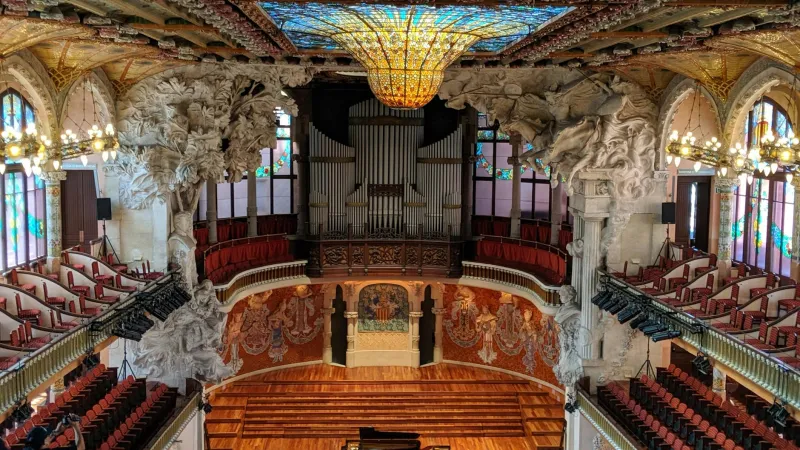
The physical spaces that housed these concerts were as revolutionary as the performances themselves. Purpose-built promenade halls featured large open floors surrounded by galleries, creating an environment where social mixing occurred naturally. The wealthy might occupy the boxes and galleries, but the promenade floor itself became a genuinely democratic space where clerks, shopkeepers, students, and artisans mingled freely.
This architectural democracy extended to the refreshment arrangements that became integral to the promenade experience. Unlike today's hurried interval drinks, promenade concerts featured elaborate supper rooms and smoking areas where audiences could retreat without missing the music entirely. These spaces fostered the kind of musical conversation and debate that helped develop more sophisticated listening habits across broader social strata.
The lighting technology of the era contributed significantly to the unique atmosphere of these events. Gas illumination created a warm, intimate environment quite different from the harsh glare of modern concert halls. Audiences could see and be seen, turning each concert into both a musical and social occasion that reflected the gregarious spirit of Victorian public life.
Musical Programming and Popular Education
The programming philosophy that emerged from the promenade tradition proved remarkably prescient. Rather than assuming audiences needed to be spoon-fed simplified arrangements, successful promenade impresarios developed sophisticated strategies for musical education that worked through exposure and repetition rather than formal instruction.
Typical programmes might open with a popular overture, progress through orchestral arrangements of familiar songs and dances, introduce excerpts from major symphonic works, and conclude with rousing finales that encouraged audience participation. This structure allowed newcomers to classical music to find their bearings whilst gradually expanding their musical horizons.
The success of this approach can be measured in the remarkable expansion of Britain's concert-going public during the mid-19th century. Cities across the country began establishing their own promenade seasons, creating a network of musical venues that served communities previously excluded from formal musical culture.
Lessons for Contemporary Classical Music
As today's classical music organisations grapple with concerns about aging audiences and cultural relevance, the promenade tradition offers instructive precedents for making orchestral music more accessible without compromising artistic standards. The original promenade concerts succeeded because they treated audiences as intelligent participants rather than passive consumers, creating environments where musical appreciation could develop organically.
Modern concert halls might benefit from reconsidering the rigid protocols that can intimidate newcomers to classical music. The promenade tradition suggests that audiences respond positively to greater freedom and informality, provided the musical standards remain uncompromised.
The Enduring Legacy
Though the original promenade concerts eventually evolved into more formal structures, their influence on British musical culture proved lasting. The democratic principles they embodied laid the groundwork for later innovations, from the BBC Proms to today's outdoor classical festivals. They demonstrated that accessibility and excellence need not be mutually exclusive, a lesson that remains relevant for contemporary arts organisations seeking to expand their reach whilst maintaining their artistic integrity.
The promenade concert tradition reminds us that classical music's greatest strength lies not in its exclusivity, but in its capacity to create shared experiences that transcend social boundaries. In our current age of cultural fragmentation, this legacy offers valuable guidance for those seeking to preserve and revitalise Britain's classical music heritage.