A Troubling Transformation in Provincial Playhouses
Something profound is shifting in the landscape of British regional theatre, and it should concern anyone who values our cultural inheritance. Across the country, from the Midlands to the Scottish borders, theatres that once proudly flew the flag for Shakespeare, Shaw, and Sheridan are quietly abandoning their classical repertoire in favour of contemporary programming that, whilst undoubtedly well-intentioned, may be severing vital cultural connections.
This is not merely a question of artistic preference or commercial pragmatism. It represents a fundamental change in how regional theatres understand their cultural mission—and the implications extend far beyond the theatre world itself.
The Statistical Evidence of Decline
Recent analysis of programming data from forty-three major regional theatres reveals a stark picture. Over the past decade, productions of Shakespeare have declined by 47% across regional venues, whilst other classical dramatists fare even worse. Chekhov, once a staple of ambitious provincial seasons, has virtually disappeared from regional stages outside London. The great Restoration comedies—Congreve, Wycherley, Vanbrugh—now appear so rarely as to be practically extinct.
The Birmingham Repertory Theatre, historically one of Britain's most adventurous regional companies, programmed seven classical productions in 2010 but only two in 2023. Similar patterns emerge across the country: the Crucible in Sheffield, once renowned for its Shakespeare productions, has not staged the Bard for three consecutive seasons.
This retreat from the classics coincides with increased emphasis on contemporary writing, community engagement projects, and what theatre professionals term "relevant" programming. Whilst these developments have undoubtedly brought benefits, they raise fundamental questions about cultural continuity and artistic responsibility.
The Justifications and Their Limitations
Theatre directors defending this shift offer compelling arguments. Sarah Mitchell, Artistic Director of the Northampton Royal Theatre, explains: "We have a responsibility to reflect our community's diversity and address contemporary concerns. Shakespeare wrote for his audience—shouldn't we write and programme for ours?"
This perspective resonates widely within the profession. Directors argue that classical drama, however magnificent, can feel remote to audiences grappling with modern challenges: economic uncertainty, social fragmentation, environmental crisis. Why stage King Lear when contemporary playwrights offer more immediate engagement with current anxieties?
Funding pressures intensify these considerations. Arts Council England's emphasis on "relevance" and "community impact" creates incentives for programming that demonstrates clear social benefits. A new play addressing local housing issues secures funding more easily than another production of The School for Scandal, however brilliantly conceived.
Yet this reasoning, whilst understandable, rests on questionable assumptions about audience sophistication and cultural value. It implies that classical drama lacks contemporary relevance—a proposition that centuries of successful performance have comprehensively disproved.
The Counter-Argument: Classics as Living Culture
The case for maintaining classical repertoire in regional theatre extends beyond nostalgic attachment to tradition. These works continue to speak powerfully to contemporary audiences precisely because they address universal human experiences that transcend historical circumstance.
Hamlet's psychological complexity remains as penetrating today as in Shakespeare's era. Chekhov's exploration of social change and personal disappointment resonates profoundly in our own age of transformation. Shaw's wit and social criticism feel remarkably contemporary. These works endure not despite their age but because of their timeless insights into human nature.
Moreover, regional theatres historically served as cultural bridges, introducing audiences to works they might never otherwise encounter. The Chichester Festival Theatre's recent production of The Recruiting Officer attracted audiences who had never heard of George Farquhar but discovered a playwright of remarkable wit and insight. Such encounters expand cultural horizons in ways that purely contemporary programming cannot match.
Professor James Whitfield of Manchester University's Drama Department argues: "Regional theatres abandoning the classics represent a fundamental misunderstanding of their cultural role. They're not just entertainment venues but guardians of our dramatic heritage. When they retreat from this responsibility, something irreplaceable is lost."
The Audience Perspective: Hunger for Heritage
Audience research reveals more complex preferences than programming decisions might suggest. The Theatre Audience Research Institute's recent survey found that 68% of regional theatre-goers expressed interest in seeing classical productions, whilst only 34% had attended one in the past two years.
This gap between desire and opportunity reflects programming choices rather than audience indifference. Margaret Thompson, a season ticket holder at the Liverpool Playhouse, observes: "I love supporting new writing, but I also want to see the great plays that shaped our culture. When was the last time we had a proper Restoration comedy here? These works are part of our heritage."
The generational dimension adds further complexity. Older audiences, who form the backbone of regional theatre attendance, often feel alienated by the wholesale abandonment of familiar repertoire. Yet younger audiences, when exposed to well-produced classical drama, frequently respond with enthusiasm and surprise.
The Royal Exchange Manchester's recent production of She Stoops to Conquer attracted their youngest-ever audience demographic, suggesting that quality productions can overcome preconceptions about classical drama's accessibility.
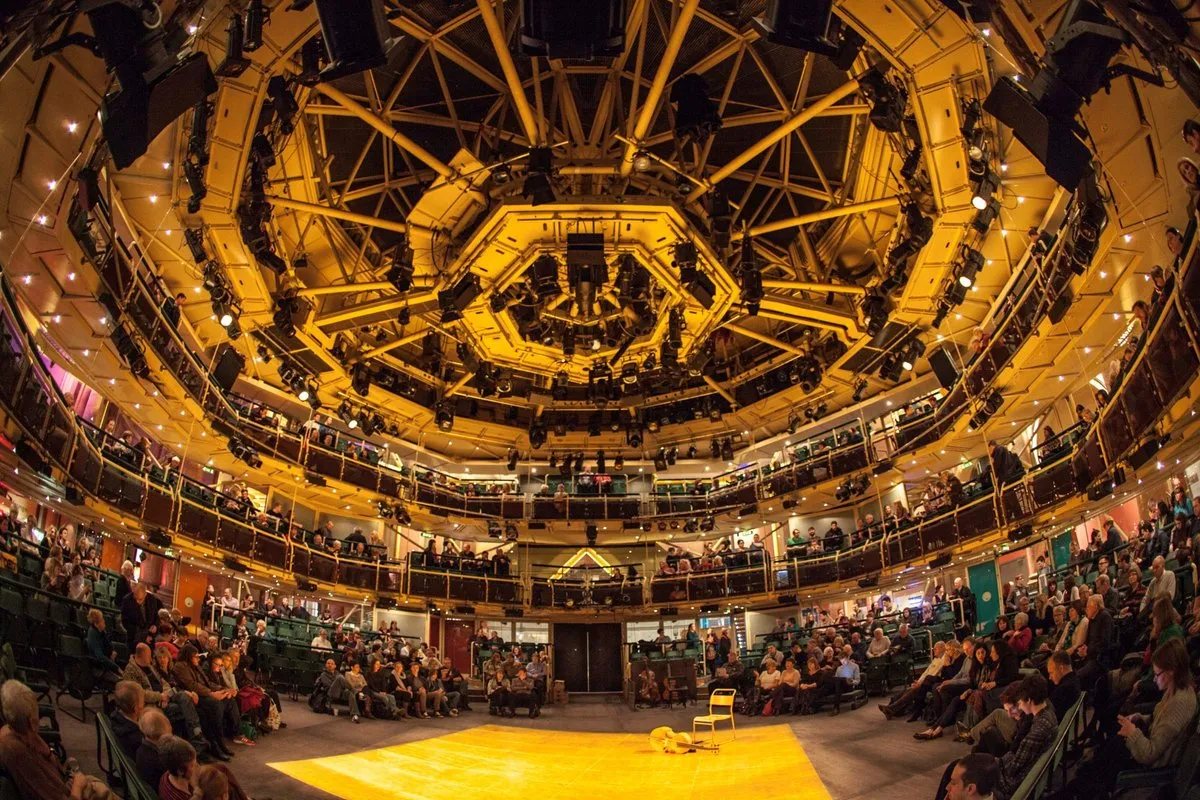 Photo: Royal Exchange Manchester, via dynamic-media-cdn.tripadvisor.com
The London Exception and Its Implications
Whilst regional theatres retreat from classical programming, London's theatrical landscape tells a different story. The National Theatre, RSC, and commercial West End continue to programme classical works successfully, often to sold-out houses and critical acclaim.
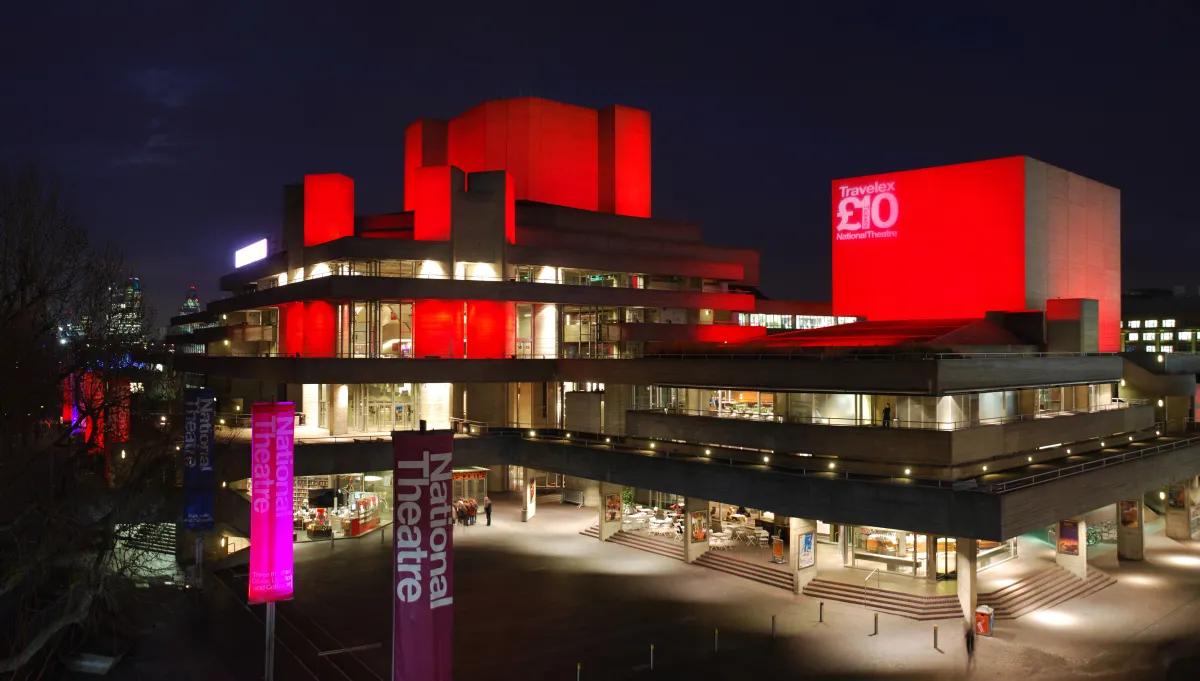 Photo: National Theatre, via upload.wikimedia.org
This divergence creates a troubling cultural geography where access to our dramatic heritage depends increasingly on proximity to the capital. Regional audiences who once enjoyed local productions of Shakespeare or Sheridan must now travel to London—if they can afford to do so—to experience these works in professional productions.
The implications extend beyond individual disappointment. Regional theatres historically played crucial roles in training actors, directors, and designers in classical techniques. As these opportunities disappear, the entire profession loses vital skills and knowledge. Young actors graduating from drama schools find fewer opportunities to develop classical expertise, creating a self-perpetuating cycle of decline.
The Educational Imperative
Regional theatres' retreat from classical programming coincides with similar trends in education, where literature curricula increasingly emphasise contemporary texts over traditional canon. This double abandonment threatens to sever entirely the cultural connections that once linked generations through shared dramatic experience.
Schools once relied on regional theatres to provide students with live encounters with Shakespeare and other classical dramatists. As these productions disappear, teachers struggle to make these works vivid for students who may never see them performed. The result is a generation growing up with diminished connection to their cultural inheritance.
Dr Emma Richardson, Head of English at a comprehensive school in Derby, explains: "When the Derby Playhouse stopped programming Shakespeare regularly, we lost an invaluable educational resource. Reading Macbeth in class is one thing; seeing it performed professionally is transformative. Our students are poorer for losing that opportunity."
A Path Forward: Integration Rather Than Abandonment
The solution lies not in choosing between classical and contemporary programming but in finding creative ways to integrate both traditions. Several regional theatres demonstrate how this balance can be achieved without sacrificing artistic integrity or community relevance.
The West Yorkshire Playhouse's recent season successfully combined new writing with classical revivals, using shared themes to create dialogue between historical and contemporary perspectives. Their production of The Tempest paired with a new play about climate change created rich conversations about power, nature, and human responsibility.
Similarly, the Everyman Theatre in Liverpool has pioneered approaches that make classical texts speak directly to local communities without compromising their essential character. Their all-Merseyside cast of Romeo and Juliet proved that classical drama can celebrate regional identity whilst maintaining universal appeal.
These examples suggest that the perceived opposition between classical and contemporary programming represents a false choice. Skilled artistic directors can programme seasons that honour both traditions, creating richer theatrical experiences than either approach achieves alone.
The Stakes Are Higher Than Entertainment
Ultimately, this debate transcends questions of theatrical programming to touch fundamental issues about cultural continuity and community identity. Regional theatres serve not merely as entertainment venues but as cultural anchors, connecting communities to broader artistic traditions whilst reflecting local character and concerns.
When these institutions abandon their role as guardians of dramatic heritage, they diminish not only their own artistic mission but the cultural life of their communities. The great classical plays offer resources for understanding human experience that complement rather than compete with contemporary insights.
The challenge facing regional theatre leaders is not whether to programme classical works but how to make them speak powerfully to contemporary audiences. This requires imagination, skill, and commitment—qualities that the best regional theatres have always possessed.
Reclaiming the Classical Tradition
Britain's regional theatres stand at a crossroads. They can continue their retreat from classical programming, gradually transforming into venues that reflect only immediate contemporary concerns. Or they can reclaim their historic role as bridges between past and present, offering audiences encounters with both inherited wisdom and contemporary insight.
The choice will determine not only the future of regional theatre but the cultural vitality of communities across Britain. In an age of rapid change and social fragmentation, the timeless insights of great dramatic literature offer resources for understanding and connection that we abandon at our peril.
The classics are not museum pieces but living works that continue to illuminate human experience. Regional theatres that rediscover this truth will find audiences eager to engage with drama that speaks to both contemporary concerns and eternal truths. Those that persist in their retreat risk losing not only their artistic soul but their essential purpose as guardians of our shared cultural inheritance.
The time has come for regional theatres to remember their calling: not merely to entertain or even to educate, but to connect communities with the great works that have shaped our understanding of what it means to be human. In that mission, Shakespeare and his fellow dramatists remain not obstacles to overcome but allies to embrace.