The Canvas of Sound
In the gaslit drawing rooms of Victorian Britain, music arrived dressed in silk and adorned with jewels. Long before the gramophone democratised musical entertainment, sheet music publishers understood that the eye must be seduced before the ear could be enchanted. What emerged was a golden age of illustrated covers that transformed simple parlour ballads into miniature galleries, each piece a testament to the era's belief that beauty should permeate every aspect of domestic life.
The phenomenon reached its zenith between 1850 and 1920, when publishing houses like Boosey & Co., Chappell & Co., and Francis Brothers competed not merely for musical supremacy but for artistic distinction. These covers, produced through the painstaking process of chromolithography, featured elaborate borders reminiscent of illuminated manuscripts, romantic pastoral scenes, and portraits of celebrated performers rendered with museum-quality precision.
Masters of the Miniature
Behind these visual symphonies stood a cadre of largely anonymous artists whose talents rivalled those working in oils for the Royal Academy. Alfred Concanen, perhaps the most celebrated of these forgotten masters, created over 3,000 covers during his career, each bearing his distinctive combination of theatrical drama and technical precision. His work for the publisher Hopwood & Crew elevated simple music hall ditties into objects worthy of framing.
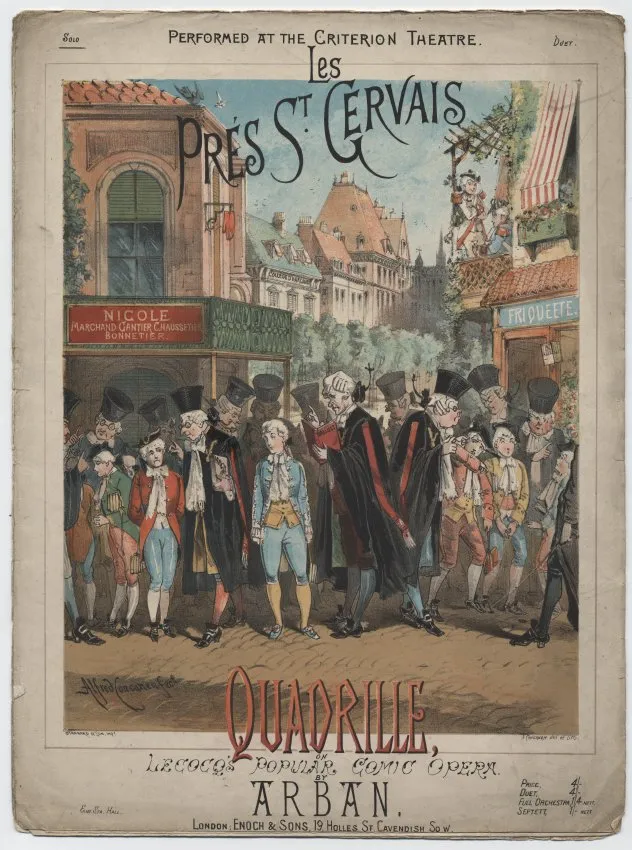 Photo: Alfred Concanen, via irishsheetmusicarchives.com
The process itself was an art form. Skilled lithographers would spend weeks perfecting a single cover, building up layers of colour through multiple stone impressions. The finest examples employed gold leaf, embossing, and hand-finished details that made each sheet a small luxury. Publishers understood that these covers served as both advertisement and ornament – displayed on piano stands, they announced the household's musical sophistication to visitors.
The Cultural Symphony
These illustrated scores reveal fascinating insights into Victorian musical life. Popular ballads like 'The Lost Chord' or 'Come Into the Garden, Maud' were given covers that reflected their emotional content through carefully chosen imagery – weeping willows for melancholy pieces, roses and doves for romantic songs. Military marches featured stirring battle scenes, whilst comic songs boasted cartoonish illustrations that promised entertainment before a single note was played.
The covers also documented the era's celebrity culture. When Jenny Lind, the 'Swedish Nightingale', conquered London audiences, her likeness graced dozens of covers, turning sheet music into collectible memorabilia. Similarly, the portraits of music hall stars like Marie Lloyd or George Leybourne transformed these publications into early forms of fan merchandise.
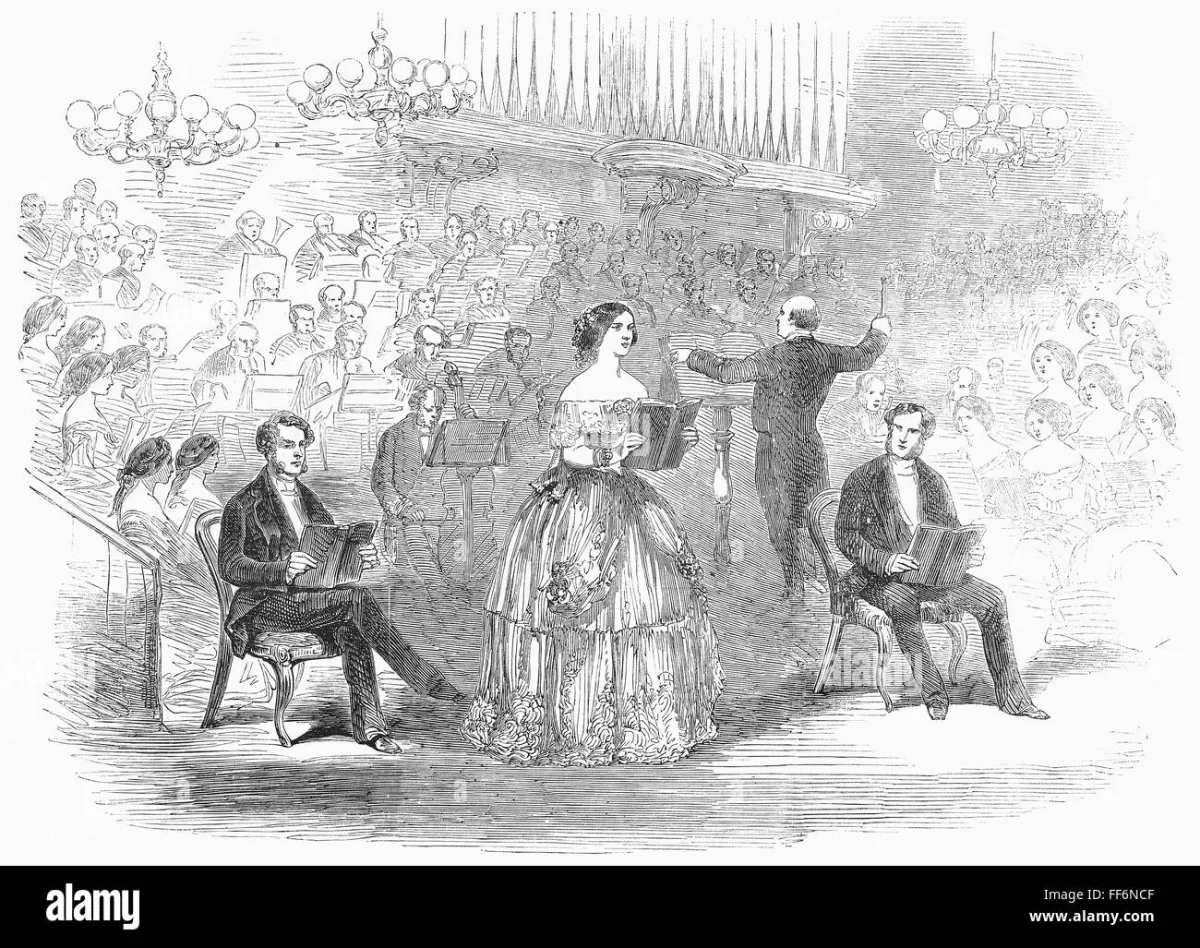 Photo: Jenny Lind, via c8.alamy.com
The Collectors' Crusade
Today, these artistic treasures survive largely through the dedication of private collectors and specialist archives. The Victoria and Albert Museum houses one of the finest collections, whilst institutions like the British Library's Music Collections preserve thousands of examples. However, many pieces remain scattered in attics and second-hand shops, their artistic value unrecognised.
 Photo: Victoria and Albert Museum, via static.vecteezy.com
Collector Margaret Williamson, who has assembled over 2,000 Victorian covers, observes that 'each piece tells a story not just of musical taste, but of how ordinary families chose to surround themselves with beauty. These weren't luxury items – they were affordable art that democratised aesthetic pleasure.'
Lessons from the Parlour
The tradition speaks to a time when music consumption was inherently social and ceremonial. Unlike today's invisible digital files, these physical objects demanded display, discussion, and careful handling. They transformed the act of choosing music into an aesthetic decision, where visual appeal might determine which piece would grace the evening's entertainment.
Perhaps most remarkably, these covers remind us that our ancestors expected beauty as a standard feature of cultural consumption. In an age of increasingly utilitarian design, the Victorian sheet music tradition offers a compelling argument for the transformative power of everyday artistry – proof that even the humblest domestic pleasure deserves to be clothed in splendour.
Preserving the Visual Music
As streaming services reshape our relationship with music once again, these illustrated covers serve as poignant reminders of music's material culture. They represent an era when songs were objects to be treasured, displayed, and shared – when the visual and auditory arts combined to create experiences that engaged all the senses.
For those seeking to explore this forgotten world, specialist dealers and auction houses occasionally offer original examples, whilst digital archives provide glimpses of covers too fragile for handling. Each discovery offers a window into a Britain where music wore its finest dress, and where the humblest drawing room could become a gallery worthy of the finest artistic traditions.