The Silent Partners of Literary Immortality
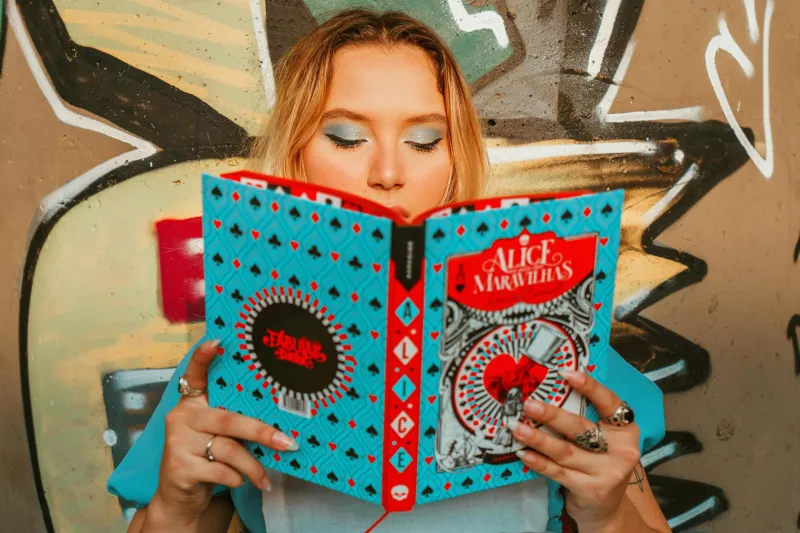
When Alice tumbled down the rabbit hole in 1865, she carried with her not merely Lewis Carroll's whimsical prose, but the precise features, expression, and bearing that John Tenniel had bestowed upon her. Similarly, when readers encounter the rotund figure of Mr Pickwick or the gaunt silhouette of Ebenezer Scrooge, they witness not Charles Dickens's words alone, but the visual genius of Hablot Knight Browne—'Phiz'—whose interpretations became so definitive that they superseded even Dickens's own descriptions.
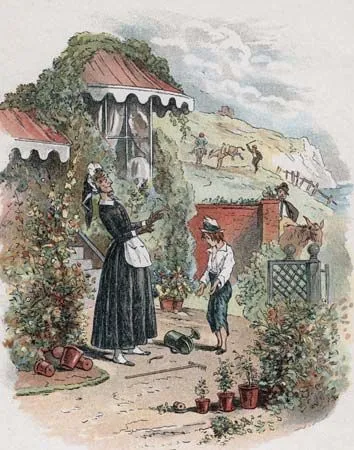 Photo: Hablot Knight Browne, via cdn.britannica.com
This phenomenon represents one of Britain's most overlooked artistic triumphs: the golden age of literary illustration, when engravers and draughtsmen wielded influence comparable to the authors themselves. Far from serving as mere decorative appendages to text, these artists functioned as visual co-authors, their interpretations becoming so embedded in the cultural consciousness that alternative readings seem almost heretical.
The Craft Behind the Magic
The technical mastery required for Victorian book illustration demanded years of apprenticeship in arts that have since vanished from common practice. Wood engraving, the medium that brought us Tenniel's Alice illustrations, required artists to carve their designs into the end grain of boxwood blocks with tools finer than surgical instruments. Each line, cross-hatch, and stipple had to be precisely calculated to survive the printing process whilst maintaining delicate gradations of tone.
Steel engraving, favoured for prestigious publications, offered even greater detail but demanded superhuman patience. Artists like George Cruikshank, whose illustrations for Oliver Twist remain unsurpassed in their atmospheric power, spent months creating single plates, building up their images through thousands of microscopic incisions into steel surfaces harder than marble.
These technical constraints shaped aesthetic choices in ways modern readers rarely appreciate. The bold, simplified forms of Tenniel's playing card characters emerged not from stylistic preference alone, but from wood engraving's inability to reproduce photographic detail. Similarly, the dramatic chiaroscuro effects that made Phiz's illustrations so memorable exploited steel engraving's capacity for deep blacks and brilliant whites.
Collaborative Genius in Action
The relationship between author and illustrator in Victorian Britain represented a form of creative partnership rarely equalled in publishing history. Dickens and Phiz worked so closely that the novelist would adjust his text to accommodate visual ideas, whilst Phiz developed characters through sequential illustrations that revealed psychological depths barely suggested in the prose.
This collaboration extended beyond individual partnerships to encompass entire publishing ecosystems. The Dalziel Brothers' engraving workshop became a creative hub where illustrators, engravers, and authors refined their visions through constant dialogue. Artists like Arthur Boyd Houghton and Frederick Walker elevated illustration from commercial craft to high art, their work for magazines like Good Words and Once a Week establishing visual narratives that influenced painting and sculpture.
The Democratisation of Visual Culture
British illustrated literature achieved something unprecedented: it democratised access to sophisticated visual art. Before photography became commercially viable, book illustrations represented many readers' primary encounter with professional artistic work. Publishers recognised this responsibility, commissioning Britain's finest artists for even modest publications.
The influence extended far beyond literature. When Edmund Dulac illustrated fairy tales or Arthur Rackham brought fantasy worlds to life, they established visual vocabularies that influenced theatre design, advertising, and eventually cinema. The Pre-Raphaelite movement's impact on book illustration created feedback loops where fine art and commercial illustration enriched each other.
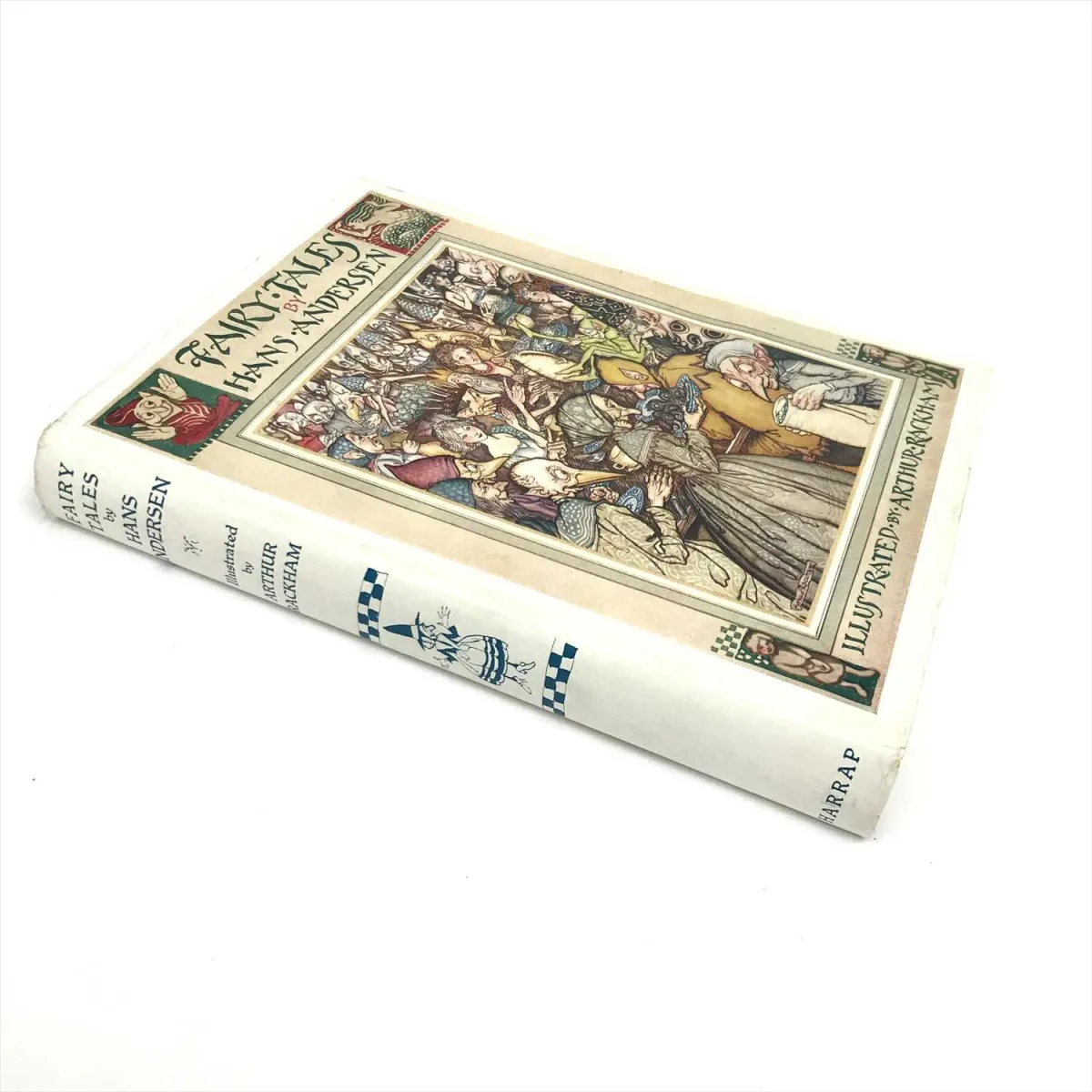 Photo: Arthur Rackham, via davidlay.blob.core.windows.net
Technical Innovation and Artistic Evolution
The evolution of printing technology during the Victorian era created opportunities for artistic innovation that illustrators seized with remarkable creativity. The development of photomechanical reproduction processes in the 1880s liberated artists from the constraints of wood and steel engraving, enabling the delicate wash drawings of E.H. Shepard's Winnie-the-Pooh illustrations or the atmospheric watercolours that characterised fin de siècle book design.
Yet rather than abandoning traditional techniques, the greatest illustrators synthesised old and new methods. Edmund Dulac combined photomechanical colour reproduction with hand-finished details, creating limited editions that functioned as affordable art collections. This hybrid approach maintained the intimacy of handcraft whilst embracing technological possibilities.
Legacy Beyond the Page
The influence of Britain's golden age illustrators extends far beyond their original literary contexts. Tenniel's Alice imagery has become so fundamental to British cultural identity that it appears on stamps, currency, and official commemorative materials. Shepard's Pooh illustrations define childhood itself for multiple generations, their gentle humanity transcending national boundaries whilst remaining quintessentially English in character.
More significantly, these artists established principles of visual storytelling that continue to influence contemporary media. The psychological insight that enabled Phiz to reveal character through gesture and expression laid groundwork for cinematic acting techniques. The environmental storytelling pioneered by illustrators like Hugh Thomson, whose Jane Austen illustrations perfectly captured Regency social nuances, anticipated modern production design methods.
The Unfinished Revolution
Perhaps the greatest tragedy of British book illustration's golden age lies not in its eventual decline, but in our collective amnesia regarding its achievements. These artists created visual languages so successful that they became invisible, their interpretations mistaken for inevitable truth rather than creative genius.
Recognising their contribution requires acknowledging that Britain's greatest literary works emerged from collaborative processes that extended far beyond individual authorship. The Alice we cherish combines Carroll's mathematical whimsy with Tenniel's draughtsmanship. Dickens's social panorama gains much of its power from Phiz's ability to visualise class distinctions through clothing, posture, and architectural detail.
These artistic partnerships represent a distinctly British approach to creative collaboration, one that valued collective achievement over individual celebrity. In an era increasingly dominated by digital media, their example suggests possibilities for new forms of artistic cooperation that honour both technological capability and human creativity. The painted word, it seems, still has stories to tell.